

Understanding the history of literary agents—and how their role has changed over time—can give you an advantage as a writer. Many writers think of literary agents mainly as gatekeepers or people who decide which authors get access to traditional publishers and which authors don’t. That’s true, since major publishers require agented submissions. But the history of literary agents reveals something more useful, and more encouraging, for authors.

Literary agents didn’t become important just because publishers were hard to reach. They became important because publishing became more complicated. As books and stories became valuable in more ways—magazines, newspapers, serial rights, foreign rights, translation rights, stage rights, film rights, audio rights, digital rights, and now AI-related rights—authors needed advocates who understood contracts, money, rights, and long-term career strategy.
This article is part of our free guide about how to get a literary agent. In it, you’ll learn how literary agents evolved from nonexistent into controversial middlemen into essential author advocates—and why that history still matters if you’re trying to get a literary agent today.
Quick Summary
The history of literary agents is really the history of authors needing help every time publishing created a new way to use, divide, sell, license, or exploit creative work. Literary agents didn’t begin as gatekeepers. They became important because publishing became more complicated. As books became valuable in more ways—magazine rights, serial rights, foreign rights, translation rights, film rights, audio rights, digital rights, and now AI-related rights—authors needed professional advocates to help them protect and profit from their work.
Key Takeaways
- Literary agents became important because authors needed help understanding contracts, copyright, rights, royalties, and publishing relationships.
- Modern literary agents began emerging in the nineteenth century, when periodicals, copyright, and transatlantic publishing created new opportunities and risks for authors.
- A.P. Watt is widely regarded as one of the most important early literary agents and helped define literary agenting as a profession.
- Publishers didn’t always welcome literary agents, because agents pushed for better payment and better terms for authors.
- The role of the literary agent has expanded with every new storytelling medium, including stage, film, radio, television, audiobooks, ebooks, streaming, and AI.
- A good literary agent isn’t just a gatekeeper or salesperson. A good agent is an advocate, strategist, negotiator, rights manager, and career advisor.
Table of Contents
- Why Literary Agents Exist
- Before Literary Agents, Authors Often Negotiated Alone
- Copyright Changed Everything
- Magazines and Newspapers Helped Create the Agent’s Role
- A.P. Watt and the Birth of the Modern Literary Agent
- Why Early Literary Agents Were Controversial
- How Literary Agents Professionalized Authorship
- Transatlantic Publishing and the Rise of Rights Strategy
- New Media Expanded the Agent’s Job
- Literary Agencies Became Long-Term Rights Managers
- Professional Standards Became Necessary
- Publishing Consolidation Made Agents More Important
- The Internet Changed Querying Forever
- Today’s Literary Agent
- AI and the Next Chapter in Literary-Agent History
- What the History of Literary Agents Teaches Authors Today
- Next Steps
- Frequently Asked Questions

Why Literary Agents Exist
Most authors think of literary agents as gatekeepers. That makes sense since, these days, large traditional publishers don’t accept unagented submissions, and many writers spend months—or years—trying to get a literary agent’s attention. From the outside, literary agents can seem like mysterious people standing between authors and publishers.
But literary agents didn’t start out that way.
They became important for a more interesting reason: every time publishing created a new way to use, sell, divide, license, or profit from an author’s work, authors needed someone to help protect their rights.
That’s the real purpose and history of literary agents.
When I was a literary agent, and during my years since then helping authors get literary agents and traditional publishers, I’ve seen many writers misunderstand what agents do. Writers often think the agent’s main value is “getting them in the door.” That’s part of it, of course. But that’s not the whole story. A good literary agent helps protect the value of an author’s work—sometimes in ways the author doesn’t yet know to ask or even think about.
A book isn’t just a book. It can also be a bundle of rights. It can become a hardcover, paperback, ebook, audiobook, translation, film, television series, stage play, excerpt, anthology selection, curriculum, podcast adaptation, merchandise, or something else that doesn’t even exist yet.
That’s why literary agents became necessary.
Publishing became more complicated. Authors needed advocates who understood the business. For a more practical explanation of what agents do these days, see What Is a Literary Agent?
Literary agents didn’t become essential because publishers were hard to reach. They became essential because rights became complicated.
Before Literary Agents, Authors Often Negotiated Alone
For much of publishing history, authors didn’t have professional representatives. They often dealt directly with printers, publishers, editors, booksellers, patrons, magazine editors, or newspaper editors.
Sometimes those relationships were fair.
Other times not so much.
Many authors had little bargaining power. They might sell a manuscript outright for a flat fee. They might not understand what rights they were giving away. They might not know whether a publisher’s offer was fair. They might not have access to competing buyers. They might not know how to negotiate royalty terms, territory, reprint rights, or future uses of their work.
That imbalance is one of the reasons literary agents eventually emerged. The deeper need wasn’t just, “Authors need someone to submit their books.” It was, “Authors need someone who understands the business better than they do.”
That’s still true.
A talented writer can create a wonderful book and still have no idea how to evaluate a publishing contract. That was true in the nineteenth century, and it’s true today.
Copyright Changed Everything
The rise of copyright helped make literary agents possible—and necessary. It turned writing into something that could be owned, licensed, sold, divided, inherited, renewed, disputed, and protected. Once an author’s work had legal and commercial value beyond the physical manuscript, the business became more complicated.
A story could appear in a magazine before becoming a book. A book could be published in one country and then another. An author might sell British rights separately from American rights. A work might later be adapted for the stage. Eventually, the same story might be sold for film, television, audio, translation, educational use, anthology use, and more.
That complexity created opportunity, and risk.
If authors didn’t understand what they owned, they could give away too much. If they didn’t understand what publishers wanted, they could accept poor terms. If they didn’t understand future uses of their work, they could lose control of valuable rights before those rights became valuable.
That’s why understanding subsidiary rights in publishing is so important before signing with an agent or publisher.
A literary agent’s job is not merely to sell a manuscript. A literary agent’s job is to help protect all the author’s interests.
Magazines and Newspapers Helped Create the Literary Agent’s Role
The early history of literary agents is also tied to magazines, newspapers, and serial publication. Before movies, television, streaming, podcasts, and social media, periodicals were one of the most important ways writers reached readers. Fiction, essays, humor, journalism, criticism, poetry, and serialized novels could appear in magazines and newspapers before or apart from book publication.
That created a market for people who could place writing. An author might not know which magazine wanted a certain type of story. A publisher might want material for a periodical. A writer might have multiple pieces that could be sold in different places. A story might be worth more if sold strategically instead of casually.
Early agents often understood the periodical world because they had backgrounds in publishing, bookselling, journalism, editing, or advertising. They knew who needed content. They knew what different outlets paid. They knew how to connect writers and buyers.
That’s another reason the “agent as gatekeeper” idea is too narrow. From the beginning, the best agents were not merely blocking access.
They were creating access.
A.P. Watt and the Birth of the Modern Literary Agent
Alexander Pollock Watt is widely regarded as one of the first true literary agents. The University of North Carolina’s A.P. Watt Records note that Watt began working as a literary agent in 1875 when a friend asked him to negotiate a contract with a London publishing company. The University of East Anglia’s A.P. Watt Archive also describes A.P. Watt Ltd. as the oldest literary agency in the world.
Watt’s importance wasn’t just that he represented authors. He helped define literary agenting as a profession. He showed that there could be a professional person or company whose job was to represent writers’ business interests, negotiate with publishers, place work in the right markets, and earn money through commission rather than by charging writers up front.
That commission model remains central to reputable literary agenting. In most cases, a legitimate literary agent earns a percentage of what the author earns. That’s important because it aligns the agent’s financial interest with the author’s success. The better the deal for the author, the better the deal for the agent. Win win.
That basic commission idea helped distinguish professional literary representation from less reputable arrangements in which writers are charged fees regardless of whether anything is sold. To understand how modern agent compensation works, see How Much Does a Literary Agent Cost?
Why Early Literary Agents Were Controversial
Today, agents are deeply embedded in traditional publishing. Many editors expect submissions to come through agents, and many authors assume representation is the normal path to a major publishing deal. But early literary agents weren’t universally welcomed.
Britannica’s publishing history says that literary agents were initially resented by publishers because they pushed for higher payments to authors. That makes sense from the publisher’s point of view. If authors negotiated alone, publishers often had more control. Once literary agents entered the conversation, authors had someone pushing for higher payment, better royalties, better terms, and better rights protection.
In other words, agents changed the economics of being an author. They made authors more informed. They made negotiations more serious. They made it harder for publishers to acquire rights cheaply from writers who did not know what those rights might be worth.
That early resistance is important because it reveals what literary agents were really doing. They weren’t just delivering manuscripts. They were changing the power dynamic, in a ways that’s good for authors.
The history of literary agents is really the history of authors needing help every time publishing created a new way to profit from creative work.
How Literary Agents Professionalized Authorship
The rise of literary agents also helped professionalize writing.
Authors have always written for many reasons: art, calling, faith, politics, self-expression, beauty, truth, entertainment, service, healing, or personal necessity. But publishing is also a business, at least to the major traditional publishers. Once money, contracts, copyright, rights, and long-term career decisions are involved, authorship becomes more than just creativity.
Literary agents helped writers operate more professionally.
They could advise authors about which project to submit first. They could negotiate advances and royalties. They could track payments. They could help authors avoid weak contract language. They could sell work in multiple markets. They could introduce authors to editors. They could help writers think beyond one book.
That final point is especially important, since a publisher is often, at least early on, just focused on one book by the author. A good agent is often focused on the author’s career.
Should the author accept a modest offer from a reputable house? Should the author wait? Should the author revise? Should the author write a different book next? Should the author use a pen name? Should the author stay in one genre or move into another? Should the author reserve certain rights? Should the author accept a work-for-hire arrangement? Should the author agree to an option clause?
Those questions didn’t disappear as publishing modernized.
They multiplied.
Transatlantic Publishing and the Rise of Rights Strategy
Literary agents became even more useful as publishing crossed borders.
For example, British and American publishing were connected but complicated. An author’s work might be valuable in both markets, but the timing, rights, editions, and legal protections could differ. A book might be published in London and New York. Magazine rights might be sold separately. Colonial markets and foreign-language rights created additional possibilities.
This is where agents became more than negotiators.
They became rights strategists.
They helped authors and publishers navigate separate markets. They understood that the same work might have different value in different territories. They could help prevent authors from accidentally giving one publisher rights that might have been sold separately elsewhere.
That’s still one of the most important things agents do.
A modern book contract might include North American rights, world English rights, translation rights, audio rights, first serial rights, second serial rights, dramatic rights, film and television rights, merchandising rights, electronic rights, and other subsidiary rights.
An author who focuses only on the advance might miss the bigger picture. An agent’s job is to see the whole bundle, and negotiate contracts for different types of subsidiary rights in the best order.
A book deal isn’t just about how much money the publisher offers up front. It’s also about what the author gives away in exchange.
New Media Expanded the Agent’s Job
Every new storytelling medium has created new questions for authors and agents. When stage adaptations became possible, authors needed to think about dramatic rights. When radio emerged, authors needed to consider broadcast rights. When film became powerful, motion picture rights became valuable. Then came television. Then audiobooks. Then ebooks. Then streaming. Then podcasts and other digital formats.
Each new medium created new opportunities—and new ways for authors to give away rights too casually. That’s why the history of literary agents keeps repeating the same pattern:
- A new market appears.
- Publishers, producers, platforms, or companies want access to authors’ work.
- Contracts expand to include new rights.
- Authors need help understanding what to grant, what to reserve, and what to negotiate.
- Literary agents become more important.
That pattern is still happening.
Literary Agencies Became Long-Term Rights Managers
Many authors think a literary agent’s main job is to get the first book deal. That is part of the job, but it isn’t the whole job. A literary agency may remain involved with a book for years or decades. The agency might handle royalty statements, payments, permissions, renewals, rights reversions, foreign editions, audio licenses, film inquiries, estate matters, and new editions.
That means an agency isn’t just a door-opener. It can also be a long-term rights manager. That’s one reason authors should be careful when signing an agency agreement. The agreement should make clear what the agent represents, what commission is charged, how money is handled, what happens after termination, and whether the agency continues to receive commission on deals it made.
A good agent-author relationship can be tremendously valuable. A vague or overly broad agreement can create problems later. The bottom line: rights can become valuable long after the first contract is signed.
Professional Standards Became Necessary
As literary agents became more important, professional standards became more important too. Authors needed a way to distinguish legitimate agents from questionable ones. The industry needed ethical norms. Agents needed standards about commissions, reading fees, client funds, conflicts of interest, and professional conduct.
That’s why professional organizations and ethical guidelines became significant. The Association of American Literary Agents publishes a Canon of Ethics addressing professional standards, client funds, conflicts of interest, and reading fees. Authors researching credibility should also read about AALA literary agents and what AALA membership does—and does not—mean.
You can read about the Canon of Ethics in the linked article above.
One of the most important principles is that reputable literary agents generally don’t charge reading fees to consider work for representation. Agents are supposed to make money by selling rights and earning commission, not by charging writers who hope to be represented.
Another important principle is that agents handle client money properly. In many traditional publishing arrangements, money from a publisher might go to the agency first. The literary agency deducts commission and sends the balance to the author. That requires trust, transparency, and proper accounting.
One more reason that choosing an agent shouldn’t be an emotional decision. When an author gets an offer of representation, it can feel like a dream. But it’s also a business relationship. The author is giving someone authority to represent valuable intellectual property, negotiate contracts, and possibly receive money on the author’s behalf.
Who you work with matters.
Publishing Consolidation Made Agents More Important
As publishing became more corporate, agents became more important. Large publishing houses merged. Imprints changed. Editors moved. Sales expectations increased. Marketing and platform became more important. Book categories became more specialized. More decisions were influenced by profit-and-loss statements, comparable titles, sales data, and corporate strategy. In that environment, authors needed advocates who understood the market.
A strong literary agent knows which editors are right for a project. They know which imprints publish which types of books. They know when a book should be positioned as commercial fiction, literary fiction, upmarket fiction, narrative nonfiction, memoir, prescriptive nonfiction, middle grade, young adult, romantasy, thriller, or something else.
They also know that a manuscript can be strong and still be difficult to sell if it is too long, too short, too familiar, too niche, too broad, too quiet, too politically risky, or too hard to position. That’s one reason agents sometimes give editorial feedback before submitting a manuscript to publishers. They aren’t trying to rewrite the author’s vision. They’re trying to make the book more salable without destroying the author’s intent or what makes the book special.
That’s something I’ve seen repeatedly while helping authors improve their query letters, book proposals, synopses, and manuscripts. Many authors think the hardest part is making the writing “good.” But, in traditional publishing, good isn’t always enough. The book also has to be as clear, distinctive, marketable, and properly positioned as possible.
How The Internet Changed Querying
For much of modern publishing history, authors queried agents by mail. They sent query letters, sample pages, synopses, and self-addressed stamped envelopes. Research was slower. Response times were slower. Information was harder to find.
The internet changed that.
Now authors can research agents online, read agency websites, review submission guidelines, follow manuscript wish lists, use query-tracking tools, attend virtual conferences, watch interviews, and submit through email or online forms.
That’s helped authors in many ways. It’s easier than ever to identify agents who represent a specific genre or category. It’s easier to avoid agents who are closed to submissions. It’s easier to learn what agents want.
After learning the history of literary agents, authors can use this guide on how to find a literary agent and this free Literary Agent Database to research agents.
By the way, the internet also created problems.
Agents now receive more submissions because querying is easier. Writers compare response times and outcomes online, which can be helpful but also discouraging. Bad advice spreads quickly. Scammers can impersonate real agents, create fake websites, or use email addresses that look almost legitimate.
For more about that, see Book Scams: Literary Agent and Publishing Scam Warnings.
Today’s Literary Agent Is Often Part Editor, Part Strategist, Part Rights Expert
An agent might help shape a proposal, revise a pitch, edit a manuscript, develop a submission list, contact editors, manage an auction, negotiate contract terms, coordinate foreign rights, review royalty statements, advise on platform, discuss future projects, help with career strategy, and protect the author from bad contract language.
That doesn’t mean every agent does all things equally well. Agents have different strengths. Some are highly editorial. Some are especially strong dealmakers. Some are rights specialists. Some are experts in children’s books, commercial fiction, literary fiction, nonfiction, cookbooks, religion, business, fantasy, romance, graphic novels, or celebrity projects.
But the overall direction is clear: agenting has become more complex because publishing has become more complex. That’s the same story that started in the nineteenth century. Authors create the work. The marketplace keeps inventing new ways to sell and exploit the work. Authors need someone who understands both.
When you’re ready to query, review literary agent submissions so you know what agents expect to receive.
AI and the Next Chapter in Literary-Agent History
AI has created urgent questions about copyright, consent, compensation, licensing, training data, derivative works, contract language, and future uses of books. Authors and illustrators are asking whether their work can be used to train AI systems. Publishers are asking what rights they control. Technology companies are seeking access to content. Contracts are beginning to address issues that barely existed a short time ago.
This is exactly the kind of moment that has always made literary agents more important. When a new technology appears, it can create new revenue. It can also create new ways for authors to lose control. That doesn’t mean every author should be afraid of every new technology. It means authors should understand what they’re signing. They should know whether AI-related rights are being granted, reserved, licensed, limited, or left vague.
The AALA’s statement on AI revenue and licensing says the right to license a work for generative-AI training should remain with the creator or copyright holder unless clearly granted, and should involve consent and compensation.
Vague rights language usually benefits the party with more power. Authors shouldn’t assume that a contract covers only the uses they currently understand. Contracts often shape future uses, including uses that become valuable later.
That’s why literary agents will likely play an important role in AI-rights negotiations, just as agents played important roles in earlier eras of serial rights, foreign rights, film rights, audio rights, and digital rights.
Every new publishing technology creates the same question for authors: Who controls the work, and who gets paid?
What the History of Literary Agents Teaches Authors Today
The history of literary agents isn’t just interesting trivia.
It can help authors make better decisions now.
First, literary agents exist because books are business assets as well as creative works. A manuscript can become a book, but it can also become an audiobook, translation, film, television series, stage adaptation, curriculum, excerpt, anthology selection, or licensed property.
Second, agents became important because authors needed leverage. Publishers know contracts. Authors usually know their books. An agent helps balance that difference.
Third, a good agent thinks about more than the first offer. The advance matters, but so do royalties, territory, rights, options, noncompete language, accounting, reversion, indemnity, and long-term career strategy.
Fourth, timing and fit matter. A strong book still needs the right agent, the right positioning, the right editors, and the right market moment.
Fifth, authors should be careful. Not everyone who calls themselves an agent is reputable. Legitimate representation is usually based on commission from sales, not upfront fees paid by hopeful writers.
Finally, the agent’s role will keep changing because publishing will keep changing.
That’s been true from the beginning.
Before accepting representation, authors should also understand what happens during an offer of representation from a literary agent and what happens after you get a literary agent.
Literary Agents Were Born from Change
Literary agents were once viewed by some publishers as unnecessary middlemen. Today, they are central to traditional publishing.
That shift happened because agents solved a real problem. They helped authors navigate a business that kept becoming more complicated.
- When copyright became valuable, authors needed help.
- When magazines and newspapers created new markets, authors needed help.
- When British and American rights could be sold separately, authors needed help.
- When stage, film, radio, television, audio, and digital rights appeared, authors needed help.
- Now that AI is creating new rights questions, authors need help again.
That’s the real history of literary agents. They didn’t simply appear to stand between writers and publishers. They emerged because creative work became valuable in more ways than authors could easily manage alone.
And that’s why, for many writers seeking a traditional publishing deal, the right literary agent is still one of the most important partners an author can have.
Next Steps
If you’re learning about the history of literary agents because you want to get one, don’t stop with history. Use what you’ve learned here to become more strategic.
Strengthen your submission materials before you query.
The history of literary agents shows that agents have always been looking for more than good writing. They’re looking for work they can position, protect, and sell. That means your manuscript, query letter, synopsis, proposal, platform, and comparable titles should all work together to make your book as compelling and marketable as possible.
Get 1-on-1 Support for Pitching Literary Agents
If you want help understanding how literary agents might see your book, query letter, synopsis, proposal, or platform, schedule a 1-on-1 introductory coaching / consulting call. As a former literary agent who has helped 450+ writers get literary agents and/or traditional publishers, I can help you identify the best agents for your book, improve your query materials, and create a smarter submission strategy. Explore 1-on-1 author coaching and consulting.
FAQ: The History of Literary Agents
When did literary agents begin?
Modern literary agents began emerging in the nineteenth century. A.P. Watt, who began working as a literary agent in the 1870s, is widely regarded as one of the most important early literary agents and helped define literary agenting as a profession.
Why were literary agents created?
Literary agents emerged because publishing became more complicated. Authors needed help negotiating contracts, selling rights, understanding royalties, collecting money, evaluating publishers, and protecting their work in multiple markets.
Who was the first literary agent?
A.P. Watt is often described as one of the first true literary agents. His agency became one of the earliest and most influential literary agencies and helped establish the commission-based model still associated with reputable agenting.
Were literary agents always accepted by publishers?
No. Early literary agents were sometimes resented by publishers because they pushed for better payment and better terms for authors. Over time, however, agents became an accepted and important part of traditional publishing.
Why are literary agents important today?
Literary agents are important because they help authors with submissions, negotiations, contracts, rights, royalties, subsidiary rights, and career strategy. Many major traditional publishers also prefer or require agented submissions.
Do literary agents only sell books?
No. Literary agents may also help authors sell or protect other rights, including foreign rights, translation rights, audio rights, film and television rights, stage rights, serial rights, permissions, and other subsidiary rights.
How did copyright affect the rise of literary agents?
Copyright helped turn writing into valuable intellectual property. Once authors’ work could be owned, licensed, divided, and sold in different ways, authors needed help understanding which rights to grant, which rights to keep, and how to negotiate better terms.
How did the internet change literary agents?
The internet made it easier for authors to research and query agents, but it also increased submission volume and created new risks, including misinformation, unrealistic expectations, and agent impersonation scams.
How might AI affect literary agents?
AI may make literary agents more important because authors need help understanding whether AI-related rights are being granted, reserved, licensed, or left unclear in publishing contracts.
What can authors learn from the history of literary agents?
Authors can learn that literary agents exist because books are creative works and business assets. A good agent helps authors protect their rights, negotiate better deals, avoid bad terms, and think beyond one manuscript or one book deal.
About
This article about “The History of Literary Agents” was written by a former literary agent turned author coach. Mark Malatesta is the creator of The Directory of Book Agents, host of Ask a Publishing Agent, and founder of Literary Agent Undercover and The Bestselling Author.
Mark has helped hundreds of authors get offers from literary agents and/or traditional publishers. Writers of all Book Genres have used our Book Agent Advice coaching/consulting to get Top Literary Agents at the Best Literary Agencies on our List of Literary Agents.
The Bestselling Author, LLC
 Established in 2011, The Bestselling Author has helped 400+ authors get literary agents and/or traditional publishers. Writers who’ve worked with Literary Agent Undercover, a division of The Bestselling Author, have gotten six-figure book deals; been on the New York Times bestseller list; had their books adapted for TV, stage, and feature film; had their work licensed in 40+ countries; and sold many millions of books.
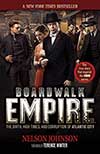
Notable authors include Nelson Johnson, author of Boardwalk Empire, which Martin Scorsese produced for HBO; Leslie Lehr, author of A Boob’s Life, which is currently being adapted for an HBO Max TV series by Salma Hayek; and Scott LeRette, author of The Unbreakable Boy, which was published by Thomas Nelson and is now a major motion picture by Lionsgate starring Patricia Heaton, Zachary Levi, and Amy Acker.
The founder of The Bestselling Author, Mark Malatesta, is a former literary agent, literary agency owner, AAR member, and Marketing & Licensing Manager for the gift and book publisher Blue Mountain Arts. He is now an author coach and consultant. Click here to see Mark Malatesta reviews.
About the Author
 The founder of The Bestselling Author, Mark Malatesta, is a former literary agent, literary agency owner, AAR member, and Marketing & Licensing Manager for the gift and book publisher Blue Mountain Arts. Mark is now a highly regarded author coach and consultant, dedicated to helping writers obtain literary agents. Drawing on decades of industry experience, he works with writers across genres, offering personalized coaching to navigate the complexities of the publishing world.
Through The Bestselling Author, Mark provides practical tools, industry insights, and motivational support tailored to each writer’s needs to help them do so. In addition to coaching, Mark shares his expertise through speaking engagements and online resources. His dedication to empowering authors has made him a trusted mentor in the writing community, earning him a reputation as a knowledgeable and approachable guide for writers pursuing their dreams. Click here for Mark Malatesta reviews.








 MARK MALATESTA is a former literary agent turned author coach. Mark now helps authors of all genres (fiction, nonfiction, and children's books) get top literary agents, publishers, and book deals through his company