

Writing the most effective bio isn’t just about saying the right things. It’s about saying enough, but not too much. It’s about putting the right details in the right order. And, in most cases, it means having more than one bio.
This article, which is part of our free guide about How to Get a Literary Agent, will help you see the options that are best for your book.
Most writers don’t need one author bio. They need more than one.
An agent or publisher reading your bio has a different set of questions than a book buyer or reader checking out your bio on a book jacket or website—including your own. If you use the same bio for all of them, you’ll probably miss the mark.
As a former literary agent who helped new writers get major publishers and appear on bestseller lists, a former Marketing & Licensing Manager for the book division of Blue Mountain Arts, and an author consultant who’s helped 400+ writers get literary agents and/or traditional publishers, I’ve seen authors struggle to talk about themselves almost as much as they struggle to talk about their book. That includes both secular and faith-based writers across fiction, nonfiction, and children’s books.
That’s why I wrote this article.
Quick Summary
A strong author bio isn’t a résumé, a life story, or a place to prove you’re impressive. It’s a positioning tool. Its job is to help the person reading it quickly understand why you’re the right person to have written your book—and, in some cases, why you’re the right person to help it reach readers.
That also means most writers shouldn’t use the same bio everywhere. A literary agent, publisher, reader, and website visitor aren’t all looking for the same thing. What you say matters. But so does when you say it, how much you say, and what you lead with.
Key Takeaways
- A strong author bio is about relevance, not self-importance.
- Most writers need more than one bio for different audiences.
- The right bio length depends on where the bio appears.
- The strongest detail should usually come first, not the oldest detail.
- Agents and publishers want confidence and clarity, not your whole life story.
- Readers usually respond better to a little more warmth and humanity.
- A website bio often works best with both a short version and a longer version.
- Filler, apology, forced charm, and irrelevant bragging usually weaken a bio.

What All Good Author Bios Have in Common
First, what is an author bio?
It’s a positioning tool.
No matter who’s reading your author bio, it shouldn’t be written to prove you’re impressive. Its job is to help the person reading it quickly understand why you’re the right person to have written your book—and, when relevant, why you’re the right person to help that book reach readers.
In other words, a strong author bio answers the question: Why you—why this book—why now?
That might mean expertise, platform, unusual proximity to the material, publishing credibility, professional authority, or simply the fact that you come across as someone who understands the book, the audience, and the market.
Everything in your bio should earn its place.
And it should be in the right place.
No matter who’s reading, you want to come across as someone who knows what they’re doing. What changes is the kind of confidence you need to create—and which details will create it.
Should An Author Bio Be First Person or Third Person?
Unless you have a specific reason not to, your author bio should usually be written in third person. Third person tends to sound more professional, more versatile, and more publishable. It’s also easier to reuse in queries, proposals, on websites, in media materials, and on book jackets. First person can work in more informal settings, especially online, but third person is usually the safest default.
Common Bio Mistakes
Most bio mistakes come down to three problems. Writers say too much. They say too little. Or they lead with the wrong thing.
That may sound simple, but it covers most of the trouble.
Some bios are crammed with every credential, publication, hobby, and life fact the author can think of. Others are so light they don’t give the reader a real reason to trust the author at all. And some contain good information, but bury the strongest point under filler, chronology, or personality details that should come later—or never.
That’s why bio length and bio order matter. It’s not just about whether the information is good. It’s about whether the right information is showing up at the right time for the right reader.
How Long Should an Author Bio Be?
Usually shorter than most writers think.
A strong bio should be only as long as it needs to be for that particular setting. Once it’s done its job, extra detail usually weakens or dilutes it. At the same time, a bio can also be too light. If you leave out the one detail that would make you seem credible, relevant, or easy to position, the bio may feel incomplete.
So the question isn’t simply, “How long should my bio be?” The better question is, “How much information does this audience need in order to trust me?”
A query bio and jacket-flap bio are usually short. A proposal bio is usually much more detailed. A website bio is usually best with two versions: a shorter one up top and a longer one below for people who want more.
The Biggest Mistake: Using One Bio Everywhere
A lot of writers create one author bio and paste it into queries, proposals, their website, media kits, social profiles, and book pages.
That’s usually a mistake.
Not because consistency is bad. Consistency is good. But the job of your bio changes from place to place. The core facts about you may stay the same. The emphasis shouldn’t.
What you say matters. But when you say it matters too. The strongest detail for one audience may be a secondary detail for another. A personal detail that helps a reader connect may be irrelevant in a query. A credential that should go first in a proposal may feel stiff or overly strategic on a book jacket.
What a Bio for Literary Agents and Publishers Is Really Doing
Most writers think an agent is reading the bio to decide whether they’re famous, impressive, or “qualified enough.”
That’s usually not what’s happening.
For agents and publishers, the bio’s main job is to reduce uncertainty and increase confidence. A good one helps the person reading it quickly understand that you seem credible, appropriately matched to the project, professional, and capable of delivering the kind of book you’re pitching.
Another thing many writers miss is that an agent isn’t only reacting to the book. The bio also helps shape an early impression of the author behind it. It can signal professionalism, maturity, judgment, social ease, and whether you seem like someone who’ll be reasonable—and perhaps even pleasant—to work with over time.
That doesn’t mean your bio must be long.
A query bio is almost always stronger when it’s selective. It doesn’t need to show every accomplishment, publication, job, volunteer role, hobby, or interesting detail about your life. It needs to support the pitch.
Again, a bio shouldn’t be a résumé.
A query bio should curate what matters for a specific book.
A strong bio for agents and publishers helps answer a handful of questions: Does this person seem to understand the market? Do they have relevant authority, experience, or perspective? Do they sound like someone I could work with? Is there any reason to believe they can help position and promote this book? Are there any red flags?
That last question matters more than many writers realize. A bio can weaken a query if it sounds defensive, inflated, chaotic, tone-deaf, or irrelevant. It can also strengthen a strong query by creating one more degree of confidence.
The difference between what an agent wants and what a publisher wants usually isn’t as dramatic as some writers think. A good agent is already thinking ahead to what editors and publishers will need. And these days, both agents and publishers care more than they used to about promotion—especially in nonfiction, but increasingly in other categories too.
That doesn’t mean you need celebrity, a massive platform, or a perfect media résumé. But it does mean that audience access, professional authority, visibility, speaking opportunities, newsletter engagement, community leadership, and any other reason you seem easier to position can carry more weight than many writers expect.
And that kind of promotability doesn’t only come from follower counts. It can also come from speaking experience, teaching, fundraising success, sales ability, media training, leadership roles, business or marketing experience, influential connections, or simply having the time, skill, and commitment to support a launch in a serious way.
In adult nonfiction, that often matters a great deal. In children’s nonfiction, practical books, memoir, and some categories of fiction, it can matter too. The point isn’t that every author needs a huge platform. The point is that a bio for agents and publishers should quietly answer not only “Can this person write the book?” but also “Can this person help this book find readers?”
What a Bio for Readers Is Really Doing
A bio for readers is doing a different job.
Readers usually aren’t deciding whether to represent you or acquire your manuscript. They’re deciding whether they trust you, like you, feel curious about you, or want to spend time with your work. That means a bio for readers often benefits from a little more warmth, a little more humanity, and a little less visible strategy.
A bio for readeres still needs relevance, and it still shouldn’t be random. But it should usually feel more accessible and more natural than a query bio.
A bio for readers is often where voice can matter more openly. A small personal detail may work better here. A little charm may help. A line that communicates sensibility, personality, or place can be more useful on a website or jacket flap than it would be in a query.
This isn’t about becoming overly cute, quirky, or familiar. It’s about remembering that readers want to connect with a human being, not a long list of credentials.
That also means the order can be different here. You still want readers to understand why you’re worth listening to or why you belong with this book, but you may not need to sound as strategic about it. A strong reader bio often leads with a clear sense of who you are and what you write, then adds one or two details that make you feel more human, distinctive, or memorable.
So if a bio for agents and publishers is often about reducing uncertainty and increasing confidence, a bio for readers is more often about trust, curiosity, and connection.
What a Bio for Your Website Is Really Doing
A bio for your website has the hardest job of the three.
That’s because your website often has to speak to everyone at once: readers, booksellers, journalists, event organizers, podcasters, agents, publishers, and people who’ve never heard of you before. So a bio for your website usually needs to blend the strengths of the first two versions.
It should still create confidence. It should still show relevance. But it also needs to sound like a real person and fit the larger brand or experience of your site.
That means a bio for your website can usually be a little more flexible in tone and length. It may include a bit more personality than a query bio, but it still shouldn’t ramble. It may include a little more authority than a jacket-flap bio, but it shouldn’t feel stiff or overblown.
The best website bios often work in layers. You might have a shorter version near the top of your About page that quickly tells people who you are and why you matter, followed by a slightly longer version below for those who want more. That way, the bio can do its job without forcing every visitor to wade through more detail than they need.
This layered approach also solves a common problem: some people want the quick version, and some want the fuller version. Your website can provide both.
And here again, order matters. The top of the page isn’t the place to bury your strongest positioning under a long personal ramble. People should be able to land there and understand, within seconds, who you are, what you write, and why they should care. More texture can come after that.
A bio for your website also has to do one more thing the other versions usually don’t: it has to sound like it belongs to the ecosystem around it. If the rest of your website feels warm and conversational, but the bio reads like a business loan application, that mismatch can create distance. If the site feels polished and professional, but the bio feels too casual or unfocused, that can also work against you.
In other words, your website bio shouldn’t just be accurate.
It should be aligned.
What Changes by Category
Your author bio can also shift depending on what kind of book you’re pitching or publishing.
In adult fiction, the bio usually matters less than the concept and pages. A fiction bio is often there to reinforce credibility, show category awareness, and maybe add one signal of authenticity or relevance. It should usually stay lean vs dense. The best fiction bios support the book’s legitimacy and then get out of the way.
In adult nonfiction, the bio matters more. A lot more. Here, agents and publishers often want some combination of authority, access, platform, and proof that you can deliver the message to the right audience. Readers usually want some of that too, but presented in a more human way.
In children’s books, especially picture books and middle grade, the bio often does less visible platform work and more category-awareness work. Experience with children can help, but it isn’t mandatory. A strong children’s bio is often less about “I wrote this for my child” and more about demonstrating that you understand children, kidlit, and the emotional or educational world the book belongs in.
So yes, the same writer may need to adjust not only for audience, but also for category.
What Counts as Credibility
Writers often assume credibility means credentials or nothing. That isn’t true. Credibility is whatever reduces the other person’s uncertainty that you can write this book, speak to this audience, handle yourself professionally, and—when relevant—help the book find readers.
This matters especially for writers with a modest platform, because many of them assume they have very little to say. Often that isn’t true. Leadership roles, academic distinction, professional accomplishments, unusual access to source material, deep familiarity with comparable books, and serious investment in writing craft can all strengthen a bio when they help create confidence.
Sometimes credibility is publishing-related. A prior book with a reputable publisher may count. A meaningful award may count. Strong journalism or short fiction credits may count. An MFA may count a little, depending on context, though not as much as many writers hope.
Sometimes credibility is professional. If you’re writing a book about grief and you’re a clinical social worker specializing in grief and trauma, that matters. If you’re writing about wildfires and you were a wildfire firefighter, that matters.
Sometimes credibility is platform. That matters most in nonfiction, and it matters more when the platform is actually relevant and engaged rather than merely large.
Sometimes credibility is lived proximity to the material. In memoir and certain kinds of nonfiction, that can matter a great deal—if it’s presented with discipline and emotional maturity.
The key isn’t whether the detail sounds impressive in the abstract. The key is whether it helps the person reading the bio trust you more in relation to your particular book.
What Should Go First in Your Bio?
When writers ask what should be in a bio, they’re often really asking a different question: What should go first? That’s the right question. What goes first should usually be the detail that creates the fastest, clearest confidence for that specific audience.
If you don’t have one obvious headline credential, don’t panic. Sometimes the strongest opening is a tight combination of two or three things: relevant experience, a signal of professionalism or accomplishment, and one reason you may be able to help the book reach readers. The point is not to impress in the abstract. The point is to create confidence quickly.
If you’re writing nonfiction and you have direct expertise, that may go first. If you have major publication credibility, that may go first. If your connection to the material is unusually compelling and directly relevant, that may go first. If you have a platform that clearly helps position the book, that may go first.
After that, add one or two supporting details that deepen the case. Then stop.
If you want a final line that humanizes you, grounds you in place, or adds warmth, that can work—especially for readers or on your website. But it should come after the core positioning, not before it.
This is why chronological order is often the wrong order. The right order is usually strategic order. Lead with what matters most, not what happened first.
That same logic applies when you move from a query letter to a book proposal. A query bio is usually the shorter version. A proposal bio should usually hit the same notes, but provide more detail.
In that sense, the relationship between the two is a lot like the relationship between the short bio and longer bio on a website. In a query, you want the leanest, strongest version of the case. In a proposal, you usually have more room to develop it. The core message should stay the same, but the proposal version can offer more evidence, more context, and more specificity.
So if your query bio briefly communicates expertise, authority, platform, experience, or access, your proposal bio can expand on those same things. It can give a clearer sense of your credentials, your audience, your reach, your professional background, your publication history, your media experience, your speaking life, or your connection to the subject—whatever’s most relevant to the book.
That doesn’t mean it should become bloated. It still needs control and relevance. But if the query bio is the concise positioning statement, the proposal bio is the more developed version of the same case.
Same thing, just more details.
Things You Probably Shouldn’t Include
Just because something isn’t wrong doesn’t mean it’s right.
Even an impressive detail still needs a reason to be there. An unusual accomplishment, early award, or off-topic distinction only helps if it meaningfully supports the case you’re making about this book, this audience, or you as a publishing partner. Otherwise, it’s just noise. Possibly interesting noice, but still noise.
You probably don’t need your full life story. You probably don’t need to start with childhood. You probably don’t need every credential, publication, award, hobby, or interesting thing anyone’s ever said about you. If it doesn’t support the book, the pitch, or the version of the bio you’re writing, it’s probably clutter.
You also probably don’t need to work so hard to sound quirky, witty, soulful, or unforgettable. A little charm can be great, especially in a bio for readers or on a website. Forced charm is less charming. If a line feels like you’re auditioning for “most adorable author on the internet,” cut it.
And you probably don’t need to include personal details just because they’re true. Marriage, children, pets, hobbies, the town where you grew up, your favorite vacation spot, your devotion to kayaking, your rescue dachshund, your obsession with thunderstorms—none of that’s automatically wrong. It’s just probably not useful either.
A good rule is this: if a detail makes the bio warmer, more human, or more aligned with the book, keep considering it. If it only makes the bio longer, cut it.
Things You Absolutely Shouldn’t Include
Some things don’t just clutter a bio. They weaken it.
Don’t apologize for being new. Debut authors get agents and publishers every day. You don’t need to ask for mercy.
Don’t outsource your credibility to friends and family. “Everyone who’s read this says I should publish it” doesn’t create confidence. It creates doubt.
Don’t compare yourself to famous authors in a self-congratulatory way. You may be wonderful. Let someone else say you’re the next Stephen King.
Don’t use the bio to complain about the industry. Even if you’ve had frustrating experiences, the bio isn’t the place to process them.
Don’t share too much of your trauma. If painful life experience is relevant, especially in memoir or some nonfiction, include it with discipline. A bio should create trust, not emotional whiplash.
Don’t fake authority. If you’re not a therapist, surgeon, historian, wildfire expert, or relationship coach, don’t write as if you are.
Don’t include irrelevant bragging. An impressive detail that has nothing to do with the book can still confuse the pitch.
And perhaps most important, don’t try too hard.
Confidence is attractive. Desperation is memorable for the wrong reasons. Your bio doesn’t need to sound like a résumé, a confession, or a TED Talk.
What Should Stay Consistent Across All Versions
No matter who the bio is for, certain things should be consistent.
Your author bio should be clear. It should be relevant. It should be emotionally appropriate. It should sound confident without sounding inflated. It should support the book rather than compete with it. And it shouldn’t make the person reading it work too hard to understand why you’re there.
This is where a lot of cliché lines fall apart. “I’ve always wanted to be a writer” may be sincere, but it rarely helps. “My friends say I should publish this” isn’t useful. “Children today need this message” doesn’t prove market fit. “I’m the next Stephen King” isn’t doing what writers think it’s doing.
What creates confidence isn’t hype. It’s relevance, clarity, control—knowing what to say, how much to say, and when to say it.
A Strong Bio Won’t Save a Weak Pitch
The bio is rarely the main focus. It’s reinforcement. But when your concept, query, proposal, or pages are already working, a clean, strategically written bio can create one more layer of confidence.
- This writer knows what they’re doing.
- This book belongs in the market.
- This is someone I can work with.
- This is someone readers will trust.
You don’t need a perfect author bio.
You need to understand what each version of the bio is supposed to accomplish—so you can create the best version (oops, I meant “versions”) for you.
Get 1-on-1 Help to improve Your Author Bio(s), Other Pitch Material, Platform, and/or Manuscript
A strong author bio matters—but it’s only one part of the bigger picture.
As a former literary agent, a former Marketing & Licensing Manager for the book division of Blue Mountain Arts, and an author consultant who’s helped 400+ writers get literary agents and/or traditional publishers, I can make sure you give your book the best chance—explore 1-on-1 author coaching and consulting.
About
This article about “Author Bios for Literary Agents, Publishers, and Readers” was written by a former literary agent turned author coach. Mark Malatesta is the creator of The Directory of Book Agents, host of Ask a Publishing Agent, and founder of Literary Agent Undercover and The Bestselling Author.
Mark has helped hundreds of authors get offers from literary agents and/or traditional publishers. Writers of all Book Genres have used our Book Agent Advice coaching/consulting to get Top Literary Agents at the Best Literary Agencies on our List of Literary Agents.
The Bestselling Author, LLC
 Established in 2011, The Bestselling Author has helped 400+ authors get literary agents and/or traditional publishers. Writers who’ve worked with Literary Agent Undercover, a division of The Bestselling Author, have gotten six-figure book deals; been on the New York Times bestseller list; had their books adapted for TV, stage, and feature film; had their work licensed in 40+ countries; and sold many millions of books.
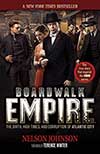
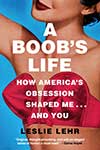
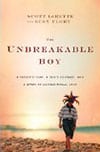
Notable authors include Nelson Johnson, author of Boardwalk Empire, which Martin Scorsese produced for HBO; Leslie Lehr, author of A Boob’s Life, which is currently being adapted for an HBO Max TV series by Salma Hayek; and Scott LeRette, author of The Unbreakable Boy, which was published by Thomas Nelson and is now a major motion picture by Lionsgate starring Patricia Heaton, Zachary Levi, and Amy Acker.
The founder of The Bestselling Author, Mark Malatesta, is a former literary agent, literary agency owner, AAR member, and Marketing & Licensing Manager for the gift and book publisher Blue Mountain Arts. He is now an author coach and consultant. Click here to see Mark Malatesta reviews.
About the Author
 The founder of The Bestselling Author, Mark Malatesta, is a former literary agent, literary agency owner, AAR member, and Marketing & Licensing Manager for the gift and book publisher Blue Mountain Arts. Mark is now a highly regarded author coach and consultant, dedicated to helping writers obtain literary agents. Drawing on decades of industry experience, he works with writers across genres, offering personalized coaching to navigate the complexities of the publishing world.
Through The Bestselling Author, Mark provides practical tools, industry insights, and motivational support tailored to each writer’s needs to help them do so. In addition to coaching, Mark shares his expertise through speaking engagements and online resources. His dedication to empowering authors has made him a trusted mentor in the writing community, earning him a reputation as a knowledgeable and approachable guide for writers pursuing their dreams. Click here for Mark Malatesta reviews.



 MARK MALATESTA is a former literary agent turned author coach. Mark now helps authors of all genres (fiction, nonfiction, and children's books) get top literary agents, publishers, and book deals through his company