

What’s your target market for literary agents and publishers? Many writers don’t realize a book’s target market isn’t equally important in every query, and it’s not always equally hard to address. Some target markets need explanation. Others are so obvious that talking about them in a query letter is a waste of valuable query-letter space.
That’s one of the things I learned not only as a former literary agent, but also as the former Marketing & Licensing Manager for the book division of Blue Mountain Arts, and as an author coach/consultant who has helped 450+ authors get offers from literary agents and/or traditional publishers. Part of writing a strong query is knowing what to explain, what not to explain, and what deserves only a sentence or two.
This article, which is part of our free guide about How to Get a Literary Agent, will help you see the options that are best for your book.
Quick Summary
In publishing, target market does not mean “everyone who might like this book.” It means the most likely readers and buyers for this specific book, based on existing reading behavior, buying behavior, and shelf placement. In a query letter, though, target market is not always equally important. Sometimes the audience is so obvious that you should barely mention it. Other times, market fit is less obvious and needs to be clarified. The goal is not to sound like a marketer. The goal is to sound like a writer who understands what they wrote, where it fits, and who is most likely to buy it.
Key Takeaways
- Literary agents do not want to hear that your book is for everyone.
- The more obvious the market, the less you usually need to explain it.
- Wrong shelf placement is one of the fastest ways to make a query feel uncertain.
- In nonfiction and children’s books especially, the buyer and the user may not be the same person.
- Strong comps often do more work than broad, vague audience claims.
- A clear target market makes your query sound more professional and easier to say yes to.
Table of Contents
- What Is Target Market in Publishing?
- When Should You Explain Target Market in a Query Letter?
- How Literary Agents Evaluate Target Market
- The Biggest Target Market Mistakes Writers Make
- How to Identify Your Book’s Target Audience More Clearly
- Buyer vs. User: A Target Market Nuance Many Writers Miss
- How Target Market Changes by Category
- How to Describe Target Market Without Sounding Salesy
- How to Show There’s a Market Without Overdoing It
- Where Target Market Shows Up in a Query Letter
- A Simple Target Market Checklist Before You Query
- Why Target Market Matters More for Debut Authors
- The Bottom Line
- FAQ: Target Market for Literary Agents

What Is Target Market in Publishing?
In book publishing, target market means the most likely buyers and readers for your specific book, based on existing buying behavior and shelf placement. It doesn’t mean “everyone who likes books” or “women 18–65.” It doesn’t mean “people who like romance, thrillers, fantasy, and nonfiction.” And it definitely doesn’t mean “fans of great writing.”
Those answers feel logical and comfortable to many writers, but to literarsy agents that type of simple description can sound fuzzy. A real target market is often narrower—points to a primary audience you can describe clearly and credibly. It suggests a reading or buying pattern that already exists, and helps answer a practical question: where does this book belong in the marketplace?
Literary agents don’t need you to prove your book will be a bestseller. They simply need to see that you understand what you wrote, who is most likely to buy it, and how it can be positioned.
When Should You Explain Target Market in a Query Letter?
Target market deserves the most attention when it is not immediately obvious, when it could be misunderstood, or when explaining it helps make the book feel more commercially viable. That can happen when a book crosses categories, when the buyer and the reader or user are not the same person, when a nonfiction book has a clear subject but a less obvious buying pattern, when a children’s book involves multiple gatekeepers, or when a novel has a tone, structure, or blend of elements that could easily be misread.
But if the audience is already built into the premise, title, category, or concept, you usually don’t need to say much. For example, if you’re pitching a book about how to look sexy in your 70s, you don’t need to spend precious query-letter space explaining the most obvious part of the target market. What may matter more is your authority, your angle, the promise of the book, how your version stands out, and whether there’s a useful distinction between who will use the book and who will buy it.
In other words, target market isn’t just about identifying an audience. It is also about deciding whether explaining that audience will actually help your query.
Sometimes the smartest thing to say—is less.
How Literary Agents Evaluate Target Market
When a literary agent reads a query, they’re trying to answer a few questions quickly.
1. Who is the primary reader?
Not “everyone.” Not “men and women of all ages.” The real question is: who is most likely to buy this book first?
2. What is the reader promise?
What is the reader getting? Tension? Escape? Catharsis? Comfort? Transformation? A practical solution? A fresh angle on a subject they already care about?
3. Where will the book sit in bookstores?
Shelf clarity matters more than many writers realize. If you’ve written adult fiction, what category or subgenre is it really? If it’s nonfiction, what lane is it in? If it’s for children, what age category and format are you talking about?
4. What else does this audience already buy?
This is where comps matter. Agents are wondering whether they can identify an existing readership and quickly think of successful books that appeal to a similar audience.
5. Why now?
That does not always mean the book has to be tied to a trend or the news. It may simply mean the book fits a current appetite, speaks to an ongoing conversation, or delivers an evergreen promise in a way that feels fresh.
If your query helps an agent answer those questions, you’re making the agent’s job easier. I’m not saying you should have to do that—but if you can do that, it can’t hurt.
The Biggest Target Market Mistakes Writers Make
One of the fastest ways to weaken a query letter is to tell an agent your book is for everyone. That can sound generous and optimistic to the writer. To the agent, it can sound like the writer doesn’t understand their book’s market. That’s important because literary agents aren’t only evaluating whether a book is good. They’re evaluating whether they can position it clearly, explain it quickly, and sell it.
Another common mistake writers make is confusing theme with market. Love, healing, justice, identity, grief, empowerment, and forgiveness are important themes. But theme doesn’t define a market. A target market is made up of readers who already buy a certain kind of book for a certain kind of experience or result.
Writers also often lean too heavily on demographics. Age and gender can matter, but reading behavior matters more. Two women in the same age range may buy very different books for very different reasons. One may want high-stakes domestic suspense. Another may want literary family drama. The demographics overlap, but the target market doesn’t.
Wrong shelf placement is another frequent problem. Writers often pitch romance like women’s fiction, thrillers like mysteries, upmarket novels like literary fiction, and fantasy like general fiction. Sometimes the manuscript is strong, but an incorrect target market description creates a disconnect for the literary agent.
Lastly, there are the overreaching claims. If a writer says a book is perfect for fans of Colleen Hoover, Stephen King, and Malcolm Gladwell, that does not make the project sound broad and exciting. It makes it sound unfocused. Agents want plausibility, in the stories they read and in the pitches they receive.
How to Identify Your Book’s Target Audience More Clearly
When defining your target market, focus on three things: who the readers are, why they buy, and what is going on in their lives.
The first part is basic demographics. That may include age range, life stage, or reader category.
The second part is psychographics. That’s about motivation. Are your readers looking for excitment, insight, comfort, escape, intensity, humor, hope, or something else?
The third part is buying context. What is happening in your reader’s life? Do they want a page-turner? A book-club novel? A practical guide? A story that helps them feel less alone? A gift for someone else?
Buyer vs. User: A Target Market Nuance That Many Writers Miss
Sometimes the person who uses the book is not the person most likely to buy it. And sometimes that distinction can make a book much easier to sell.
One of the reasons I was able to help New York Times bestselling author Harry Harrison Jr. become successful with Father to Son, a book for fathers, was by making it clear that many, if not most, of the sales would likely come from women buying the book as a gift for the men in their lives. The content served fathers, but the buyers were often mothers, partners, and children.
It can help an agent or publisher feel more confident about market fit. And it can help a writer think more clearly about the audience, because “who needs this book?” and “who buys this book?” are not always the same question.
How Target Market Changes by Category
Adult Fiction
In adult fiction, the target market is often closely tied to the reader promise. Readers buy fiction for a certain kind of experience, and literary agents want to hear that you understand the experience your book delivers. A thriller reader wants something different, as does a romance reader. And a romance reader wants something different from a fantasy reader. And a book-club reader wants something different from a literary reader. Even when a book crosses or blends categories, it needs a primary shelf.
Adult Nonfiction
In adult nonfiction, the target market is often about a problem, solution, and urgency. Who is looking for help? What have they already tried? Why would this book appeal to them now? Nonfiction also raises the buyer/user question more often than fiction does. A book may be bought by the person using it, but not always. That distinction can matter, especially with categories like parenting, spirituality, gift books, and some business books.
Children’s Books
With children’s books, kids may be the readers, but parents, teachers, librarians, and caregivers often influence or control the purchase. That doesn’t mean you need to list all of those people as separate target markets in your query letter. You also need to get your children’s sub-genre right. Picture books, early readers, chapter books, middle grade, and YA are not interchangeable.
How to Describe Target Market Without Sounding Salesy
For adult fiction, it’s usually best to describe the kind of reading experience the book delivers and who is most likely to want that experience. Instead of saying, “This book is for anyone who likes suspense and drama,” you might say it’s for readers who love twisty domestic suspense with slow-building dread and strong emotional stakes.
For adult nonfiction, it’s usually better to focus on who wants a specific result and why current alternatives haven’t been enough. Instead of saying, “This book is for anyone who wants to improve themselves,” you might say it’s for high-achieving professionals burned out by hustle culture who want a more practical, sustainable way to rebuild focus and meaning.
For children’s books, both age category and reading experience matter a great deal. “This is for middle-grade readers who love funny, heartfelt mysteries with a brave-kid-under-pressure arc” is better than “This book is for both kids and adults.”
Your description should sound credible and natural, like someone who understands books and readers, not someone trying to impress an agent with “marketing speak.”
There’s also oftten more than one way to present your target market well. Let’s say an author has written a horror novel and an agent asks about the target market. One author might simply say their book is for, “readers of horror fiction.” Another might say it’s for “adult readers who like intelligent, character-driven horror with a strong cultural dimension.”
Unless an agent asks for something specific, there’s room for style. You don’t need to sound like a copywriter. You should sound like you know who your audience is.
How to Show There’s a Market Without Overdoing It
You don’t need hype—you need credibility. That usually comes from a clear category or subgenre label, a believable target reader description, a pitch that matches the promise of the category, and two or more comparable titles.
If your book feels unusual, resist the temptation to say there are no comps. That almost never helps. It usually signals you don’t know the market. In most cases, you can comp the reading experience, the hook, the voice, the audience overlap, or the emotional effect.
A book doesn’t need to be easy to explain for it to be marketable, but it does have to be explainable.
A Simple Target Market Checklist for Querying
Before you start querying, ask yourself:
- What is the primary shelf for this book?
- What is the core reader promise in one sentence?
- Who is the most likely reader or buyer?
- What are two believable comps that point to a similar audience?
- Why does this book make sense now, especially if it’s nonfiction?
- What kind of reader is least likely to like it?
That last question is more useful than many writers realize. When you know who your book is not for, you usually get clearer about who it’s for.
Why Target Market Matters More for Debut Authors
Established authors sometimes get more flexibility because their name already sells, their readership is known, or their previous numbers reduce perceived risk.
Debut authors usually don’t typically get that luxury.
That doesn’t mean a debut has to be conventional. It does mean the positioning usually has to be especially clear. Literary agents and editors need to be able to understand where the book fits, as well as how it can be explained, sold, and acquired.
The Bottom Line
Literary agents don’t expect you to be a professional marketer. They do expect you to understand what you wrote, where it fits, who is most likely to buy it, and why it belongs on that shelf.
They also expect judgment.
Part of that judgment is knowing when target market needs explanation and when it doesn’t. If the market is obvious, don’t waste valuable space in your query belaboring it. If the market is less obvious, easier to misunderstand, or commercially nuanced, address it strategically and clearly.
When your target market is clear, your query gets stronger. Your comps make more sense. Your pitch language lines up better with reader expectations—and the agent has fewer unknowns to solve. That won’t guarantee representation, of course. But it will make you sound more professional, market-savvy, and easier to say yes to.
Get 1-on-1 Help to Find a Literary Agent and a Traditional Publisher
Knowing your target market is just one way to increase your odds of getting a literary agent. As a former literary agent, the former Marketing & Licensing Manager for the book division of Blue Mountain Arts, and an author consultant who’s helped 400+ writers get literary agents and/or traditional publishers, I’d be honored to help you get a literary agent.
FAQ: Target Market for Literary Agents
What does target market mean in publishing?
Target market means the most likely readers and buyers for your specific book, based on how books like yours are actually bought, read, and shelved.
Do I need to mention target market in every query letter?
Not in the same way or to the same degree. If the market is obvious, you may only need to imply it through category, comps, and pitch language. If the market is less obvious or easy to misunderstand, it may deserve more explanation.
Can a book have more than one target market?
Yes, but most books still need a primary market. Secondary and adjacent audiences can matter, but your pitch usually gets stronger when the main audience is clear.
Is target market the same as comp titles?
No. Comp titles help support your target market, but they are not the same thing. Your target market is the audience. Your comps are part of how you show that audience already exists.
What if my book crosses genres?
That is fine, but it still usually needs a primary shelf. A cross-genre book can work well. A pitch that sounds confused about where the book belongs usually does not.
Why does target market matter more for debut authors?
Debut authors generally need clearer positioning because agents and editors do not yet have sales history, name recognition, or a built-in readership to reduce uncertainty.
About
This article about “Literary Agents and Target Market” was written by a former literary agent turned author coach. Mark Malatesta is the creator of The Directory of Book Agents, host of Ask a Publishing Agent, and founder of Literary Agent Undercover and The Bestselling Author.
Mark has helped hundreds of authors get offers from literary agents and/or traditional publishers. Writers of all Book Genres have used our Book Agent Advice coaching/consulting to get Top Literary Agents at the Best Literary Agencies on our List of Literary Agents.
The Bestselling Author, LLC
 Established in 2011, The Bestselling Author has helped 400+ authors get literary agents and/or traditional publishers. Writers who’ve worked with Literary Agent Undercover, a division of The Bestselling Author, have gotten six-figure book deals; been on the New York Times bestseller list; had their books adapted for TV, stage, and feature film; had their work licensed in 40+ countries; and sold many millions of books.
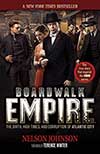
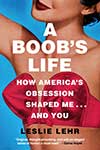
Notable authors include Nelson Johnson, author of Boardwalk Empire, which Martin Scorsese produced for HBO; Leslie Lehr, author of A Boob’s Life, which is currently being adapted for an HBO Max TV series by Salma Hayek; and Scott LeRette, author of The Unbreakable Boy, which was published by Thomas Nelson and is now a major motion picture by Lionsgate starring Patricia Heaton, Zachary Levi, and Amy Acker.
The founder of The Bestselling Author, Mark Malatesta, is a former literary agent, literary agency owner, AAR member, and Marketing & Licensing Manager for the gift and book publisher Blue Mountain Arts. He is now an author coach and consultant. Click here to see Mark Malatesta reviews.
About the Author
 The founder of The Bestselling Author, Mark Malatesta, is a former literary agent, literary agency owner, AAR member, and Marketing & Licensing Manager for the gift and book publisher Blue Mountain Arts. Mark is now a highly regarded author coach and consultant, dedicated to helping writers obtain literary agents. Drawing on decades of industry experience, he works with writers across genres, offering personalized coaching to navigate the complexities of the publishing world.
Through The Bestselling Author, Mark provides practical tools, industry insights, and motivational support tailored to each writer’s needs to help them do so. In addition to coaching, Mark shares his expertise through speaking engagements and online resources. His dedication to empowering authors has made him a trusted mentor in the writing community, earning him a reputation as a knowledgeable and approachable guide for writers pursuing their dreams. Click here for Mark Malatesta reviews.






 MARK MALATESTA is a former literary agent turned author coach. Mark now helps authors of all genres (fiction, nonfiction, and children's books) get top literary agents, publishers, and book deals through his company