

What’s the best email address to use querying literary agents—and what email deliverability issues do you need to know about? Most writers spend many years preparing their manuscript, book proposal (mainly for nonfiction authors), synopsis, and query letter. Yet they don’t spend any time—or much—thinking about their email address.
Your email address can quietly influence your message deliverability, how professional you appear, whether your message gets opened, whether it lands in spam, and how seriously a literary agent takes you. This article, which is part of our free guide about How to Get a Literary Agent, will help you see the best email options for you and your book.
Quick Summary
Most writers spend a great deal of time polishing their query letter, synopsis, book proposal, and manuscript—but almost no time thinking about the email address they use to contact literary agents. That’s a mistake. Your email address can affect how professional you appear, whether agents trust you, whether your message gets opened, and whether your submission reaches the inbox at all.
A clean, simple, professional email address won’t guarantee literary agent interest. But a confusing, overly cute, politically charged, mismatched, or poorly configured email address can create unnecessary issues. If you’re querying literary agents, use an email address that supports your author identity, keeps the focus on your writing, and gives your message the best chance of being seen—so you can have the best odds of getting a literary agent.
Key Takeaways
- You don’t need a clever email address to query literary agents.
- A simple, name-based email address is usually best.
- A clean Gmail address is fine, especially if your custom domain email isn’t configured properly.
- Your email address can create unintended signals related to age, gender, faith, politics, profession, or lifestyle.
- If you’re getting no responses at all to well-targeted queries, deliverability could be part of the problem.
- Read receipt software usually creates more problems than it solves.
- Your email address probably won’t make or break your query—but it can affect how you’re perceived and whether your message gets seen.
Table of Contents
- Why Your Email Address Matters More Than You Think
- Should You Use a Separate Email for Agent Submissions?
- When Your Email Address Sends the Wrong Message
- Cute, Clever, or Confusing Email Addresses
- Gender, Age, Faith, and Politics Signals
- Free Email vs. Custom Domain—Does It Matter?
- Your Name Field Matters Too
- Should Your Email Match Your Author Name?
- Deliverability Issues Most Writers Don’t Think About
- My Own Personal Deliverability Nightmare
- Should Writers Use Read Receipt Software?
- Privacy and Long-Term Thinking
- The Bottom Line
- FAQ

Why Your Email Address Matters More Than You Think
Your email address is often one of the first things a literary agent or publisher sees. Before your writing is evaluated, before your idea is judged, before your credentials are considered, your email address and name field are already communicating. But what? Hopefully, professionalism, awareness, and the sense that you’re approaching publishing like a career—not a hobby. Most agents aren’t going to reject a great book because of an email address. But small negative signs can stack up, and small positive signs can help.
Most agents aren’t going to reject a great book because of an email address. But small negative signs can stack up.
Should You Use a Separate Email for Agent Submissions?
In many cases, yes—not because it’s required, but because it’s practical. A separate email can help you stay organized, track responses, avoid missing important replies, and keep your writing career separate from your personal or work life.
It also creates a subtle psychological shift. You’re not just “sending emails.” You’re managing a professional submission process. That matters more when you’re querying multiple agents, receiving requests, following up, or working on more than one project.
When Your Email Address Sends the Wrong Message
Most writers know they probably shouldn’t query agents from an email address that looks sloppy, silly, or confusing. But your email address might be communicating other things that aren’t always obvious. Your email address can quietly communicate things about your age, gender, politics, faith, personality, profession, or lifestyle. Sometimes that’s fine and “on brand.” Other times, it creates a distraction or negative reaction before your writing has a chance to speak for itself.
This isn’t about hiding who you are, or pretending to be someone you’re not. It’s about controlling the first impression. If you write children’s books and your email is vegasbeerfestivalking@, you can see how that might create a disconnect. Same thing if you write literary fiction and your email is newbiewriter@. The agent may smile—but they also might smirk. You probably don’t want your email address to be the most memorable thing about your submission.
A good email address can be clever or branded. If it is, it should match the content and/or voice/style of your writing. At the very least, it needs to be clear, professional, and unlikely to distract from your work.
Cute, Clever, or Confusing Email Addresses
Some email addresses feel more personal than professional: cutiepie@, bookwormgirl@, lovetoread4ever@, dragonqueen@, caffeineaddictwriter@. None of these are catastrophic. But they can subtly position you as less professional than you are. Humor and sarcasm can also backfire. An address like procrastinationking@ might be funny to you—but an agent who doesn’t know you may not take it that way.
Your voice belongs in your writing. Your email address should stay out of the way.
Gender, Age, Faith, and Politics Signals
Your email address may signal identity in other ways you don’t intend. That doesn’t mean you should hide who you are—but you should be aware of what you’re communicating.
If you’re writing Christian nonfiction, a faith-based email may support your author identity. If you’re writing a secular thriller, it may create assumptions that aren’t helpful. If you’re writing political nonfiction, a political email may align with your platform. If you’re writing a romantic comedy, it may distract.
If your email includes a birth year, nickname, generational label, or strong identity signal, ask whether it adds anything useful. Most of the time, a neutral, name-based email keeps the focus where it belongs—on your writing.
Free Email vs. Custom Domain—Does It Matter?
Less than most writers think. A clean Gmail address is perfectly fine. Something like janedoe@gmail.com is completely professional. A custom domain (jane@janedoe.com) can look more polished—especially if you already have a website—but it’s not required. Good Gmail beats a poorly configured custom domain every time.
Your Name Field Matters Too
Your “From” name can be just as important as your email address. If your email shows up as coolwriter88 instead of your real name, you’re creating an unnecessary distraction and inviting thoughts about you and your writing that you probably don’t want. Use your real name or pen name. Keep it simple and recognizable.
Should Your Email Match Your Author Name?
Ideally, yes. If you’re querying under your real name, use an email that reflects it. If you’re using a pen name, consider aligning your email accordingly.
It’s not about perfection. It’s about consistency.
Deliverability Issues Most Writers Don’t Think About
Even if you get all the above right, your query might not reach an agent’s inbox. A typical response rate to well-targeted literary agent queries is often in the 10–20% range. That doesn’t mean every response will be positive, and it doesn’t mean every project will get requests. But if you’re hearing absolutely nothing—including no rejections—it’s worth asking whether agents are even getting your submissions.
I discovered this when one of my author coaching/consulting clients told me she hadn’t received any requests to read her book. When I looked more closely, I realized agents likely weren’t getting her submissions. The email provider she was using was causing a deliverability issue. Once we addressed that, the problem became clear: the issue wasn’t necessarily the book or the query—it was the email path.
If agents don’t receive your query, they can’t request your manuscript—no matter how strong your book is.
My Own Personal Deliverability Nightmare
Early this year, I realized that many of the writers who opted in or entered their email address to get my newsletter had never received it—going back more than ten years—or they’d stopped receiving it. For months, I’d been wondering why my normal flow of writers signing up for introductory coaching/consulting calls had been shrinking.
So, I hired an email deliverability expert.
No one tells you these things as an entrepreneur—some things you have to learn the hard way. I’m telling you to help you avoid making the same mistake. The older your email list gets (I started mine in 2011), the more important it is to do “list hygiene.” In other words, remove subscribers who haven’t opened one of your emails in a long time, or ever.
If you don’t do that, your emails will eventually start going to people’s junk or spam folders, or they won’t get delivered at all.
Should Writers Use Read Receipt Software?
Usually, no. Read receipts feel useful, but they rarely give meaningful insight. Some tools add tracking elements that can affect deliverability or make your email look less personal. Some agents—probably most—don’t like being tracked. And even when they work, the data can be misleading. It’s best to focus on clean delivery, not tracking.
Privacy and Long-Term Thinking
Your email address may become part of your long-term author identity. It may appear in contracts and professional communication. You don’t need a perfect brand now—but, if possible, avoid using something tied to a job, hobby, or identity you may not want connected to your writing career later.
The Bottom Line
Your email address probably won’t make or break your query. But it’s one of those small details that can quietly influence how you’re perceived—and whether your message gets seen. You don’t need a clever brand or a custom domain. Simple wins: professionalism, consistency, clarity, and deliverability.
1-on-1 Help to Get a Literary Agent
Making sure your query letter reaches literary agents is important—but so is your pitch and manuscript. As a former literary agent, the former Marketing & Licensing Manager for the book division of Blue Mountain Arts, and an author consultant who’s helped 400+ writers get literary agents, I can help you have the best odds of getting a literary agent. Here you can explore 1-on-1 author coaching and consulting.
FAQ: Best Email Address and Deliverability Tips for Literary Agents
What email address should writers use to query literary agents?
The best email address for querying literary agents is usually simple, professional, and name-based. Something like janedoe@gmail.com, janedoeauthor@gmail.com, or jane@janedoe.com is usually better than something cute, confusing, overly branded, or unrelated to your writing.
Is Gmail okay for literary agent submissions?
Yes. A clean Gmail address is perfectly acceptable for literary agent submissions. A custom domain can look more polished, but only if it’s configured properly. A reliable Gmail address is better than a custom-domain email that has deliverability problems.
Should writers use a separate email address for literary agent submissions?
In many cases, yes. A separate email address can help you track queries, avoid missing replies, and keep your writing life separate from your personal or work email. It can also help you feel more organized and professional during the submission process.
Can my email address affect whether literary agents respond?
Yes, indirectly. A strange or unprofessional email address may create a poor first impression, and deliverability problems may prevent agents from seeing your message at all. If you’re sending strong, targeted queries and getting no responses—not even rejections—your email setup could be part of the issue.
Should writers use read receipts when querying literary agents?
Usually, no. Read receipt tools can create technical signals that make emails look less personal or more promotional. Some agents also dislike being tracked. Even when read receipts work, the data can be misleading because an “open” doesn’t mean the query was read carefully.
Do literary agents care about an author’s email address?
Agents care most about the book, the writing, the query, and the fit. But an email address can still influence first impressions. A professional email address won’t sell your book, but an odd, mismatched, or technically unreliable one can create unnecessary friction.
About
This article about “The Best Email Address and Deliverability Tips for Querying Literary Agents” was written by a former literary agent turned author coach. Mark Malatesta is the creator of The Directory of Book Agents, host of Ask a Publishing Agent, and founder of Literary Agent Undercover and The Bestselling Author.
Mark has helped hundreds of authors get offers from literary agents and/or traditional publishers. Writers of all Book Genres have used our Book Agent Advice coaching/consulting to get Top Literary Agents at the Best Literary Agencies on our List of Literary Agents.
The Bestselling Author, LLC
 Established in 2011, The Bestselling Author has helped 400+ authors get literary agents and/or traditional publishers. Writers who’ve worked with Literary Agent Undercover, a division of The Bestselling Author, have gotten six-figure book deals; been on the New York Times bestseller list; had their books adapted for TV, stage, and feature film; had their work licensed in 40+ countries; and sold many millions of books.
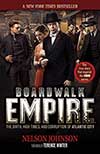
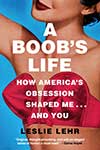
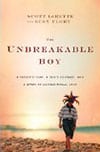
Notable authors include Nelson Johnson, author of Boardwalk Empire, which Martin Scorsese produced for HBO; Leslie Lehr, author of A Boob’s Life, which is currently being adapted for an HBO Max TV series by Salma Hayek; and Scott LeRette, author of The Unbreakable Boy, which was published by Thomas Nelson and is now a major motion picture by Lionsgate starring Patricia Heaton, Zachary Levi, and Amy Acker.
The founder of The Bestselling Author, Mark Malatesta, is a former literary agent, literary agency owner, AAR member, and Marketing & Licensing Manager for the gift and book publisher Blue Mountain Arts. He is now an author coach and consultant. Click here to see Mark Malatesta reviews.
About the Author
 The founder of The Bestselling Author, Mark Malatesta, is a former literary agent, literary agency owner, AAR member, and Marketing & Licensing Manager for the gift and book publisher Blue Mountain Arts. Mark is now a highly regarded author coach and consultant, dedicated to helping writers obtain literary agents. Drawing on decades of industry experience, he works with writers across genres, offering personalized coaching to navigate the complexities of the publishing world.
Through The Bestselling Author, Mark provides practical tools, industry insights, and motivational support tailored to each writer’s needs to help them do so. In addition to coaching, Mark shares his expertise through speaking engagements and online resources. His dedication to empowering authors has made him a trusted mentor in the writing community, earning him a reputation as a knowledgeable and approachable guide for writers pursuing their dreams. Click here for Mark Malatesta reviews.





 MARK MALATESTA is a former literary agent turned author coach. Mark now helps authors of all genres (fiction, nonfiction, and children's books) get top literary agents, publishers, and book deals through his company