

Do literary agents edit manuscripts? Agents often help authors revise manuscripts, but they don’t all provide the same kind—or amount—of editing. Some agents give extensive developmental notes and guide authors through multiple rounds of revisions. Others don’t do anything. And, as you might imagine, most agents fall somewhere in the middle. This article is part of my guide about how to get a literary agent.
An agent’s approach can also change from one project to another. One book by an author may need only modest adjustments. The author’s next book may require significant restructuring, even after the author has become successfully published.
So, you’re probably wondering:
What kind of editorial relationship should you expect—and what kind is right for you and your book?
The best literary agent isn’t necessarily the one who gives the most notes. It’s the one whose judgment, involvement, communication style, and editorial vision are compatible with yours and help make the work stronger.
Quick Summary
Many literary agents provide strategic and developmental feedback before submitting manuscripts or proposals to publishers. Some also comment at the line level, but agents generally don’t function as comprehensive copyeditors or proofreaders.
Editing might take place before representation through a revise-and-resubmit request, after signing but before publisher submission, during a submission round, and throughout an author’s career as the agent evaluates future books.
The same author might need little editing on one project and extensive work on another. The publishing-house editor’s involvement can also vary from book to book.
Unpublished and traditionally published authors sometimes hire beta readers, book coaches, developmental editors, line editors, copyeditors, proofreaders, or subject specialists. If a manuscript needs more intensive work than the agent or publisher can provide—and the author can’t complete it independently—additional professional help may be recommended or required before the project can move forward.
An agent might help make a strong manuscript stronger. Writers shouldn’t assume an agent will transform an unready manuscript into a representable one.
Key Takeaways
- Many literary agents provide developmental and strategic editorial feedback.
- “Editing” can refer to several different services and levels of involvement.
- An editorial agent isn’t automatically a line editor, copyeditor, or proofreader.
- Revisions might happen before or after an offer of representation.
- An agent’s editorial involvement generally continues with an author’s future books.
- Different books by the same author might need very different amounts of editing.
- More editorial involvement isn’t necessarily better.
- Authors and agents should be able to discuss and disagree about revisions productively.
- Unpublished and traditionally published writers sometimes hire independent editorial help.
- Paid services shouldn’t quietly become an undisclosed or coercive condition of representation.
The value of editorial feedback is measured by its insight and usefulness—not its length.
Table of Contents
- Do Literary Agents Edit Manuscripts?
- What Kind of Editing Do Literary Agents Provide?
- How Editorial Are Different Literary Agents?
- When Do Agents Request Revisions?
- Does an Agent Keep Editing an Author’s Future Books?
- Is a More Editorial Literary Agent Always Better?
- What If You Disagree With the Agent’s Feedback?
- Are Agents Substitutes for Professional Editors?
- When an Agent or Publisher May Recommend Outside Help
- What to Ask Before Signing
- Final Thoughts
- Frequently Asked Questions

How I Evaluate an Agent’s Editorial Fit
In my approximately 30 years in publishing—including my experience as a literary agent, literary-agency owner, and publishing executive—I’ve seen wide variation in how agents, publishing-house editors, authors, and individual books approach revision.
Since becoming an author coach and consultant in 2011, I’ve also helped more than 450 writers receive offers from literary agents and/or traditional publishers. That has included helping writers evaluate an agent’s proposed revisions, compare editorial approaches when they receive multiple offers, and decide whether an agent’s vision is compatible with their own.
Writers sometimes focus too much on whether an agent is “editorial” and not enough on whether that agent’s editorial judgment and process are right for them.
I consider five areas.
1. The Manuscript
What kind of help does the project actually need?
The answer might include:
- Structure
- Character development
- Pacing
- Positioning
- Marketability
- Line-level writing
- Grammar and consistency
- Final proofreading
The right editorial process begins with evaluating everything.
2. The Author
Some authors want detailed feedback and frequent discussion. Others prefer broad guidance and considerable independence.
Things I consider:
- The author’s experience
- How independently they revise
- How much explanation they need
- How they respond to criticism
3. The Agent
An agent’s notes matter more when they demonstrate:
- A clear understanding of the book
- Relevant category and market knowledge
- Strong editorial judgment
- Clear priorities
- Respect for the author’s central vision
- An ability to identify problems without dictating every solution
4. The Relationship
The author and agent should be able to ask questions, discuss alternatives, and disagree without turning the process into a struggle over control. That’s one reason editorial compatibility should be considered alongside sales history, communication, enthusiasm, and other factors when evaluating an offer of representation.
5. The Process
Writers should understand:
- What revision might happen before submission
- How many rounds the agent typically expects
- How future projects will be evaluated
- Whether outside editorial help might be recommended
- How the agent participates after a publishing-house editor becomes involved
The goal isn’t maximum editorial involvement. It is, ideally, an editorial process that makes the book stronger without undermining the author, the book, or the partnership.
1. Do Literary Agents Edit Manuscripts?
Yes, many literary agents help authors edit and revise manuscripts before submitting them to publishers. But the amount of involvement varies widely.
A highly editorial agent is more likely to:
- Write a detailed editorial letter
- Mark up the manuscript
- Hold one or more revision calls
- Request substantial structural changes
- Read multiple revisions before submission
Another agent might just identify the most important concerns and leave the author to decide how to solve them. A comparatively less involved agent might recommend few changes because the manuscript is already strong—or because the agent sees their primary role as pitching, negotiating, managing rights, and advising the author’s career.
None of those approaches is right or wrong.
The more important considerations are, or, should be:
- Does the manuscript receive the help it needs?
- Is the agent’s judgment good?
- Does the author understand and believe in the proposed direction?
- Does the revision process lead toward publisher submission?
“Editorial agent” doesn’t automatically mean line editor, copyeditor, or proofreader.
Agents might comment at any of those levels, but most concentrate on the changes they believe will strengthen the book and improve its chances with acquiring editors.
2. What Kind of Editing Do Literary Agents Provide?
Writers often use the word “editing” as though it describes one thing, but it doesn’t.
Strategic and Market-Focused Guidance
An agent might advise the author to reconsider:
- Positioning
- Genre or age category
- Target audience
- Word count
- Commercial hook
- Comparable titles
- Title or subtitle
- Which project to submit
- How the book should be presented to editors
This might involve relatively little rewriting while having a major effect on the project’s marketability.
Developmental Editing
Developmental feedback addresses the book as a whole.
For fiction and narrative nonfiction, that might include:
- Structure
- Character motivation
- Stakes
- Pacing
- Point of view
- Narrative arc
- The opening
- The ending
- Chapter organization
For prescriptive or informational nonfiction, it might include:
- The central promise
- Target readership
- Argument
- Organization
- Chapter progression
- Examples and evidence
- Proposal structure
- Sample chapters
That’s the primary way literary agents usually work when it comes to editing.
Line Editing
Line editing focuses on how the writing works at the sentence and paragraph level.
It might include:
- Voice
- Clarity
- Rhythm
- Repetition
- Dialogue
- Transitions
- Word choice
- Sentence effectiveness
Some agents make extensive line-level comments. Others identify recurring issues and expect the author to revise the rest of the manuscript accordingly.
Copyediting
Copyediting addresses:
- Grammar
- Usage
- Punctuation
- Consistency
- Continuity
- Mechanics
- Style-guide issues
Agents might notice and mention those concerns, but comprehensive copyediting generally isn’t their primary role.
Proofreading
Proofreading catches typographical and formatting errors after the primary editing and, often, after the book has been designed or typeset.
That usually occurs much later and isn’t typically the literary agent’s responsibility.
An agent might comment at several editorial levels, but most agents focus on the changes they believe will have the greatest effect on the book and its sale.
3. How Editorial Are Different Literary Agents?
Literary agents can be viewed as falling into three broad groups, although an individual agent may work differently depending on the author and project.
Highly Editorial Agents
These agents might provide detailed notes, extensive manuscript comments, revision calls, and multiple rounds before submission.
This can be helpful when:
- The agent has excellent editorial instincts
- The manuscript needs substantial development
- The author wants detailed guidance
- The author and agent share a clear vision
It can become problematic when:
- The agent overdirects the book
- The author feels unable to make independent creative decisions
- The requested direction changes repeatedly
- Revision continues indefinitely without moving toward submission
Strategic Editorial Agents
These agents focus on the highest-priority concerns. They might identify the problem, explain why it matters, and let the author determine the best creative solution.
Their feedback might focus on:
- Structure
- Positioning
- Marketability
- The beginning or ending
- Length
- Issues likely to concern acquiring editors
This approach can suit authors who want informed guidance while maintaining considerable independence.
Light-Touch Agents
A light-touch agent might believe the manuscript is already close to submission-ready.
The agent might just recommend modest changes and concentrate more heavily on:
- Pitching
- Editor selection
- Negotiation
- Contracts
- Rights
- Career strategy
Light-touch doesn’t necessarily mean inattentive, and highly editorial doesn’t necessarily mean more skilled or committed. A twenty-page editorial letter can misdiagnose a book, and one perceptive conversation can transform it.
4. When Do Agents Request Revisions?
Agent-guided revision can happen at several stages.
Before Offering Representation
An agent might:
- Provide limited feedback while declining
- Invite a revise and resubmit
- Discuss possible changes during an offer call
- Determine whether the author shares the agent’s editorial vision
Before signing, a revision request might help determine whether the relationship begins. Writers should discern between helpful comments and an actual invitation to revise and send the manuscript back.
After Representation but Before Publisher Submission
This is generally when the most substantial agent-led revision occurs.
The agent might want to:
- Strengthen the book
- Resolve concerns editors are likely to raise
- Improve the positioning
- Make a nonfiction proposal more persuasive
- Increase the likelihood of a strong response during submission
Before signing, revision might help determine whether a relationship begins. After signing, revision becomes part of the relationship.
During Publisher Submission
If several editors respond positively but raise similar concerns, the agent may recommend revising before continuing the submission process. The agent might also help the author interpret conflicting feedback or decide whether an interested editor’s requested changes are worthwhile.
After a Publisher Acquires the Book
The publishing-house editor typically becomes the primary editorial guide.
The agent might still:
- Help the author interpret the editor’s notes
- Discuss possible alternatives
- Help resolve disagreement
- Protect the book’s central identity
- Advise on strategic or contractual concerns
The agent doesn’t necessarily disappear from the editorial process simply because the book has sold.
5. Does an Agent Keep Editing an Author’s Future Books?
Generally, yes. An agent’s editorial involvement usually doesn’t end after getting the author’s first book deal.
For future books, the agent might:
- Evaluate potential ideas
- Advise which project the author should pursue
- Comment on an outline or proposal
- Read early chapters
- Review the completed manuscript
- Recommend revisions
- Decide when and how to approach the current publisher
- Consider whether another publisher may be more appropriate
A career agent is evaluating more than the writing.
The agent might also consider:
- The author’s readership and brand
- Existing contractual obligations
- The author’s relationship with the current publisher
- Changes in the marketplace
- Long-term career goals
An agent’s editorial role usually doesn’t end when the first book sells. Each new project may require another round of evaluation, revision, and positioning.
The amount of work might also differ dramatically from book to book.
One manuscript might need only a stronger opening and modest cuts.
The next might need:
- A different structure
- A new point of view
- More character development
- A new ending
- Substantial proposal revision
- Significant line or copyediting
The same is true at the publishing house.
An editor might request little work on one book by an author and several major revision rounds on the author’s next project. That doesn’t necessarily mean the author’s ability declined. Different books expose different strengths and problems.
The amount of editing a book needs isn’t a permanent judgment about the author’s talent. Different projects create different editorial challenges.
6. Is a More Editorial Literary Agent Always Better?
No. Writers sometimes assume that more notes mean:
- Greater commitment
- Greater expertise
- Better representation
- A stronger final book
Not necessarily.
You should evaluate the feedback itself:
- Did the agent identify the real problem?
- Does the proposed direction strengthen the book?
- Does the agent understand what the author is trying to accomplish?
- Are the priorities clear?
- Does the feedback preserve what makes the project distinctive?
- Does the author have room to develop creative solutions?
- Is the manuscript moving toward submission?
The goal shouldn’t be to find an agent who generates the greatest quantity of revision. It should be to find an agent whose judgment improves the work.
The value of editorial feedback should be measured by its insight and usefulness—not its length.
A strong agent can be authoritative without being authoritarian. They might make a forceful case for a revision because they believe it matters, while still listening to the author and considering alternative solutions. That difference is important to a healthy author–literary agent relationship.
7. What If You Disagree With the Agent’s Feedback?
Authors don’t need to accept every suggestion automatically. But they should understand the concern before rejecting the recommendation.
You should always ask:
- What problem is the agent trying to solve?
- Is the agent identifying a genuine weakness but proposing the wrong solution?
- Is the recommendation based on craft, marketability, or personal taste?
- Could another revision address the same concern?
- Is the disagreement about execution—or about the identity of the book?
- How relevant is the agent’s experience in this category?
The author owns and creates the work. The agent must also believe strongly enough in the final manuscript to submit it and advocate for it.
Neither person should simply “win.”
Possible outcomes include:
- The author accepts the recommendation.
- The author proposes a different solution.
- The agent sees the issue differently after discussion.
- The author retains the original choice.
- The disagreement reveals a larger incompatibility.
A productive editorial disagreement should end with greater understanding—not reluctant obedience.
Serious disagreement before signing may indicate that the author and agent shouldn’t work together. After signing, occasional disagreement is normal. Repeated conflict over the book’s identity or the author’s right to participate in decisions might signal a deeper relationship problem.
8. Are Agents Substitutes for Professional Editors?
Literary agents can be excellent editors. Some previously worked as acquiring editors. Others developed strong editorial judgment through years of reading, selling, and working with authors. But an agent’s role generally isn’t the same as purchasing comprehensive editorial services.
An agent’s primary responsibilities might include:
- Representing the author
- Positioning and pitching projects
- Selecting appropriate editors
- Negotiating contracts
- Managing publisher relationships
- Advising on rights
- Helping guide the author’s career
An agent might not have the time or role to:
- Teach foundational craft
- Line-edit every sentence
- Copyedit the entire manuscript
- Provide unlimited revision rounds
- Coach the author through every implementation problem
- Proofread final production files
An agent or publishing editor might diagnose and direct the revision. An independent editor or coach may sometimes help the author execute it.
Writers shouldn’t knowingly query an unfinished manuscript and assume an agent will repair it. A literary agent might help turn a strong, promising manuscript into a more marketable one. The agent isn’t generally there to provide basic writing instruction or reconstruct a book that isn’t yet competitive.
9. When an Agent or Publisher May Recommend Outside Help
Both unpublished and traditionally published writers sometimes hire outside readers or editors. Different professionals serve different purposes.
Beta Readers
Beta readers respond as readers, often commenting on:
- Engagement
- Confusion
- Emotional impact
- Credibility
- Pacing
- Satisfaction
Authenticity or Specialist Readers
These readers bring relevant cultural, professional, technical, historical, or lived experience to the project.
Book Coaches
Book coaches can provide:
- Ongoing guidance
- Planning
- Accountability
- Craft instruction
- Revision support
Developmental Editors
Developmental editors address:
- Concept
- Structure
- Plot
- Character
- Pacing
- Argument
- Audience
- Overall execution
Line Editors
Line editors focus on:
- Voice
- Clarity
- Flow
- Rhythm
- Style
- Repetition
- Sentence and paragraph effectiveness
Copyeditors
Copyeditors address:
- Grammar
- Usage
- Mechanics
- Consistency
- Continuity
- Style-guide issues
Proofreaders
Proofreaders catch final typographical and formatting errors after the major editing is complete.
Published authors sometimes hire these professionals before sending a new book to their agent or editor. They might also seek help when entering a new genre, working under a deadline, or addressing an area that isn’t one of their strengths.
Traditional publication doesn’t eliminate an author’s need for outside help. It changes when, why, and how that help might be used.
An agent or publisher might recommend additional help when:
- The structure needs major reconstruction
- Recurring craft problems remain
- The author understands the requested changes but can’t execute them successfully
- The prose needs extensive line-level attention
- Grammar or consistency problems exceed normal in-house editing
- A subject specialist is needed
- The project can’t move forward effectively without more work
In some situations, the author might be told that additional professional support is necessary before the agent submits the manuscript or the publisher proceeds. That isn’t automatically improper, but paid-service recommendations should be handled transparently.
Writers should ask:
- Why is outside help needed?
- Can the author choose among qualified professionals?
- Does the agent or agency have a financial relationship with the provider?
- Has that relationship been disclosed?
- Is hiring the person optional, recommended, or a condition of moving forward?
The Association of American Literary Agents treats conflicts involving paid editorial services seriously. Legitimate representation shouldn’t become a disguised system for steering writers toward undisclosed affiliated services.
An outside editor may sometimes be necessary or valuable. Paying for an affiliated service shouldn’t quietly become the price of obtaining or keeping legitimate representation.
10. What to Ask Before Signing
Editorial compatibility should be discussed before the author signs an agency agreement.
You don’t need to interrogate the agent with a long list of questions.
A few focused questions can reveal a lot:
- How editorial are you, and what does your revision process usually look like?
- What changes do you currently think this manuscript needs before submission?
- How do you generally handle disagreements about revisions?
- How do you work with authors on their future books?
- Are there circumstances in which you recommend outside editorial help?
The answers might show:
- How carefully the agent read the manuscript
- How much revision might be expected
- Whether feedback is broad or detailed
- Whether questions and alternatives are welcomed
- How future projects will be handled
- Whether paid outside help may become part of the process
Don’t wait until after signing to discover how much the agent wants to change your book—or how they respond when you disagree.
11. Final Thoughts
Many literary agents help authors revise their work, but the type and amount of editorial involvement vary according to:
- The agent
- The author
- The manuscript
- The stage of the relationship
- The needs of the market
- The publishing-house editor
- Whether the author needs additional outside support
Editing can happen before signing, before publisher submission, during the submission process, after acquisition, and on future books throughout the author’s career. The same writer may need modest feedback on one project and extensive help on another. That isn’t necessarily a judgment about the author’s overall ability. Each book creates its own problems. The agent, publishing-house editor, and independent editor also don’t perform interchangeable roles.
The goal isn’t to receive the most editing possible.
It’s to ensure that:
- The right problems are identified
- The author understands the reasoning
- The suggested direction improves the book
- The author and agent can disagree productively
- The project receives whatever additional help it genuinely needs
- The process continues moving toward publication
The best literary agent isn’t necessarily the one who edits the most. It’s the one whose editorial judgment, involvement, and vision help make your books stronger—and whose approach works for you throughout your career.
Get 1-on-1 Help Evaluating an Agent’s Editorial Approach
An agent might be successful and enthusiastic but still not be the right editorial partner for every author.
I help writers evaluate:
- The type and amount of editing their manuscript needs
- An agent’s proposed editorial vision
- Whether suggested revisions are likely to strengthen the book
- Whether the author and agent are editorially compatible
- How the approaches of competing agents compare
- Whether outside editorial help might be useful
- How to respond when the author disagrees
- What to ask before signing
The strongest decision considers the agent’s editorial approach as part of the entire potential relationship—including experience, sales, communication, strategy, enthusiasm, and career support.
Explore 1-on-1 author coaching and consulting. and read reviews from authors I’ve helped.
You might also find these articles helpful:
FAQ: From Book Idea to Querying Literary Agents—Steps and Timeline
Do all literary agents edit manuscripts?
No. Many provide developmental or strategic feedback, while others are comparatively light-touch. Their approach may also vary from one author or project to another.
Will a literary agent line-edit my complete book?
Some agents provide substantial line-level feedback. Comprehensive line editing of the entire manuscript generally shouldn’t be assumed.
Will an agent fix grammar and punctuation?
An agent may identify recurring concerns, but agents don’t generally act as full copyeditors or proofreaders.
Should I hire an editor before querying?
Not every writer needs to. Independent editorial help may be valuable when the manuscript has significant problems the author can’t identify or solve alone—or when the author wants an experienced evaluation before approaching agents.
Can an agent request revisions before offering representation?
Yes. The agent may offer feedback or invite a revise-and-resubmit. Make sure the agent actually invited another submission before sending the manuscript back.
Will my agent read future books after selling the first one?
Generally, yes. A career agent usually evaluates and advises on future projects throughout the relationship.
Does every book by the same author need the same amount of editing?
No. One project may require little work, while another needs substantial developmental, line, or copyediting.
Can a publishing-house editor request major revisions?
Yes. The extent of publisher editing varies by project, editor, author, schedule, and publishing house.
Do traditionally published authors hire independent editors?
Some do. They may hire beta readers, coaches, developmental editors, line editors, copyeditors, proofreaders, or subject specialists.
Is it a warning sign if an agent recommends a paid editor?
Not automatically. It deserves caution when the recommendation is pressured, undisclosed, financially connected to the agent, or effectively required as the price of representation.
What happens if I disagree with my agent?
Discuss the concern behind the recommendation and consider alternative solutions. Persistent conflict over the identity of the book or the author’s role in creative decisions may indicate a deeper mismatch.
About
This article about whether literary agents edit manuscripts was written by a former literary agent turned author coach. Mark Malatesta is the creator of The Directory of Book Agents, host of Ask a Publishing Agent, and founder of Literary Agent Undercover and The Bestselling Author.
Mark has helped hundreds of authors get offers from literary agents and/or traditional publishers. Writers of all Book Genres have used our Book Agent Advice coaching/consulting to get Top Literary Agents at the Best Literary Agencies on our List of Literary Agents.
The Bestselling Author, LLC
 Established in 2011, The Bestselling Author has helped 400+ authors get literary agents and/or traditional publishers. Writers who’ve worked with Literary Agent Undercover, a division of The Bestselling Author, have gotten six-figure book deals; been on the New York Times bestseller list; had their books adapted for TV, stage, and feature film; had their work licensed in 40+ countries; and sold many millions of books.
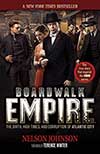
Notable authors include Nelson Johnson, author of Boardwalk Empire, which Martin Scorsese produced for HBO; Leslie Lehr, author of A Boob’s Life, which is currently being adapted for an HBO Max TV series by Salma Hayek; and Scott LeRette, author of The Unbreakable Boy, which was published by Thomas Nelson and is now a major motion picture by Lionsgate starring Patricia Heaton, Zachary Levi, and Amy Acker.
The founder of The Bestselling Author, Mark Malatesta, is a former literary agent, literary agency owner, AAR member, and Marketing & Licensing Manager for the gift and book publisher Blue Mountain Arts. He is now an author coach and consultant. Click here to see Mark Malatesta reviews.
About the Author
 The founder of The Bestselling Author, Mark Malatesta, is a former literary agent, literary agency owner, AAR member, and Marketing & Licensing Manager for the gift and book publisher Blue Mountain Arts. Mark is now a highly regarded author coach and consultant, dedicated to helping writers obtain literary agents. Drawing on decades of industry experience, he works with writers across genres, offering personalized coaching to navigate the complexities of the publishing world.
Through The Bestselling Author, Mark provides practical tools, industry insights, and motivational support tailored to each writer’s needs to help them do so. In addition to coaching, Mark shares his expertise through speaking engagements and online resources. His dedication to empowering authors has made him a trusted mentor in the writing community, earning him a reputation as a knowledgeable and approachable guide for writers pursuing their dreams. Click here for Mark Malatesta reviews.








 MARK MALATESTA is a former literary agent turned author coach. Mark now helps authors of all genres (fiction, nonfiction, and children's books) get top literary agents, publishers, and book deals through his company