

The literary agent slush pile is the collection of unsolicited queries and supporting materials writers send to literary agencies. Despite the name, it isn’t necessarily a neglected heap of bad manuscripts. It can also contain an agent’s next client, book deal, bestseller, or long-term author relationship. This article is part of my guide about how to get a literary agent.

Many writers assume unsolicited submissions are rarely reviewed. In reality, more agents and agencies review all compliant submissions than most writers realize—sometimes personally and sometimes with help from trusted assistants, associates, interns, or first readers.
Quick Summary
Unsolicited simply means the agent didn’t invite the submission in advance. It doesn’t mean the manuscript is unwanted, unprofessional, or unlikely to receive consideration.
Most modern literary-agent slush piles are digital. They contain query letters, sample pages, synopses, book proposals, author information, and other materials requested in each agent’s guidelines.
Some agents personally read every query. Others use trusted first readers and review the most promising submissions themselves. “Reviewed,” “personally read,” “responded to,” “requested,” and “read in full” describe different levels of attention.
A rejection doesn’t prove the submission was ignored. It generally means the agent didn’t see enough fit, interest, confidence, or sales potential to continue.
Key Takeaways
- A slush pile contains unsolicited submissions—not necessarily bad ones.
- More agents review their entire query queues than many writers realize.
- Assistants and first readers can become advocates for promising submissions.
- “Reviewed” doesn’t mean every page of the complete book was read.
- Referrals can help, but unsolicited queries regularly lead to representation.
- Agents open to submissions because they want to discover writers worth representing.
Table of Contents
- What Is a Literary Agent Slush Pile?
- Why “Slush Pile” Is a Misleading Term
- Why Reviewing the Slush Pile Was One of My Favorite Parts of Agenting
- Why Literary Agents Need Unsolicited Submissions
- More Submissions Get Reviewed Than Writers Realize
- Who Actually Reviews Literary-Agent Submissions?
- What “Reviewed” Really Means
- What Literary Agents Hope to Find
- How Agents Decide Whether to Keep Reading
- Submission Volume and the Odds of Getting an Agent
- Do Referrals Bypass the Slush Pile?
- What Responses and Rejections Do—and Don’t—Mean
- How to Give Your Submission Its Best Chance
- Common Slush-Pile Myths
- Frequently Asked Questions

1. What Is a Literary Agent Slush Pile?
A literary agent slush pile is the electronic pile of submissions received from writers who haven’t been specifically invited or referred.
In the past, it was a literal pile of envelopes and paper manuscripts. Today, it’s a digital queue containing query letters, sample pages, synopses, nonfiction book proposals, author biographies, platform information, illustration portfolios, graphic-novel samples, and sometimes complete manuscripts.
The exact contents depend on each agent’s submission guidelines. Most agents don’t want writers to send complete manuscripts initially. They request a bit of information and often some sample material to help them decide if they want to see more.
For most literary agencies, the modern slush pile is more accurately a query-and-sample queue.
2. Why “Slush Pile” Is a Misleading Term
The word slush sounds negative, I know. Like a judgment about quality. It can make writers think that unsolicited submissions are automatically considered bad, unimportant, disorganized, or inferior to referred material.
That isn’t what it really means.
The literary agent slush pile can have manuscripts that are unfinished, poorly written, incorrectly targeted, or submitted without following the guidelines. It can also include excellent books by writers who simply haven’t been discovered.
Every successful author was unknown to the publishing industry at some point.
Some literary agencies prefer other terms like submissions inbox, query queue, or open submissions. Those phrases don’t have a negative connotation or imply that the material is worthless before anyone has even looked at it.
3. Why Reviewing the Slush Pile Was One of My Favorite Parts of Agenting
Reviewing unsolicited submissions was one of my favorite parts of being a literary agent.
Every new query was, to me, a possibility. I might discover a promising writer with a unique, well-written, marketable book. Most submissions don’t lead to representation, but that didn’t make reviewing them meaningless. The chance of discovering something great made the process exciting.
Agents don’t open to submissions because they enjoy disappointing writers. They do it because they need authors and books to represent. The next promising project can come from a referral, conference, published article, existing client, or professional contact. But it can also arrive via an unsolicited query from a writer the agent has never heard of.
A literary agent’s slush pile isn’t just a backlog. For many, it’s a way to find new talent.
4. Why Literary Agents Need Unsolicited Submissions
Literary agents find books in a lot of ways. They receive referrals, attend conferences, and follow literary magazines and journalism. They review published books, hear about writers through existing clients, and sometimes contact authors directly. Open submissions are one of the main ways literary agents find new writers. Referrals are not how most authors get representation.
The unsolicited query levels the playing field. It gives writers from different locations, professions, communities, financial circumstances, and backgrounds a way to approach agents based purely on the book and pitch. The system is imperfect and competitive, but publishing is one of the few industries where a newbie who doesn’t know anyone get break out.
5. More Submissions Get Reviewed Than Writers Realize
Writers sometimes picture unsolicited queries in the slush pile disappearing into nowhere. That can happen sometimes, especially when a pitch is sent through the wrong channel, caught in spam filters, or mishandled by an agency. However, many agents and agencies state publicly that every submission following their guidelines will be reviewed.
Some agents personally evaluate every query. Others divide the work with assistants, associates, interns, or dedicated readers. At collaborative agencies, a strong project might also be shared with another agent who appears to be a better fit.
That doesn’t happen often.
There is no accurate percentage I can share regarding how many agents read every query or use first readers. Overstatements like “Agents never read slush” and “Every agent personally reads everything” are inaccurate. The bottom line is that a significant number of agents have systems in place for reviewing unsolicited work because that’s how they find clients.
You don’t need a referral in most cases.
6. Who Actually Reviews Literary-Agent Submissions?
The first person who reviews a submission might be the literary agent, an assistant, a literary associate, an intern, a dedicated reader, or another agent at the agency. A solo agent might handle the entire queue personally. A larger agency might use one or more initial readers to identify projects that warrant an agent’s attention.
Writers sometimes assume that anyone other than the named agent is an obstacle. In a well-run agency, the opposite can be true. The first reader is usually trusted because the agent believes that person understands their taste, list, and standards. That reader might also have more time to consider your work.
7. What “Reviewed” Really Means
Received simply means the material entered the agency’s system. Reviewed means someone evaluated the submitted materials enough to decide whether to keep looking. Personally read means the named agent—not only an assistant or reader—evaluated the submission.
Requested means the agency asked for more pages, a proposal, or the complete manuscript. Read in full means someone at the literary agency read the entire requested manuscript or proposal.
An agency can review every query without reading every complete manuscript. That’s the reason the query system exists: the query, positioning, credentials, and sample material help agents decide when to invest more time.
A fair review might take several minutes or much longer. It doesn’t require an agent to read material the writer wasn’t asked to submit.
8. What Literary Agents Hope to Find
Agents can be tired, busy, behind, distracted, or uncertain about what they want on a particular day. They’re still generally hoping the next promising query appears.
They might be looking for a new voice, a fresh version of a popular concept, a memorable or unforgettable protagonist, a strong premise, expertise connected to a timely nonfiction idea, a book for an underserved readership, or an author with long-term career potential.
They might also find something surprising they didn’t know they wanted until they saw it. That happens more often than you might think. Literary agents are often looking for something specific, and they often list those things in their guidelines. But, often, literary agents are also open to something to wow them that they might never have imagined.
Agents don’t read queries just to eliminate writers. Elimination is a natural part of the process of managing the volume, but finding something good is always the goal.
Agents are looking for a submission that gives them a compelling reason to continue.
9. How Agents Decide Whether to Keep Reading
An unsolicited submission usually faces several connected decisions.
First, the agent determines whether they can consider it. Does the category fit? Is the agent open? Does the book meet basic expectations? Did the writer follow the agent’s guidelines?
Next, the agent decides whether they want to read more. The premise, voice, positioning, sample pages, author qualifications, and personal interest can all factor in.
If the literary agent requests and likes additional material, the questions change: Does the agent love the book enough to represent it? Can it be improved when needed? Is there a market? Which publishers might want it? Does the agent have room on their list for that type of book and author? Does the author seem like they’d be reasonable to work with?
Agents notice different elements first. Some begin with the pitch, while others start with the pages, category, word count, comparable titles, or author platform.
The complete submission package should work together. An exciting query followed by slow or confusing pages creates disappointment. Excellent pages can also be overlooked when the query misclassifies or poorly explains the book.
10. Submission Volume and the Odds of Getting an Agent
Literary agents can receive hundreds or thousands of queries while taking on a comparatively small number of new clients. That imbalance explains why agents use submission forms, sample-page limits, assistants, form rejections, temporary closures, and no-response policies. That’s also why response times can be so long.
See the Odds of Getting a Literary Agent. That article explains how I arrived at the often-repeated estimate that the odds can be approximately one in 6,000 when a writer is pursuing the most competitive agents.
The number shouldn’t be treated as one fixed acceptance rate for every author or agent. The odds vary according to the agent, genre, manuscript, pitch, platform, competition, targeting, and number of appropriate agents available.
A well-prepared writer with a strong project and strategic agent list isn’t entering a random drawing. Writers can improve their manuscript, pitch, positioning, research, platform, timing, and submission strategy. And, in the process, they can improve their odds.
The competition is real, but the process isn’t just luck or chance.
11. Do Referrals Bypass the Slush Pile?
A referral can attract attention, establish credibility, or result in a direct invitation to submit. It doesn’t guarantee representation. At all. The agent still needs to like the book, believe in the author, and see a realistic path to publication. A referral is literally going to be read no differently than a pitch in the slush pile.
Many writers assume authors who secure representation usually know someone. In my experience, that belief is greatly exaggerated. The many authors I’ve helped get representation generally did so by creating strong submission materials and approaching appropriate agents—not through referrals.
An unsolicited query can be enough.
12. What Responses and Rejections Do—and Don’t—Mean
A fast rejection doesn’t automatically mean the query was ignored. An experienced agent might quickly recognize that the category is wrong, the word count is unsuitable, the premise doesn’t fit the list, the agency already represents something similar, or the market isn’t one they want to pursue.
A long wait doesn’t necessarily mean serious consideration either. The agent might be behind, reviewing categories in batches, prioritizing client work, or reading submissions out of order. Silence also doesn’t prove the submission was unread. Some agents review every query but respond only when interested. Other submissions might remain unread, become lost or filtered, or still be within the agency’s stated response period.
Try not to read into response times.
A rejection can mean the agent doesn’t represent the category, know which editors would acquire the book, believe the market is favorable, have room for something similar, or connect strongly enough with the manuscript. The pages might need work, the nonfiction platform might be insufficient, or the query might not position the book effectively.
Those situations call for different responses. A targeting problem requires a better agent list. A positioning problem might require a new query. Weak pages might require revision. Taste, workload, and list overlap generally mean continuing elsewhere. One rejection provides little reliable information. Patterns across a meaningful number of suitable submissions can be more useful.
For additional guidance, see How to Interpret and React to Literary Agent Rejections.
13. How to Give Your Submission Its Best Chance
Research agents carefully and query those who genuinely represent the category, age range, and market. Follow each agent’s guidelines and provide the requested materials in the requested format.
Your query should make the title, category, word count, audience, premise, central conflict, stakes, and distinguishing qualities easy to understand. For nonfiction, it’s more important that the query also establish the author’s authority and platform.
The sample pages then need to deliver the experience promised by the query.
Avoid preventable problems such as excessive personalization, inflated credentials, unsupported bestseller predictions, distracting formatting, contradictory information, or querying agents who don’t represent your genre.
Your goal shouldn’t be to avoid or escape the slush pile. It should be to make the right agent grateful they looked there.
14. Common Slush-Pile Myths
“No Literary Agents Read Their Own Queries”
Many agents do. Others use trusted readers or assistants, and some combine both approaches.
“If an Assistant Reads It, the Agent Will Never See It”
A first reader’s job is often to identify and recommend promising submissions.
“No Response Means No One Read It”
Some agents review every query but respond only when interested.
“A Referral Is the Only Way to Be Taken Seriously”
Referrals can help, but unsolicited queries regularly lead to requests and representation.
“Agents Hate Their Slush Piles”
Some dislike the volume or terminology. Many still enjoy discovering promising writers.
“The Slush Pile Contains Only Bad Writing”
It contains work at every level, including publishable material.
“A Fast Rejection Means the Query Wasn’t Read”
Experienced agents can make some fit decisions quickly.
“A Long Wait Means the Agent Is Seriously Considering It”
The delay might have nothing to do with the quality or status of the submission.
“Agents Choose the Best Book in the Entire Pile”
Each agent chooses books fitting their taste, list, skills, contacts, workload, and confidence in the market.
“A Great Manuscript Doesn’t Need a Strong Query”
The query helps the agent recognize why the manuscript deserves more time.
“Every Rejection Means Something Is Wrong With the Book”
Taste, timing, list overlap, workload, and market confidence can all lead to rejection.
“Agents Are Trying to Keep Writers Out”
Agents need authors and books. They’re selective because representation takes a lot of time, risk, editorial work (often), and long-term advocacy.
Get Help Rising From the Literary Agent Slush Pile
Getting noticed in the literary agent slush pile isn’t easy, but it’s possible. And there’s a lot you can do to increase your odds of getting a literary agent.
I can help you determine how agents are likely to perceive your project, improve your query letter and other materials. I can also help you see how to prioritize the most appropriate agents for your project. And I can help you understand how to respond strategically to requests, rejections, and feedback.
As a former literary agent, former Marketing & Licensing Manager for the book division of Blue Mountain Arts, and author coach and consultant who has helped 450+ writers get offers from literary agents and/or traditional publishers, I can help you give your book the best chance.
Explore 1-on-1 author coaching and consulting.
Related Articles About Literary Agent Submissions
FAQ: Literary Agent Slush Pile—What Most Writers Don’t Realize
What is a literary agent slush pile?
It’s the collection of unsolicited queries and supporting materials writers send to literary agencies.
Why is it called a slush pile?
The phrase historically referred to accumulated unsolicited manuscripts. Most literary-agent slush piles are now digital.
Does “slush” mean the writing is bad?
No. It describes how the work arrived, not its quality.
Do literary agents really read unsolicited submissions?
Yes. Many agents personally review queries, while other agencies use trusted assistants, associates, interns, or first readers.
Do all agents personally read every query?
No. Policies and agency structures vary. However, more agents ensure every compliant query is reviewed than many writers assume.
What does it mean when an agency says every submission is reviewed?
It generally means someone evaluates the materials requested under the agency’s guidelines. It doesn’t mean every page of every book is read.
Is it bad if an assistant reads my query?
No. A trusted assistant or reader can recognize promise and recommend the submission to the agent.
Do agents read complete manuscripts from the slush pile?
Usually not initially. Most request a query and limited sample, then ask for more when interested.
Do agents enjoy reading queries?
Some enjoy it more than others, but many appreciate the possibility of discovering a promising new writer.
Can an unsolicited query lead to representation?
Yes. Many agent-author relationships begin through ordinary unsolicited queries.
Is a referral better than a cold query?
It can attract attention or establish credibility, but it doesn’t guarantee interest or representation.
Does a quick rejection mean the agent didn’t read my query?
No. The agent might have recognized a mismatch or concern quickly.
Does no response mean my query wasn’t reviewed?
Not necessarily. Some agents review all submissions but respond only when interested.
Does a long wait mean the agent is seriously considering my query?
Not necessarily. The agent might be behind, working through a different category, or prioritizing client responsibilities.
Why don’t agents provide feedback?
Providing thoughtful feedback on hundreds or thousands of submissions would take time away from current clients and additional query review.
What makes a query stand out?
Clear positioning, a compelling premise, strong writing, suitable targeting, professional presentation, and pages that deliver on the pitch.
Can a strong book still be rejected?
Yes. Fit, taste, timing, list overlap, workload, positioning, platform, and market confidence can all affect the decision.
Is the slush pile still worth trying?
Yes. For writers without invitations or publishing connections, querying remains one of the primary routes to literary representation.
About
This article, “Literary Agent Slush Pile—What Most Writers Don’t Realize,” was written by a former literary agent turned author coach. Mark Malatesta is the creator of The Directory of Book Agents, host of Ask a Publishing Agent, and founder of Literary Agent Undercover and The Bestselling Author.
Mark has helped hundreds of authors get offers from literary agents and/or traditional publishers. Writers of all Book Genres have used our Book Agent Advice coaching/consulting to get Top Literary Agents at the Best Literary Agencies on our List of Literary Agents.
The Bestselling Author, LLC
 Established in 2011, The Bestselling Author has helped 400+ authors get literary agents and/or traditional publishers. Writers who’ve worked with Literary Agent Undercover, a division of The Bestselling Author, have gotten six-figure book deals; been on the New York Times bestseller list; had their books adapted for TV, stage, and feature film; had their work licensed in 40+ countries; and sold many millions of books.
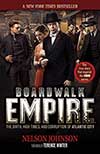
Notable authors include Nelson Johnson, author of Boardwalk Empire, which Martin Scorsese produced for HBO; Leslie Lehr, author of A Boob’s Life, which is currently being adapted for an HBO Max TV series by Salma Hayek; and Scott LeRette, author of The Unbreakable Boy, which was published by Thomas Nelson and is now a major motion picture by Lionsgate starring Patricia Heaton, Zachary Levi, and Amy Acker.
The founder of The Bestselling Author, Mark Malatesta, is a former literary agent, literary agency owner, AAR member, and Marketing & Licensing Manager for the gift and book publisher Blue Mountain Arts. He is now an author coach and consultant. Click here to see Mark Malatesta reviews.
About the Author
 The founder of The Bestselling Author, Mark Malatesta, is a former literary agent, literary agency owner, AAR member, and Marketing & Licensing Manager for the gift and book publisher Blue Mountain Arts. Mark is now a highly regarded author coach and consultant, dedicated to helping writers obtain literary agents. Drawing on decades of industry experience, he works with writers across genres, offering personalized coaching to navigate the complexities of the publishing world.
Through The Bestselling Author, Mark provides practical tools, industry insights, and motivational support tailored to each writer’s needs to help them do so. In addition to coaching, Mark shares his expertise through speaking engagements and online resources. His dedication to empowering authors has made him a trusted mentor in the writing community, earning him a reputation as a knowledgeable and approachable guide for writers pursuing their dreams. Click here for Mark Malatesta reviews.








 MARK MALATESTA is a former literary agent turned author coach. Mark now helps authors of all genres (fiction, nonfiction, and children's books) get top literary agents, publishers, and book deals through his company