


Most articles about how to publish a book stop at listing the pros and cons of each publishing option—traditional, small press, hybrid/vanity, and self-publishing. This one goes further. For each path, it spells out not only what it is and what it’s good for, but exactly what types of authors, books, and real-life situations it tends to fit best. That “best match” part is where most writers get stuck, because authors aren’t choosing between four equally good options—they’re choosing between four options that work well only under specific conditions.
Shortcut for impatient readers: Read the Key Takeaways first, then skim the “Best Match in a Nutshell” at the end of each path. Come back for the details only where you need them.
The publishing choice an author makes affects everything that happens next: timeline, distribution, creative control, marketing expectations, and the kind of career (or legacy) being built. It’s also often a progression. Many writers start with their best-fit first choice, then move strategically if gatekeepers say no or the timeline doesn’t work. That matters because access to certain kinds of publishing is controlled by literary agents and acquisition editors, which means Plan B is sometimes about access—not quality.
One nuance that helps many authors: once the landscape is truly understood, self-publishing often becomes Plan B or C because agented traditional publishing can offer distribution and credibility advantages that are hard to replicate. But self-publishing can also be a smart Plan A for authors with strong marketing ability, platform, genre fit, business goals, or urgency. The goal here isn’t to rank paths as “good” or “bad.” It’s to help authors choose the best match for their book right now.
This article is part of our Guide to Getting a Literary Agent. It was written by a former literary agent with 30 years of experience in the industry, not just as an agent but as the former Marketing & Licensing Manager of a well-known book publisher, and as an author coach and consultant who has helped 400+ writers get literary agents and/or traditional publishers since 2011.
Quick Summary
There are four main ways to publish a book: agented traditional publishing, unagented traditional publishing (small presses, university presses, some legitimate digital-first publishers), assisted publishing (hybrid and vanity presses), and self-publishing (indie publishing). Each path differs in timeline, distribution, creative control, quality control, marketing expectations, and contract terms. Most authors should start with the path that best matches their goals and book—often traditional publishing—then move strategically to other options if access, timing, or fit changes. The most valuable question isn’t “Which path is best?” but “Which path is best for me and this book, right now?”
Key Takeaways
- There are four main ways to publish a book: agented traditional publishing, unagented traditional publishing, assisted publishing (hybrid/vanity), and self-publishing.
- The best publishing path depends on timeline, distribution goals, creative control, quality control, marketing expectations, and career strategy fit.
- For many writers, agented traditional publishing is the strongest Plan A if broad print distribution and traditional credibility are top goals.
- Unagented traditional publishing can be ideal for niche, literary, scholarly, regional, and mission-driven books—especially when there’s a strong press match.
- Assisted publishing can be viable for some authors, but it’s also where authors can be most easily oversold, so it requires careful evaluation.
- Self-publishing is often Plan B for many authors, but it can be Plan A for authors with marketing strength, platform, genre fit, business goals, or urgency.
- The “best” path is the one that can be executed well, in a way that gets the book read and supports the life the author wants.
Table of Contents
- The 4 Main Ways to Publish a Book (Definitions)
- How to Choose the Best Publishing Path (What to Compare)
- Agented Traditional Publishing (Pros/Cons + Best Match)
- Unagented Traditional Publishing (Pros/Cons + Best Match)
- Assisted Publishing: Hybrid Publishing vs Vanity Press (Pros/Cons + Best Match)
- Self-Publishing / Indie Publishing (Pros/Cons + Best Match)
- The Progression Map: Plan A, B, and C
- FAQ: How to Publish a Book

The 4 Main Ways to Publish a Book (In Plain English)
Before comparing pros and cons, let’s identify the options.
1) Agented traditional publishing is major trade publishers (and major independents) where the realistic path to a deal typically runs through a literary agent.
2) Unagented traditional publishing is legitimate publishers that accept submissions directly from authors. This includes a very small number of large publishers, and many quality small presses, independent presses, university presses, as well as some legitimate digital-first publishers.
3) Assisted publishing is the umbrella for hybrid publishers and vanity or pay-to-publish packages. Terminology isn’t regulated here, so the details matter.
4) Self-publishing (indie publishing) is where the author is the publisher. The author controls the timeline and the decisions, and either learns the process or hires professionals to help.
How to Choose the Best Publishing Path (What to Compare)
Rather than framing this as a debate about who pays or who controls rights, it’s more useful to compare publishing paths the way authors experience them in real life.
The publishing timeline matters because it determines how fast a book can get to market and whether it will still be relevant when it arrives. Distribution matters because “available online” is not the same thing as “discoverable.” Creative control matters because it affects everything from title and cover to edits and pricing. Quality control matters because readers can feel when a book wasn’t professionally produced. Marketing expectations matter because most authors are surprised by how much they’re still expected to do. Financial and contract terms matter because publishing is a relationship with long-term consequences.
Reality check: The “best” publishing path is rarely the most glamorous one. It’s the one that matches the book’s audience, the author’s goals, and what the author can realistically execute.
As you read the sections below, keep coming back to these questions: How quickly does the book need to be out? Where does it realistically need to be sold? How much control is needed to be happy? How much marketing is realistic (or can be outsourced)? And what does “success” mean for this book: credibility, reach, income, impact, legacy, or some blend?
1) Agented Traditional Publishing (Major Trade Publishers and Major Independents)
What it typically looks like
In agented traditional publishing, most authors begin by querying literary agents. If an agent signs the author, the agent helps revise and position the manuscript, then submits it to acquisition editors at publishers who might be a fit. If a publisher makes an offer and the author accepts, the book enters a long production runway that includes multiple rounds of editing, cover design, interior design, marketing coordination, and a release date that’s usually many months—sometimes more than a year—after the deal.
Why authors want it
The biggest advantage here is distribution power and institutional access. If the goal is brick-and-mortar bookstores, library systems, trade review channels, and the credibility that comes with established imprints, agented traditional publishing is still the lane most likely to provide those opportunities. It’s much harder for a book to become a bestseller, great seller, or even very good seller without the distribution, promotion ability, and promotion dollars that come with a bigger publsher behind you. This option also comes with a professional machine—editors, designers, production, sales—plus an ecosystem for subsidiary rights like audio and foreign.
The tradeoffs
The timeline is longer, the path is competitive, and nothing is guaranteed. Publishers also typically control cover design and may influence title, content edits, positioning, and pricing. Marketing is also more collaborative than many first-time authors expect. Traditional publishing can open doors, but it rarely means the publisher does everything while the author does nothing.
Best match for agented traditional publishing
If the #1 priority is broad print distribution and industry credibility, this is usually the strongest Plan A, provided the runway and the gatekeeping are tolerable. This path tends to fit authors who want bookstores and libraries to be realistic, who care about trade reviews and certain awards pathways, and who want a career built inside the traditional ecosystem rather than adjacent to it.
It’s also a strong match when a book is easy for the market to understand quickly. That doesn’t mean the book must be “safe.” It means an agent and editor can look at it and say, “I know where this belongs, who it’s for, and how it will be sold.” Clear category fit and clear audience fit matter here more than many writers want to admit, because acquisition is a business decision as much as it’s an artistic one.
This path usually fits authors who can emotionally handle rejection without internalizing it as a verdict. Traditional publishing is selective and subjective by design. Authors who can play the long game, revise strategically without losing voice, and keep moving even when the process is slow are often well suited to this route.
It’s often not a great match when speed is your most important priority, when the book has a time-sensitive purpose, or when complete control is required over title, cover, and editorial direction. It can also be a mismatch if the book is extremely difficult to categorize or aimed at a very narrow audience that big trade publishers struggle to scale. And it’s a mismatch when the path is chosen mainly because it’s assumed “someone else will do all the marketing.”
Best Match in a Nutshell: This is usually the best first path if the goal is bookstore/library reach and traditional credibility, the book fits a clear commercial category, and a long runway and gatekeeping are acceptable. It works best for authors open to strategic revision who want a professional team and sales infrastructure behind the book.
If you want to give yourself the best chance of getting a literary agent, learn more about my author coaching and consulting here. As a former literary agent turned author coach and consultant, I’ve helped 400+ writers get literary agents and/or traditional publishers since 2011.
I’d be honored to help you, too.
2) Unagented Traditional Publishing (Small Press, University Press, Legit Digital-First)
What it typically looks like
Unagented traditional publishing means the publisher accepts submissions directly from authors. This category includes quality small and independent presses, university presses, and some legitimate digital-first publishers. These sub-lanes operate differently, but what they share is that the publisher, not the author, is typically taking on production responsibility and publishing the book as the publisher of record.
Small presses are often mission-driven, taste-driven, or community-driven. University presses tend to serve scholarly, cultural, and specialist audiences. Digital-first publishers vary widely, which means authors should evaluate carefully so they don’t confuse a legitimate publisher with a service company using publishing language.
Why authors choose it
This path can offer a real publisher partnership without requiring the agent bottleneck first. It can also be an excellent fit for books with targeted readerships, niche topics, regional hooks, cultural significance, or scholarly value. In many cases, this path can move faster than agented traditional publishing, though “faster” still rarely means instant.
For many authors, the appeal is also personal. The best small presses can offer deep editorial care, thoughtful design, and a sense of belonging. The book becomes part of a list with identity, not just another product.
The tradeoffs
The biggest reality here is variability. Distribution strength, marketing resources, editorial quality, and reach differ dramatically across presses. “Traditional” does not automatically mean nationwide bookstore presence. It means a publisher partner exists, but the scale depends on the press. Advances may be modest or nonexistent, budgets are often smaller, and authors often need to participate meaningfully in marketing.
Best match for unagented traditional publishing
If the #1 priority is the right press match and niche credibility, unagented traditional publishing can be a stronger fit than big trade publishing. This path is best when the “right audience” matters more than the largest possible audience, and when a press’s identity and community help the book land with the people who will care most.
It’s a particularly good match for books that are literary, regional, cultural, scholarly, experimental, or mission-driven, and for authors who value editorial collaboration and curated positioning. It also fits authors who want legitimacy and professional standards, but don’t want the entire publishing fate to hinge on the tastes of literary agents.
It’s often not the best match when the primary goal is maximum commercial scale quickly, when the publisher is expected to do all marketing, or when a press is chosen simply because it feels easier than querying agents without confirming the press can actually reach the intended readership.
Best Match in a Nutshell: This is often the best fit if the book is niche, literary, regional, scholarly, cultural, or mission-driven—and there’s a press whose identity and readership genuinely match it. It works best for authors who want a real publisher partnership and are realistic about distribution scale and shared marketing responsibilities.
3) Assisted Publishing (Hybrid Publishing vs Vanity Press)
What it typically looks like
Assisted publishing is where authors pay for some or all of the publishing services. Some companies call themselves hybrid publishers, others sell pay-to-publish packages, and the language is often confusing because terminology is not regulated. That means labels can’t be trusted. The substance must be evaluated: selectivity, transparency, contract terms, and track record.
This category contains both reputable providers and predatory companies. So when authors ask, “Is hybrid publishing legitimate?” the honest answer is: sometimes. The only way to know is to look beyond the brand language and examine what the company actually does and how it makes money. If they charge any fees, they’re not a traditional publisher.
Why authors choose it
The main advantage here is speed plus support. For authors who don’t want to manage freelancers or learn every moving part of publishing, assisted publishing can feel like relief. It can also make strategic sense when the book serves a broader plan—especially for entrepreneurs, experts, coaches, consultants, or speakers using a book for credibility, though traditional publishers provide far more credibility.
It can also be a fit for legacy goals. Some authors simply don’t want to wait trying to break into traditional publishing. They want the work in the world while they’re here to share it with the people who matter.
The tradeoffs
This is the category where authors are most likely to overspend and be disappointed. Many companies profit primarily from selling packages to authors rather than selling books to readers, which changes incentives. “Distribution” claims can be vague. Contracts can be risky. Upsells can be aggressive. Quality varies widely. Lastly, these types of pubilshers often control the price your book sells for, and they price books so high that no one will buy them.
Assisted publishing can be valuable when professional services are bought with clarity. It becomes dangerous when hope is bought dressed up as marketing promises. If you’re going to go this route, don’t rush. Choose a company that has a lot of testimonials, with books you can see online that have lots of reviews, with book covers that look like they were designed by traditional publishers.
Best match for assisted publishing
If the #1 priority is speed with support and there is budget, assisted publishing can be viable—but only when it’s chosen with business-level clarity about ROI and terms. The authors who do best here are usually not relying on the publisher to “make the book successful.” They are using the book within a larger ecosystem or a clearly defined purpose.
This path can be a smart match for authors who already have an audience or platform, authors whose books support a business model, and authors who want a predictable timeline and professional packaging without becoming project managers. It can also be a match for authors who care most about legacy and personal fulfillment and are willing to pay for a professional result.
It’s usually not the best match when a company is expected to create demand that doesn’t already exist, especially through vague promises of bookstore placement or marketing muscle. It’s also often not ideal when budget is tight and the same quality could be achieved by hiring freelancers and self-publishing with more control.
Best Match in a Nutshell: This can be a smart fit if speed and professional support matter most, there’s budget, and the choice is made with business-level clarity about ROI and terms. It works best for authors with a platform, a business ecosystem, or a legacy goal—not authors relying on vague promises to “make the book sell.”
4) Self-Publishing (Indie Publishing)
What it typically looks like
Self-publishing means the author is the publisher. The author controls the timeline, cover, title, pricing, formats, and strategy, and either learns the process or hires professionals to handle editing, design, formatting, distribution setup, and marketing support. Some authors focus on retailer-first strategies. Others build direct-to-reader models through email lists, communities, live events, crowdfunding, subscriptions, or storefronts.
Why authors choose it
Speed and control are the obvious advantages. Permission isn’t required. A book can be published faster, adapted faster, and used to build a backlist that becomes an engine over time. For authors who enjoy marketing or already have an audience, self-publishing can be a strategic and profitable Plan A.
The tradeoffs
The responsibilities shift to the author. Quality control, project management, and financial risk are all on the author. Indie success is rarely accidental. It tends to be built through professional quality, strong positioning, visibility strategy, and sustained effort, often across multiple books.
Best match for self-publishing
If the #1 priority is speed with control and ownership, self-publishing may be the best first choice—especially when there’s willingness to invest in professional quality and take responsibility for discoverability. Self-publishing becomes an especially strong Plan A when there’s strong marketing skill, a platform, a category where online discovery is common, or a series/backlist strategy that rewards consistent output.
It’s usually not the best match for authors who can’t or won’t invest in editing and design, or who hate marketing and have no budget to outsource it. It can also be a mismatch for authors who need institutional validation above all else, because some awards and review channels remain harder to access as an indie author.
Indie publishing in one sentence: Self-publishing can be fast and empowering, but it rewards authors who treat quality and discoverability as non-negotiable parts of the job.
Best Match in a Nutshell: This is often the best fit if speed, control, and ownership matter most—and there’s willingness to invest in professional quality and drive discoverability through marketing, platform, or consistent output. It’s especially strong for authors building series/backlist momentum or publishing in categories where readers discover books online.
Your Unique Progression Map: Plan A, B, and C (Without Shame or Doubt)
For many writers, a realistic progression looks like this: pursue agented traditional publishing if it matches the goals and the book, because it offers unique distribution and credibility advantages. If that doesn’t happen—or if the book is better served by a specific niche audience—explore strong small presses or other unagented traditional options. If control, speed, or access matters most, move into self-publishing with professional support where needed.
Assisted publishing often belongs later in the progression for most writers, not because it’s inherently wrong, but because it’s the lane where authors can most easily be sold an expensive dream. The exceptions are authors for whom assisted publishing is clearly strategic from the beginning—usually because the book supports a business ecosystem, urgency exists, and the offering can be evaluated with clear eyes.
Get Help with Preparing to Pitch Your Book—or Deciding the Best Way to Publish
Publishing isn’t just about getting a book produced. It’s about getting a book read, in a way that supports the career—or legacy—the author actually wants. When the options are cleasr, decisions stop being driven by myths and start being driven by fit.
If you’re not sure which publishing route fits best, it might mean stepping back, consulting with someone, and choosing a path based on your unique book, goals, timeline, and marketing ability—so you don’t waste months pursuing an option that isn’t the best fit for you.
As a former literary agent who has helped 400+ writers get literary agents and/or traditional publishers since 2011, I can make sure you give your book the best chance—whether you’re pursuing agents and traditional publishers or deciding on the smartest alternative—learn more about my author coaching and consulting here.
FAQ: How to Publish a Book
What is the best way to publish a book?
The best way to publish a book depends on the author’s goals. If the strongest priorities are bookstore/library distribution and traditional credibility, agented traditional publishing is often the best first route. If speed and control matter most, self-publishing may be best. If the book is niche or scholarly, a strong small press or university press may be ideal.
Do I need a literary agent to publish a book?
A literary agent is usually needed to access many major trade publishers, especially in commercial fiction and many nonfiction categories. However, many legitimate small presses, university presses, and some digital-first publishers accept unagented submissions.
What’s the difference between hybrid publishing and a vanity press?
Both involve the author paying for services, but the difference is transparency and incentives. A reputable hybrid publisher is typically selective, clear about costs and terms, and structured to sell books to readers. A vanity press primarily profits from selling packages to authors and often relies on upsells and vague marketing promises.
Is self-publishing worth it?
Self-publishing is worth it when there’s willingness to invest in professional quality, strong positioning, and a visibility plan. It can be especially worthwhile for authors with marketing skill, an existing platform, or a genre strategy that thrives in indie ecosystems.
How long does it take to publish a book?
Traditional publishing typically takes the longest, often years from query to publication. Small presses can sometimes move faster, though timelines vary. Assisted publishing and self-publishing can be much faster, often months, depending on how quickly the book is edited, designed, and prepared for launch.
What should I do first if I want to publish a book?
Start by clarifying goals: speed, distribution, credibility, creative control, and how much marketing/business work is realistic. Then choose the path that best fits those realities.
Next Steps
This article about “How to Publish a Book” was written by a former literary agent turned author coach. Mark Malatesta is the creator of The Directory of Book Agents, host of Ask a Publishing Agent, and founder of Literary Agent Undercover and The Bestselling Author.
Mark has helped hundreds of authors get offers from literary agents and/or traditional publishers. Writers of all Book Genres have used our Book Agent Advice coaching/consulting to get Top Literary Agents at the Best Literary Agencies on our List of Literary Agents.
The Bestselling Author, LLC
 Established in 2011, The Bestselling Author has helped 400+ authors get literary agents and/or traditional publishers. Writers who’ve worked with Literary Agent Undercover, a division of The Bestselling Author, have gotten six-figure book deals; been on the New York Times bestseller list; had their books adapted for TV, stage, and feature film; had their work licensed in 40+ countries; and sold many millions of books.
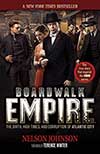
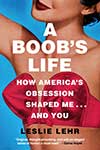
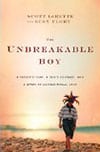
Notable authors include Nelson Johnson, author of Boardwalk Empire, which Martin Scorsese produced for HBO; Leslie Lehr, author of A Boob’s Life, which is currently being adapted for an HBO Max TV series by Salma Hayek; and Scott LeRette, author of The Unbreakable Boy, which was published by Thomas Nelson and is now a major motion picture by Lionsgate starring Patricia Heaton, Zachary Levi, and Amy Acker.
The founder of The Bestselling Author, Mark Malatesta, is a former literary agent, literary agency owner, AAR member, and Marketing & Licensing Manager for the gift and book publisher Blue Mountain Arts. He is now an author coach and consultant. Click here to see Mark Malatesta reviews.
About the Author
 The founder of The Bestselling Author, Mark Malatesta, is a former literary agent, literary agency owner, AAR member, and Marketing & Licensing Manager for the gift and book publisher Blue Mountain Arts. Mark is now a highly regarded author coach and consultant, dedicated to helping writers obtain literary agents. Drawing on decades of industry experience, he works with writers across genres, offering personalized coaching to navigate the complexities of the publishing world.
Through The Bestselling Author, Mark provides practical tools, industry insights, and motivational support tailored to each writer’s needs to help them do so. In addition to coaching, Mark shares his expertise through speaking engagements and online resources. His dedication to empowering authors has made him a trusted mentor in the writing community, earning him a reputation as a knowledgeable and approachable guide for writers pursuing their dreams. Click here for Mark Malatesta reviews.





 MARK MALATESTA is a former literary agent turned author coach. Mark now helps authors of all genres (fiction, nonfiction, and children's books) get top literary agents, publishers, and book deals through his company