

Book word count ranges for literary agents and publishers have changed over time—and some are changing again. Word counts evolve as genres expand, new formats emerge, publishers experiment, and readers respond differently to books of various lengths. This article is part of my guide about how to get a literary agent.
For example, long fiction is still popular, but publishers recently interviewed by The Bookseller described growing enthusiasm for “slim” fiction or shorter work. Spotify has separately created an audiobook publishing program for short-form works, including stories of approximately 10,000–20,000 words.
That doesn’t mean that standard full-length books are about to become dramatically shorter. It does mean that publishers and platforms are becoming more open to varied lengths and formats. I expect that trend to continue for full-length adult fiction and nonfiction books during the coming years—especially when it comes to commercial fiction, memoir, and prescriptive nonfiction.
Long books aren’t going away, though. Fantasy, romantasy, historical fiction, biography, and research-intensive narrative nonfiction often need more words. Established authors will continue receiving more flexibility than debut writers regarding how many words are required. But, in time, more concise books by debut authors in particular will become increasingly attractive because they are easier to edit, price, produce, adapt to audio, position, sample, and finish.
Word count standards change because publishing changes. Their purpose remains consistent: helping agents and publishers judge whether a book can satisfy readers and succeed in its market.
Quick Summary
Book word count ranges reflect market expectations rather than universal artistic rules.
Literary agents and publishers use length to evaluate whether a manuscript fits its category, appears structurally controlled, will satisfy readers, and can be produced and sold at an appropriate price.
Some agents, publishers, imprints, contests, and series have flexible expectations. Others impose firm requirements.
Current ranges remain broadly similar to those of recent years, but there are early signs of greater openness to concise adult books. I expect manuscripts near the lower end of accepted ranges to encounter less resistance in many categories, although shorter books still need enough story, development, evidence, or application to fulfill their promise.
Key Takeaways
- Book word count ranges change as publishing formats, economics, genres, and reader preferences evolve.
- Expectations are flexible market norms; requirements are explicit limits.
- Word count helps agents assess genre fit, pacing, structure, production cost, pricing, and risk.
- Debut authors usually face tighter expectations than established writers.
- Many adult novels remain easiest to position between approximately 70,000 and 100,000 words.
- Fantasy, science fiction, historical fiction, and some narrative nonfiction categories often support greater length.
- Commercial fiction, memoir, and prescriptive nonfiction might face growing pressure to become more concise.
- An unusually long manuscript might suggest repetition, weak structure, or insufficient revision.
- An unusually short manuscript might suggest underdevelopment or incorrect categorization.
- Children’s categories have especially specific length expectations.
- Firm publisher or imprint requirements always override general guidance.
- Cutting words works best when authors address scenes and structure—not just sentences.
- Expanding a manuscript requires more story, evidence, or reader value—not filler.
Table of Contents
- How Book Word Count Ranges Have Changed
- Expectations and Requirements Aren’t the Same
- Why Word Count Ranges and Requirements Exist
- Why Many Adult Books Might Become Somewhat Shorter
- Why Debut Authors Face Tighter Expectations
- How to Use the Current Ranges
- Adult Fiction Word Count Ranges
- Adult Nonfiction Word Count Ranges
- Children’s Book Word Count Ranges
- When a Book Can Break the Guidelines
- Word Count Is Often a Symptom
- What to Do When Your Book Is Too Long
- What to Do When Your Book Is Too Short
- How to Include Word Count in a Query Letter
- A Practical Word Count Decision Guide
- Frequently Asked Questions

1. How Book Word Count Ranges Have Changed
Word count expectations aren’t ironclad rules or laws. They’re publishing norms or conventions created and adjusted by people responding to changing markets.
Several things can impact or alter these word count expectations and requirements:
- New genres and subgenres
- Successful books that challenge earlier ways of doing things
- Changes in printing and distribution
- Ebooks and digital-first publishing
- Audiobook growth
- Retail pricing
- Reader behavior
- Library and school requirements
- Publisher experimentation
- Competition from other entertainment
- Shifts in how books are marketed and discovered
Some book categories have expanded. Fantasy, romantasy, and other speculative books often receive more space than standard commercial fiction because authors need to develop unfamiliar worlds, systems, conflicts, and relationships.
Other categories have done the opposite and become more compressed. Contemporary picture books are generally much shorter than many unpublished writers expect. Current SCBWI critique guidelines allow up to 800 words for fiction picture books and 1,200 for nonfiction, while many industry professionals recommend aiming closer to 300–600 words for fiction.
See the SCBWI critique submission guidelines.
Even within one category, acceptable lengths can change.
A literary agent writing in 2006 described 50,000- and 60,000-word general adult novels as unexpectedly short. In 2020, the same agency still identified novels below 70,000 words as a recurring concern. However, more recent agent profiles and commentary show more openness to manuscripts beginning around 65,000 words, particularly in contemporary commercial categories.
That doesn’t mean 60,000 words has suddenly become ideal for every adult novel. It means authors should rely on current, category-specific guidance instead of treating advice from ten or twenty years ago as advice that’s still good now.
The ranges are simply historical (impermanent) snapshots of what publishers believe they can acquire, produce, position, and sell.
2. Expectations and Requirements Aren’t the Same
Authors often use the words interchangeably, but the distinction is important.
Word Count Expectations
Expectations are flexible market norms. An agent might generally prefer commercial novels between 70,000 and 100,000 words while remaining open to an exceptional manuscript at 66,000 or 108,000. The farther a manuscript moves from the expected range, the more concern it can create—but the number doesn’t automatically make submission impossible.
Word Count Requirements
Requirements are explicit limits established by:
- Publishers
- Imprints
- Series
- Contests
- Mentorship programs
- Submission opportunities
- Individual agents
A requirement might specify:
- A minimum
- A maximum
- One exact target
- Different lengths for different lines
Harlequin provides a clear example. Its current submission opportunities include a minimum of 75,000 words for Afterglow by Harlequin, approximately 70,000–75,000 words for Harlequin Heartwarming, and 55,000 words for Love Inspired Suspense.
Those are publishing specifications—not broad recommendations authors should apply to every romance. See Harlequin’s current submission opportunities.
Firm requirements might exist because a line has standardized:
- Formats
- Prices
- Page counts
- Reader expectations
- Production schedules
- Distribution arrangements
A general range tells you what’s usually marketable. A stated requirement tells you what that specific opportunity will accept.
I recommend that you always follow current submission guidelines when they differ from general industry advice.
3. Why Word Count Ranges and Requirements Exist
Word count expectations aren’t arbitrary obstacles created to make writers’ lives harder. They exist because length affects nearly every part of publishing.
For example…
Reader Expectations
Readers might not know the average word count in their favorite genre, but they develop expectations about the scale and depth of the experience.
For example:
- A thriller should normally provide enough plot, escalation, and suspense to feel substantial.
- A prescriptive nonfiction book should provide enough explanation, proof, and application to justify a full-length book.
- A picture book needs to work within a visual, read-aloud format for young children.
A book can disappoint readers by being too thin as easily as it can annoy and exhaust them by being too long.
Genre and Category Fit
Different book genres make different “promises.”
For example, a 55,000-word category romance might meet an imprint’s requirements perfectly. The same count might make an epic fantasy appear underdeveloped. A 15,000-word chapter book can be appropriate for newly independent readers. It wouldn’t normally be considered a full-length young adult novel.
Word count helps agents determine whether the author understands the intended category.
Pacing and Structure
Length can be a clue to literary agents and publishers.
For example…
An unusually long manuscript might have:
- A slow opening
- Repetition
- Too many subplots
- Excessive backstory
- Unnecessary points of view
- Overextended research or worldbuilding
An unusually short manuscript might have:
- A thin middle
- Weak opposition
- Rushed character development
- Insufficient evidence
- An unearned ending
- Too little reader application
A book’s word count doesn’t prove those problems exist, but it does give literary agents a reason to look for and/or expect them.
Editing and Production Costs
A longer manuscript might need:
- More developmental editing
- More copyediting and proofreading
- More pages
- More paper and ink
- Greater shipping weight
- More storage
- More audiobook recording and production time
Those costs affect decisions about pricing, format, print runs, and profitability.
Retail Positioning and Pricing
All publishers need to decide:
- What the book will cost
- How it compares with competing titles
- Where retailers will place it
- Which readers are likely to buy it
- Whether the physical product feels appropriately substantial
A short book priced like a longer competitor might seem like poor value. A very long debut might need a higher price than the market will justify or support.
Acquisitions Risk
Every unusual feature of a book adds uncertainty.
For example…
A debut author, difficult-to-define genre, unfamiliar premise, limited platform, and unusual word count can combine into a project that feels unnecessarily risky. Literary agents often look for reasons to believe. Word count gives them one fast indication of whether the manuscript appears ready for serious consideration.
Age and Reading Ability
Children’s books must also fit or match the developmental needs of their readers.
For example…
Length interacts with:
- Vocabulary
- Sentence complexity
- Attention
- Reading stamina
- Page design
- Illustration frequency
- Educational level
A manuscript doesn’t become middle grade simply because it’s too long for a chapter book. The voice, protagonist, concerns, complexity, and reading level must also fit. When I’m coaching or consulting authors, I often help them see if there’s a mismatch and how to fix it.
Word count reflects both the experience promised to readers and the business required to deliver it.
4. Why Many Adult Books Might Become Somewhat Shorter
As time passes, literary agents and publishers will become increasingly receptive to adult manuscripts near the lower end of accepted ranges. I don’t expect every range to shrink dramatically. I expect shorter manuscripts to start giving some debut writers a competitive advantage. Several trends support that idea.
Growing Interest in Slim Fiction
Publishers interviewed last year described increased enthusiasm for short stories, novellas, and slim novels. Some reported that readers are now more willing to embrace shorter, more concentrated narratives that once would have been considered harder to market. See The Bookseller’s reporting on the changing attitude toward slim fiction.
More Competition for Reader Attention
More than four million books with ISBNs were published in the United States last year, including more than 642,000 traditionally published titles. That volume makes discoverability increasingly challenging and gives readers more choices than ever. See Publishers Weekly’s report that U.S. book output exceeded four million titles.
A shorter book isn’t automatically easier to discover, but it can be easier for readers to commit to, finish, and recommend when so many alternatives are available.
Audiobook Growth
U.S. audiobook revenue increased 9% last year to $2.43 billion, while publishers reported more than 750,000 active audiobook titles—43% more than the previous year. See the Audio Publishers Association survey data.
Audiobook growth doesn’t necessarily mean short books will start outperforming long books. Many listeners (maybe you as well) love long, immersive works. But length increases production expense and requires more listening commitment. Spotify’s decision to publish short-form audio stories is more proof that platforms are seeing more value in more compact formats. See Spotify’s audiobook publishing program announcement.
Production and Pricing Pressure
Publishers must consider and balance:
- Paper and printing costs
- Shipping
- Retail prices
- Editorial investment
- Consumer resistance to higher prices
- The economics of multiple formats
A concise manuscript reduces some of those pressures.
Free Competition From Other Formats
Prescriptive nonfiction is competing with:
- Podcasts
- Online courses
- Videos
- Newsletters
- Social media
- Free articles
- AI-generated summaries
A nonfiction book that repeats its premise unnecessarily might feel less attractive when readers can access shorter explanations elsewhere. The book still needs enough depth to offer something those formats can’t.
Where the Pressure Might Be Strongest
I expect the greatest shortening of books in the future in:
- General commercial fiction
- Contemporary romance
- Mystery and thriller
- Memoir
- Self-help
- Business
- Leadership
- Other prescriptive nonfiction
Where Longer Books Might Remain Common
Greater length will likely remain popular for:
- Epic fantasy
- Romantasy
- Complex science fiction
- Historical fiction
- Biography
- Major history
- Investigative nonfiction
- Research-intensive science or current affairs
This projection isn’t a rigid rule. In other words, you shouldn’t cut a 92,000-word commercial novel to 75,000 simply because shorter books might gain momentum. You should question whether every one of the 92,000 words needs to be there.
Shorter doesn’t necessarily mean better.
5. Why Debut Authors Face Tighter Expectations
Established authors often receive more flexibility because publishers already have evidence that readers will buy their books. A bestselling fantasy author might be able to publish a 160,000-word novel because:
- The audience already exists.
- Retailers know the name.
- Previous sales help forecast demand.
- The publisher can justify the price.
- Readers trust the author to sustain the story.
A debut writer asking a publisher to take the same risk has no comparable history. Literary agents and publishers might therefore view an outlying debut word count as evidence that:
- The author doesn’t understand the market.
- The manuscript might require extensive editing.
- Production will cost more.
- Retailers might resist the format or price.
- Readers haven’t yet demonstrated interest.
- The author might not know how to revise.
Debut authors can break expectations. But they usually need the concept, voice, pacing, writing, and positioning to make an unusually strong case.
Established authors might be rewarded for breaking expectations. Debut authors often need to demonstrate that they understand them first.
6. How to Use the Current Ranges
The ranges below are practical guidelines for authors seeking literary agents and traditional publishers as of this year. They aren’t guarantees. They also aren’t interchangeable with explicit agent, publisher, or imprint requirements.
Current agent guidance similarly emphasizes that word count should be evaluated by genre and age category, with additional flexibility for speculative fiction and less flexibility for debut manuscripts far outside the norm. See the Manuscript Academy’s current guide to word count by genre.
When evaluating your manuscript, consider:
- Primary genre
- Subgenre
- Intended age group
- Comparable titles
- Story or subject complexity
- Whether the manuscript is illustrated
- Whether you’re a debut or established author
- Whether the book is part of a standardized series
- Current submission guidelines
A few thousand words outside a range usually matters less than a major structural problem. A manuscript at 102,000 words might be easier to position than one at 88,000 if the shorter manuscript feels slow, repetitive, or underdeveloped. The purpose of a range is to identify potential concerns—not replace reading.
7. Adult Fiction Word Count Ranges
Literary, Upmarket, and General Commercial Fiction
Typical querying range: approximately 70,000–100,000 words
For many debut novels, approximately 75,000–95,000 words is good. Manuscripts between approximately 65,000 and 70,000 words might receive more consideration when they feel complete, substantial, and well positioned. Books significantly below 65,000 words will generally be viewed as novellas or underdeveloped. Books significantly above 100,000 words need a clear reason for their length.
Mystery, Thriller, Suspense, and Crime
Typical querying range: approximately 70,000–100,000 words
Many strong submissions fall between approximately 75,000 and 90,000 words. These genres depend on momentum.
Excessive length often suggests:
- Repeated investigative steps
- Too many suspects
- Weak escalation
- Delayed confrontation
- Tension that repeatedly dissipates
Romance
Typical single-title range: approximately 65,000–95,000 words
Contemporary romance often falls between approximately 70,000 and 90,000 words. Historical romance might reach 100,000. Romantasy often falls between approximately 90,000 and 110,000 words because it must support both the romantic arc and speculative worldbuilding. Category romance might have exact publisher requirements, sometimes far shorter than single-title commercial romance.
Science Fiction
Typical querying range: approximately 80,000–120,000 words
Science fiction often needs extra room for:
- Technology
- Political systems
- Speculative ideas
- Unfamiliar settings
- Scientific context
That flexibility, however, doesn’t justify exposition that interrupts the story.
Fantasy
Typical querying range: approximately 80,000–120,000 words
Some epic fantasy can extend beyond 120,000 words, but debut manuscripts above that face greater resistance. “Epic” describes scope and effect. It doesn’t excuse unnecessary material.
Historical Fiction
Typical querying range: approximately 80,000–120,000 words
Historical fiction often needs room for context, setting, culture, and political or social forces. The research should remain subordinate to the story.
Horror
Typical querying range: approximately 65,000–95,000 words
Some horror works effectively at shorter lengths because intensity and atmosphere can benefit from compression. Longer horror should sustain escalation rather than just repeating the same threat.
8. Adult Nonfiction Word Count Ranges
Nonfiction length depends a lot on:
- Subject
- Audience
- Structure
- Author authority
- Research
- Platform
- Reader promise
Prescriptive Nonfiction
This includes many self-help, business, leadership, relationship, health, how-to, and personal-development books.
Typical range: approximately 40,000–90,000 words
Prescriptive books benefit from being:
- Focused
- Structured
- Usable
- Easy to navigate
- Free from repeated lessons
A shorter manuscript can work when the concept is narrow and delivers substantial value.
Narrative Nonfiction
Typical range: approximately 60,000–90,000 words
Narrative nonfiction needs enough space to develop:
- People
- Events
- Setting
- Conflict
- Evidence
- Meaning
Investigative, scientific, historical, or political work might run longer when the subject requires it.
Memoir
Typical querying range: approximately 50,000–90,000 words
Memoirs above approximately 90,000 words generally face more resistance unless the author, hook, structure, or subject is exceptional. Memoirists often include too much because every event feels personally meaningful. Readers need a focused narrative rather than a complete record of the author’s life.
Biography and History
Typical range: approximately 80,000–110,000 words or more
Comprehensive biographies and major historical works can be significantly longer.
Acceptable length depends on:
- Subject importance
- Research
- Source material
- Intended readership
- Author authority
- Publisher
Nonfiction is often sold from a proposal, so the projected word count should reflect the material outlined rather than an arbitrary target.
9. Children’s Book Word Count Ranges
Children’s publishing uses especially distinct categories. The reader’s age, reading ability, visual needs, format, vocabulary, and emotional concerns all affect appropriate length.
Board Books
Often under approximately 100 words
Board books rely heavily on illustrations, concepts, rhythm, and repetition.
Picture Books
Typical fiction range: approximately 300–600 words
Some fiction picture books are as long as 800 words. Nonfiction and books for older picture-book readers might be 1,000–1,200 words when the material justifies it. Current SCBWI critique guidelines allow up to 800 words for fiction and 1,200 for nonfiction, while many contemporary professionals (including me) recommend 300–600 words as a target.
Picture books depend on:
- Page turns
- Read-aloud rhythm
- Visual storytelling
- Space for illustrations
- A complete narrative or emotional arc
Early Readers
Typical range: approximately 500–2,500 words
Early readers use controlled vocabulary, simple syntax, repetition, and frequent illustrations. They aren’t just long picture books or short chapter books.
Chapter Books
Typical range: approximately 4,000–15,000 words
Chapter books usually serve newly independent readers and are often developed as series. Current guidance places many early chapter books between approximately 4,000 and 15,000 words.
Middle Grade
Typical range: approximately 30,000–60,000 words
Contemporary and humorous middle grade might fall toward the lower portion. Fantasy, historical fiction, adventure, and upper middle grade might be 70,000–75,000 words when the material and pacing support it. Current agent guidelines often place middle grade near 40,000–60,000 words and treats manuscripts above approximately 65,000 with greater caution outside speculative categories.
Young Adult
Typical range: approximately 50,000–80,000 words
Contemporary YA often falls between approximately 60,000 and 80,000 words. Fantasy and science fiction are usually 90,000–100,000 words. A debut YA manuscript significantly above 100,000 words creates another obstacle unless the category and execution strongly support the length.
10. When a Book Can Break the Guidelines
Manuscripts outside the typical ranges can also succeed.
Greater flexibility can exist when:
- The concept is highly commercial.
- The voice is exceptional.
- The pacing makes the length feel effortless.
- The structure clearly requires the space.
- The author has an established readership.
- The author has an unusually strong platform.
- The subject demands extensive research.
- The genre routinely supports the length.
- The manuscript is already attracting strong professional interest.
Exceptions shouldn’t be confused with normal odds. A successful author’s 180,000-word novel doesn’t prove that a debut writer faces no disadvantage at the same length. It proves that publishing decisions involve more than one variable.
Exceptions reveal what’s possible, whereas current ranges reveal what’s probable. I tell all my author coaching and consulting clients: “It’s hard to get an agent, so when you know something like word count is a norm, you need to decide if you’re going to conform or decrease your odds by not doing so. You might make it either way, but I like increasing every author’s odds of getting a literary agent.”
11. Word Count Is Often a Symptom
One of the most useful book revisions can start with identifying whether and why a manuscript is too long or short.
Common Causes of Excessive Length
- The central story begins too late.
- Scenes accomplish the same purpose.
- The character repeatedly processes the same emotion.
- Too many points of view dilute the book.
- Subplots don’t change the climax or resolution.
- Exposition interrupts scenes.
- Transitions receive too much space.
- Research overwhelms the reader.
- Nonfiction chapters repeat the same lesson through different anecdotes.
Common Causes of Insufficient Length
- The middle contains too few complications.
- Opposition is weak.
- Choices don’t create meaningful consequences.
- Relationships change too easily.
- Turning points are rushed.
- The climax lacks preparation.
- Nonfiction lacks evidence, examples, objections, or application.
- The manuscript has been assigned to the wrong category.
12. What to Do When Your Book Is Too Long
Don’t begin by deleting random words from every page.
Start with bigger opportunities.
Remove Repetition
Cut repeated:
- Explanations
- Emotional realizations
- Backstory
- Descriptions
- Arguments
- Examples
- Character introductions
Evaluate Every Scene or Chapter
Ask yourself:
- What changes because of this section?
- Does another section already perform the same function?
- Does it affect the climax, conclusion, or reader transformation?
- Can it be combined with stronger material?
- Would the book still work without it?
Combine Characters or Examples
For example, two secondary characters might perform the same narrative role. Several nonfiction case studies might prove the same point. Combining them can strengthen the book while reducing length.
Reconsider Subplots
A useful subplot should usually:
- Increase pressure
- Reveal character
- Complicate the central goal
- Affect an important decision
- Change the ending
Additional activity isn’t always additional story. Read this article about How to Write Chapters that Keep Readers—Including Literary Agents—Reading.
Begin Later
Many manuscripts spend chapters preparing for the event that actually begins the book. Starting closer to the disruption, decision, discovery, or conflict can improve both pace and length.
Protect the Book’s Strengths
Don’t cut your book so aggressively that your manuscript loses:
- Voice
- Emotional depth
- Necessary context
- Character development
- Atmosphere
- Humor
- Reader understanding
The goal is to write the best book—not just a shorter one.
13. What to Do When Your Book Is Too Short
Don’t add words—add what the book is missing and/or what would make the book better.
Fiction: Add Meaningful Development
Consider strengthening:
- Opposition
- Consequences
- Complications
- Character choices
- Relationships
- Internal conflict
- External stakes
- Preparation for the climax
- Aftermath
A useful test you might not have considered yet, even if you’re a seasoned writer:
If several scenes disappeared from the middle, would the ending still happen almost the same way?
If so, the middle might not be changing the story enough.
Nonfiction: Add Reader Value
Consider adding:
- Evidence
- Case studies
- Examples
- Frameworks
- Reader objections
- Exercises
- Step-by-step application
- Common mistakes
- Troubleshooting
- Explanations of why the method works
Every addition should improve understanding or application. Filler makes a book longer, not necessarily more publishable.
14. How to Include Word Count in a Query Letter
For fiction, include the completed manuscript’s approximate word count. Round sensibly to the nearest thousand.
For example:
Complete at 88,000 words, TITLE is an upmarket novel…
Or:
TITLE is a 93,000-word historical mystery…
For nonfiction submitted through a proposal, you should include the current or projected word count and indicate how much has been completed. Don’t ever substitute page count. Formatting can change the number of pages significantly, while word count remains comparable. Current literary agency guidelines commonly ask authors to provide the manuscript’s genre and word count as basic submission information.
Don’t Defend the Number
Avoid including a paragraph explaining why the manuscript must be unusually long or short. The query should focus on the book’s appeal.
Don’t Hide an Inconvenient Count
Omitting an unusual word count can delay the concern, but it won’t remove it. Revise, reposition, or accept that the length will reduce the number of agents willing to consider the manuscript.
Describe Series Potential Accurately
A long debut manuscript becomes riskier when it’s presented as the first volume of a story that doesn’t conclude.
When accurate, say:
Standalone with series potential
That reassures agents that the first book can succeed independently.
For more guidance, see How to Write a Literary Agent Query Letter and Literary Agent Submissions.
15. A Practical Word Count Decision Guide
When You’re Within the Typical Range
- Query confidently.
- Don’t obsess over a few thousand words.
- Focus on the premise, positioning, and pages.
When You’re Modestly Outside the Range
- Review pacing and structure.
- Compare the manuscript with recent books in the category.
- Seek feedback focused on development rather than line editing.
- Decide whether the unusual length genuinely benefits readers.
When You’re Far Outside the Range
- Address the issue before querying.
- Confirm that the category is correct.
- Consider major structural revision.
- Decide whether the manuscript contains more than one book.
- Accept that querying without revision creates a much steeper path.
The goal isn’t to force every manuscript into the center of an arbitrary statistical range. It’s to understand the additional risk you’re asking agents and publishers to accept—and decide whether the book provides enough value to justify it.
Give Your Book the Space It Earns
Book word count ranges will continue to change. Some genres will expand, whereas others will contract. New formats will create new opportunities, while publishers and retailers will continue responding to costs, competition, and reader behavior.
I expect many adult books to become somewhat shorter. But shorter books can still be thin, rushed, or unsatisfying. Longer books can still be immersive, controlled, and commercially successful. The ideal length is the one that allows the book to fulfill its promise with no essential part underdeveloped and no unnecessary part demanding attention.
Learn the expectations for your category. Understand why your manuscript is longer or shorter. Follow firm requirements. Revise the cause instead of merely changing the number. Then query with a book whose length communicates the same thing as its writing: You understand what the book is, who it’s for, and how to deliver it.
The goal isn’t the fewest words or the most words—it’s the right amount of story, meaning, and value.
Get Help Evaluating and Revising Your Manuscript
I can help you determine whether your manuscript is too long, too short, or categorized incorrectly; identify the material that should be removed or developed; and improve your query and literary-agent strategy. As a former literary agent, former Marketing & Licensing Manager for the book division of Blue Mountain Arts, and author coach and consultant who has helped 450+ writers get offers from literary agents and/or traditional publishers, I can help you give yourself and your book the best possible chance.
FAQ: Changing Book Word Count Ranges for Literary Agents and Publishers
Are book word count ranges changing?
Yes. They’ve changed throughout publishing history and continue to evolve. Some speculative categories now support greater length, while recent industry interest in slim fiction suggests that shorter adult books might face less resistance in certain markets.
Are book word count expectations getting shorter?
There are early signs of greater openness to concise fiction and short-form audio. I expect more agents and publishers to accept adult manuscripts near the lower end of established ranges, particularly in commercial fiction, memoir, and prescriptive nonfiction. The movement remains uneven.
Why do literary agents care about word count?
Word count can signal genre fit, pacing, structure, reader satisfaction, production cost, price, and marketability. It helps agents identify potential risks before reading an entire manuscript.
What’s the difference between a word count expectation and requirement?
An expectation is a flexible industry norm. A requirement is an explicit minimum, maximum, or target established by an agent, publisher, series, contest, or submission opportunity.
Will an agent reject a book solely because of word count?
Some will, especially when the manuscript falls far outside the expected range. Others might continue when the premise and pages are unusually strong. An outlying count generally reduces the odds even when it doesn’t produce an automatic rejection.
What’s the ideal word count for a debut novel?
Many adult debut novels are easiest to position between approximately 70,000 and 100,000 words. The strongest range depends on genre, with fantasy, science fiction, and historical fiction often supporting greater length.
Can an adult novel be 60,000 words?
Yes, particularly in some romance, horror, cozy mystery, or increasingly concise commercial categories. Many agents will still view 60,000 words as short for general adult fiction, so the manuscript must feel fully developed.
Is 120,000 words too long for a debut novel?
It depends on the genre. It might be workable for fantasy, science fiction, or some historical fiction. It creates significantly more concern for contemporary romance, mystery, thriller, memoir, or general commercial fiction.
How long should a memoir be?
Approximately 65,000–90,000 words is a useful querying range for many memoirs. Manuscripts above 100,000 words generally require an exceptional hook, structure, platform, or reason for the length.
How long should a self-help or business book be?
Many prescriptive nonfiction books fall between approximately 40,000 and 70,000 words. Focus, evidence, usability, and the author’s platform matter more than reaching one exact number.
How long should a picture book be?
Many contemporary fiction picture-book manuscripts are approximately 300–600 words. Nonfiction or older-reader picture books might extend toward 1,000–1,200 words when the material supports it.
Should I cut my manuscript before querying?
Revise when the length reflects repetition, slow pacing, unnecessary subplots, excessive explanation, or incorrect categorization. Don’t remove essential material merely to reach an arbitrary number.
Should I include word count in my query letter?
Yes. Fiction queries normally include the completed manuscript’s rounded word count. Nonfiction proposals usually include the current or projected length.
Should I explain an unusual word count in my query?
Usually not. Keep the query focused on the book’s appeal. Revising before querying is generally stronger than defending a length that agents might view as problematic.
Can strong writing overcome an unusual word count?
Sometimes. An exceptional concept, voice, pace, platform, or market opportunity can outweigh concerns about length. The farther the manuscript moves outside the range, the stronger its other qualities generally need to be.
About
This article, “Changing Book Word Count Ranges for Literary Agents and Publishers,” was written by a former literary agent turned author coach. Mark Malatesta is the creator of The Directory of Book Agents, host of Ask a Publishing Agent, and founder of Literary Agent Undercover and The Bestselling Author.
Mark has helped hundreds of authors get offers from literary agents and/or traditional publishers. Writers of all Book Genres have used our Book Agent Advice coaching/consulting to get Top Literary Agents at the Best Literary Agencies on our List of Literary Agents.
The Bestselling Author, LLC
 Established in 2011, The Bestselling Author has helped 400+ authors get literary agents and/or traditional publishers. Writers who’ve worked with Literary Agent Undercover, a division of The Bestselling Author, have gotten six-figure book deals; been on the New York Times bestseller list; had their books adapted for TV, stage, and feature film; had their work licensed in 40+ countries; and sold many millions of books.
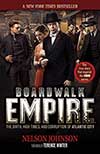
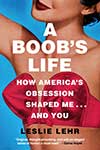
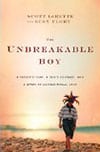
Notable authors include Nelson Johnson, author of Boardwalk Empire, which Martin Scorsese produced for HBO; Leslie Lehr, author of A Boob’s Life, which is currently being adapted for an HBO Max TV series by Salma Hayek; and Scott LeRette, author of The Unbreakable Boy, which was published by Thomas Nelson and is now a major motion picture by Lionsgate starring Patricia Heaton, Zachary Levi, and Amy Acker.
The founder of The Bestselling Author, Mark Malatesta, is a former literary agent, literary agency owner, AAR member, and Marketing & Licensing Manager for the gift and book publisher Blue Mountain Arts. He is now an author coach and consultant. Click here to see Mark Malatesta reviews.
About the Author
 The founder of The Bestselling Author, Mark Malatesta, is a former literary agent, literary agency owner, AAR member, and Marketing & Licensing Manager for the gift and book publisher Blue Mountain Arts. Mark is now a highly regarded author coach and consultant, dedicated to helping writers obtain literary agents. Drawing on decades of industry experience, he works with writers across genres, offering personalized coaching to navigate the complexities of the publishing world.
Through The Bestselling Author, Mark provides practical tools, industry insights, and motivational support tailored to each writer’s needs to help them do so. In addition to coaching, Mark shares his expertise through speaking engagements and online resources. His dedication to empowering authors has made him a trusted mentor in the writing community, earning him a reputation as a knowledgeable and approachable guide for writers pursuing their dreams. Click here for Mark Malatesta reviews.





 MARK MALATESTA is a former literary agent turned author coach. Mark now helps authors of all genres (fiction, nonfiction, and children's books) get top literary agents, publishers, and book deals through his company