

Are you a writer who looks at bestseller lists such as the New York Times bestseller list and gets inspired—or discouraged? Either way, there are nine things that writers of all genres can learn from looking at what books are selling. Some writers look at the list, see famous authors, celebrity memoirs, major thrillers, political books, big nonfiction platforms, long-running children’s series, or books that seem nothing like what they’re writing—and decide there’s no point trying to get a literary agent or traditional publisher.
They tell themselves their book is too different. No one wants what they write. They’re too old, too young, the wrong gender, the wrong race, from the wrong background, or missing the kind of platform publishers want. They decide their book isn’t commercial enough, or it’s too commercial, or their category is dead, or only famous people get published.
That’s the wrong way to approach a bestseller list. Don’t read lists such as the New York Times bestseller list—or any bestseller list—like it’s your horoscope, a fortune cookie, or a rejection letter.
A bestseller list isn’t a prophecy or a verdict on your book. It’s a snapshot of what’s selling, one that’s worth looking at—but not for self-rejection.
As a former literary agent turned author consultant who’s helped hundreds of authors get offers from literary agents and publishers, I’ve seen countless writers use market research against themselves. Instead of using bestseller lists to become more informed about publishing, they use them as evidence that they should give up.
Instead, writers should use bestseller lists to learn about category, positioning, reader expectations, titles, subtitles, author platforms, formats, timing, and the way books are packaged for the marketplace.
A bestseller list can’t tell you your book is doomed, that “someone like you” can’t get published, or that your story, voice, expertise, background, or perspective has no value.
This article will show you how to look at bestseller lists like a publishing professional—so you can use them to become a smarter and more successful writer.
A bestseller list is useful evidence. It shouldn’t become a weapon you use against your own work.
Quick Summary
Bestseller lists such as the New York Times bestseller list can teach writers a lot about categories, reader expectations, commercial positioning, titles, formats, timing, cultural appetite, author platforms, and the kinds of books getting broad attention. But they shouldn’t be treated like a horoscope, fortune cookie, or rejection letter. Bestseller lists show what’s selling in specific categories during a specific time period. They don’t prove what literary agents will or won’t want, who’s allowed to publish, or whether your book has a future.
Key Takeaways
- Use bestseller lists such as the New York Times bestseller list for market awareness, not self-rejection.
- Look for patterns in category, positioning, reader promise, format, timing, and reader appeal.
- Don’t assume your book must imitate what’s already on the list.
- Don’t conclude your age, gender, race, background, originality, or platform makes publication impossible.
- Remember that a book’s success often depends on execution, positioning, timing, audience, platform, publisher support, and luck.
- Literary agents aren’t simply looking for clones of this week’s bestsellers.
- A bestseller list should help you ask better questions about your book—not make you feel smaller.
Table of Contents
- Category Matters More Than Most Writers Realize
- Readers Want Both Familiarity and Freshness
- Positioning Is Often as Important as Premise
- Titles and Subtitles Teach You Reader Promise
- Format Can Change the Story
- Established Authors Have Advantages—but They Don’t Own the Market
- Timing, Culture, and Media Attention Matter
- The List Doesn’t Show Everything That Sells
- The List Should Make You Smarter, Not Smaller
- Frequently Asked Questions
- Final Thoughts

1. Category Matters More Than Most Writers Realize
Lists such as the New York Times bestseller list don’t just feature giant piles of “books people like.” They’re divided into categories and formats. Fiction is different from nonfiction. Hardcover is different from paperback. Children’s books are different from adult books. Advice, how-to, and miscellaneous books are different from narrative nonfiction. Series books are different from stand-alone books. Picture books are different from middle grade novels.
That’s important because a book doesn’t succeed in “publishing” in general. It succeeds in a lane. One of the best things writers can learn from bestseller lists is how important book genres and categories are. Many writers struggle not because their books have no market, but because they don’t understand what market they’re in. Looking at bestseller lists can help you become more aware of categories.
Ask yourself: Where would my book sit in a bookstore? What books would be near it? What category would a publisher put on the spine, sales sheet, or catalog copy? What kind of reader is already looking for this type of book? What does success look like in this category? Which authors are being published in this space? What do those books promise readers?
If you aren’t yet intimate with your category, literary agents and publishers may have trouble understanding how to sell your book. That doesn’t mean your book must fit neatly into a tiny box. Some of the most interesting books cross boundaries. But even category-crossing books need to be positioned clearly.
Literary agents don’t need your book to be identical to current bestsellers—but they do need to understand what kind of book it is, who the reader is, and where it belongs in the market.
2. Readers Want Both Familiarity and Freshness
When you look at bestseller lists, you may notice familiar categories appearing again and again: thrillers, romance, fantasy, celebrity memoirs, self-help, political books, book club fiction, children’s series, historical fiction, and business books. That can make writers feel like everything has already been done. But that isn’t the right conclusion. The better conclusion is this: readers often want a recognizable kind of reading experience, but they also want something fresh inside it.
A thriller reader may want danger, suspense, secrets, and high stakes—but not the exact same thriller they’ve already read. A romance reader may want attraction, conflict, chemistry, and emotional payoff—but not interchangeable characters. A memoir reader may want honesty, intimacy, transformation, and voice—but not a generic life story. A self-help reader may want a practical promise—but not stale advice. A children’s book reader may want warmth, humor, adventure, friendship, or reassurance—but not a lifeless imitation of another successful series.
If your book is too familiar, it can feel derivative. If it’s too unfamiliar, it can be hard to position. The sweet spot is often a recognizable category with a fresh voice, fresh hook, fresh setting, fresh emotional angle, fresh authority, fresh structure, or fresh cultural relevance.
That’s why saying, “There’s nothing like my book on the bestseller list,” isn’t automatically good or bad. It depends what you mean. If your book is fresh but still has a clear audience, that can be exciting. If your book is so unusual that no one can understand what it is, who it’s for, or why readers would want it, that’s a problem.
Use lists such as the New York Times bestseller list to help you study this balance. Look at books in or near your category and ask: What’s familiar here? What’s fresh? What kind of reader expectation is being met? What new angle does this book offer? What promise does the book make that readers already understand? What surprise does it bring to that promise?
Don’t look at the list to copy, but to understand.
Agents and publishers usually want both familiarity and freshness: a recognizable category with a fresh reason to care.
3. Positioning Is Often as Important as Premise
Writers often focus on a book’s premise, but positioning matters too. Premise is what the book is about. Positioning is how the book is presented to the marketplace.
Two books can have similar premises and very different positioning. One might be pitched as literary fiction. Another might be upmarket suspense. Another might be romance. Another might be book club fiction. Another might be historical fiction. Another might be speculative fiction. The difference can affect the title, cover, flap copy, comparable titles, pitch, target audience, review outlets, bookseller expectations, and publisher strategy.
When you look at lists such as the New York Times bestseller list, don’t just ask, “What is this book about?” Ask, “How is the book being positioned?”
For fiction, study the emotional promise. Is the book promising escape, suspense, romance, literary depth, book club conversation, mystery, humor, terror, wonder, a sweeping family story, or a twisty page-turner?
For nonfiction, study the practical or intellectual promise. Is the book promising transformation, insider knowledge, a new way to understand the world, a solution to a problem, access to a famous life, a political argument, a spiritual path, a scientific explanation, a business strategy, or a memoir of survival?
Writers sometimes say, “My book is different from everything on the list.” But sometimes the issue isn’t that the book is different. Sometimes the issue is that the writer hasn’t figured out how to position it.
A book can be original and still have clear positioning. A book can be unusual and still have a clear reader promise. A book can be personal and still have market relevance. I’m not suggesting you make your book generic. Your goal should be to help literary agents and publishers see how your book can be understood, described, compared, and sold.
4. Titles and Subtitles Teach You Reader Promise
The bestseller list is a great place to study titles. Not because every bestseller has a perfect title—they don’t—but because titles and subtitles teach you how books make promises quickly.
A fiction title may suggest mood, mystery, place, danger, irony, beauty, voice, romance, history, or emotional tension. A nonfiction title may suggest authority, urgency, transformation, controversy, curiosity, or a problem the reader wants solved.
Nonfiction subtitles are especially instructive because they often say the quiet part out loud. They tell the reader what the book will explain, reveal, change, challenge, or deliver.
A good title doesn’t always explain everything, but it should create curiosity. A bad title can create confusion.
When you look at the bestseller list, ask: What does this title make me expect? What feeling does it create? What kind of reader is it trying to attract? Does the subtitle clarify the promise? Does the title sound literary, commercial, practical, funny, dark, urgent, romantic, mysterious, or authoritative? Would I understand the general appeal before reading the description?
Then look at your title. Does it help the book? Does it create curiosity? Does it fit your category? Does it make the right promise? Does it sound too generic? Does it sound too confusing? Does it accidentally suggest the wrong genre?
For nonfiction, does your subtitle make the value clear? For fiction, does your title create the right mood and expectation?
You don’t have to copy bestseller titles. Of course, you shouldn’t. But you can—and should—learn from how they work. A title is positioning.
5. Format Can Change the Story
A book’s success can look different depending on format: hardcover, paperback, eBook, audiobook, children’s edition, illustrated edition, gift edition, book club edition, or large print. If you want to see how one retailer presents lists such as the New York Times bestseller lists by genre and format, browse the New York Times bestsellers at Barnes & Noble.
A book might not dominate the hardcover fiction list but could thrive in paperback. A nonfiction book might spike because of media attention. A novel might grow through book clubs or word of mouth. A memoir might perform especially well in audio. A children’s book might stay visible for years because parents, teachers, librarians, and grandparents keep recommending it.
If you only look at one list, you might misunderstand the market.
For example, a writer might look at hardcover fiction and conclude that only a narrow kind of adult novel sells. But paperback fiction, children’s lists, audio trends, book club selections, and genre markets tell a different story—a bigger story.
A nonfiction writer might look at the top few books and conclude that only celebrities sell nonfiction. But many nonfiction books sell through speaking, organizations, courses, churches, schools, corporations, specialty communities, and long-term backlist life.
A children’s author might look at famous series and feel discouraged. But children’s publishing also includes picture books, educational titles, seasonal books, school/library books, faith-based books, graphic novels, middle grade, and books that build slowly.
Format matters because different readers buy and discover books differently:
- Some buy hardcovers immediately.
- Some wait for paperback.
- Some listen to audiobooks.
- Some borrow from libraries.
- Some buy books as gifts.
- Some discover books in classrooms.
- Some find books through social media.
- Some respond to a television appearance, podcast interview, adaptation, book club, sermon, lecture, or school assignment.
So don’t look at one bestseller list and assume you understand the whole market. Look more broadly. Then ask where your book might have its strongest life.
6. Established Authors Have Advantages—but They Don’t Own the Market
Yes, famous authors have advantages. So do celebrities, politicians, influencers, authors with major platforms, and authors who have already built a large readership. It would be unrealistic or dishonest to say otherwise.
When a famous novelist releases a new book, that author may already have a built-in audience, publisher enthusiasm, bookstore support, media attention, preorders, reviews, and reader anticipation. When a celebrity memoir appears, the author may already have millions of people who know their name. When a politician, athlete, pastor, business leader, actor, musician, or public figure writes nonfiction, the author platform may be part of the appeal.
But that doesn’t mean new writers have no chance. It means you shouldn’t compare your unpublished manuscript to the 25th book by a mega-bestselling novelist or a memoir by someone with a household name and conclude that publishing is closed to you.
That isn’t fair.
The better question is: What can I learn from how this book is packaged, positioned, and promoted? Then ask: Where are the less obvious opportunities in my own category?
Debut authors get published, too. So do many other writers and books that don’t fit one narrow bestseller-list mold:
- Authors without celebrity platforms get published.
- Older authors get published.
- Younger authors get published.
- Authors from many backgrounds get published.
- Quiet books get published.
- Unusual books get published.
- Commercial books get published.
- Literary books get published.
- Faith-based books get published.
- Children’s books get published.
- Books that don’t look exactly like this week’s bestsellers still get published.
The presence of famous authors on the list isn’t proof that no one else matters. It’s proof that fame helps. Those are different things.
7. Timing, Culture, and Media Attention Matter
Bestseller lists aren’t only about books—they’re also about timing. A book can trend because it connects with a cultural moment. It might speak to something people are already thinking about, arguing about, grieving, fearing, hoping for, or trying to understand.
Timing can include a news event, political moment, film or TV adaptation, holiday, school year, graduation season, award attention, social media trend, book club momentum, celebrity endorsement, controversy, public conversation, or topic that suddenly becomes urgent.
That doesn’t mean you should chase trends. By the time you do, the moment may have passed. Publishing is often too slow for you to simply imitate what’s hot right now. If your book connects to something readers care about now, that can be important. But if your book speaks to an evergreen concern—love, grief, fear, ambition, faith, family, justice, identity, success, aging, belonging, freedom, power, mystery, transformation—that can matter too.
Some books are timely and others timeless; some are both.
When you study the bestseller list, ask: Why this book now? What conversation does it enter? What fear, hope, desire, or curiosity does it speak to? Is its success mostly author-driven, topic-driven, story-driven, media-driven, category-driven, or timing-driven?
Then ask those same questions about your book. If the timing of your submission is part of your concern, you may also want to read more about the best time to submit to literary agents.
8. The List Doesn’t Show Everything That Sells
Lists such as the New York Times bestseller list are a spotlight, not a map of the entire publishing world.
A book can:
- Sell steadily for years.
- Be profitable in a niche market.
- Support a speaking career.
- Do well in schools, churches, libraries, specialty stores, conferences, corporations, museums, book clubs, gift shops, or online communities.
- Build an author’s platform.
- Lead to consulting, teaching, media, future book deals, or subsidiary rights.
- Be deeply meaningful to readers without becoming a national bestseller.
That’s important because many writers define success too narrowly. Of course, it would be wonderful to become a bestselling author. But that isn’t the only meaningful form of publishing success.
Some books:
- Have modest launches and long lives.
- Never become famous but reach exactly the readers who need them.
- Sell enough to make publishers happy without becoming cultural events.
- Become stepping stones to bigger opportunities.
- Don’t explode but endure.
If your book isn’t obviously similar to the top books on a bestseller list, that doesn’t mean it has no market or future.
It might mean:
- You need to understand your market more clearly.
- Your book belongs in a different format, category, or channel.
- Your book is more specialized.
- Your pitch needs work.
- Your manuscript needs revision.
- Your platform needs strengthening.
9. The List Should Make You Smarter, Not Smaller
The best use of lists such as the New York Times bestseller list is to help you ask better questions. Not smaller, hopeless, or self-punishing questions.
Better questions.
- Instead of asking, “Why am I not famous?” ask: What category am I writing in?
- Instead of asking, “Why isn’t there anything exactly like my book?” ask: How can I help agents understand where my book fits?
- Instead of asking, “Does this list prove no one wants my story?” ask: What reader promise am I making?
- Instead of asking, “Should I quit?” ask: What can I learn about titles, subtitles, covers, positioning, and comparable books?
- Instead of asking, “Am I the wrong kind of person to publish this?” ask: What’s strong, fresh, credible, or emotionally compelling about my perspective?
- Instead of asking, “How do I copy what’s selling?” ask: How do I make my book both recognizable and fresh?
That’s the best way to use market research. Not to shrink your imagination but to sharpen your professional awareness. Not to become a desperate imitator of whatever is selling this week, but to become more informed.
Use bestseller lists to become a smarter writer, not a smaller one.
Final Thoughts
The worst way to use a bestseller list is to turn it into proof that you shouldn’t try. Don’t conclude that only famous people get book deals, only certain kinds of writers get published, only giant platforms matter, or literary agents are looking only for clones of whatever is already on the list.
The publishing industry isn’t simple. It has biases, patterns, preferences, blind spots, trends, risks, and business realities. It isn’t equally easy for every writer, and it would be dishonest to pretend it is.
But it also isn’t as closed, simple, or predictable as discouraged writers sometimes imagine. A bestseller list can be useful evidence. It shouldn’t become a weapon you use against your own work.
Bestseller lists such as the New York Times bestseller list can teach writers a lot. They can teach you about categories, positioning, reader promises, titles, subtitles, formats, author platforms, timing, and what books are getting broad attention.
But they can’t tell you who you’re allowed to be. They can’t tell you that your voice doesn’t matter. They can’t tell you that your age, gender, race, background, faith, category, or originality makes publication impossible. They can’t tell you that literary agents won’t want your work before they’ve even seen it.
So look at bestseller lists. Study them. Learn from them. Use them to become a smarter, more strategic writer.
But don’t use them to reject yourself.
Literary agents don’t need your book to look exactly like this week’s bestseller list. They need to believe your book is strong, well-positioned, and likely to appeal to a real readership.
Get 1-on-1 Support to Give Your Book the Best Chance for Success
If you want help understanding how literary agents might see your book, query letter, synopsis, proposal, or platform, schedule a 1-on-1 introductory coaching / consulting call. As a former literary agent who has helped 450+ writers get literary agents and/or traditional publishers, I can help you identify the best agents for your book, improve your query materials, and create a smarter submission strategy.
FAQ: What Writers Can Learn from Writer Bestseller Lists
Should writers study the New York Times bestseller list?
Yes, writers can learn a lot by studying the New York Times bestseller list, especially if they pay attention to category, positioning, titles, subtitles, formats, author platforms, and reader expectations. But writers shouldn’t use the list to decide their book has no chance.
Does my book need to be like current bestsellers to get a literary agent?
No. Your book doesn’t need to be a copy of current bestsellers. Literary agents are usually looking for books they can position clearly and sell to publishers. That often means the book should have a recognizable audience, but also something fresh in the voice, story, hook, setting, authority, or execution.
What if there’s nothing like my book on the bestseller list?
That could mean several things. It might mean your book is fresh and unusual. It might mean you’re looking at the wrong list or category. It might mean your book is hard to position. It might mean similar books sell in other formats or channels. It doesn’t automatically mean your book is doomed.
What if the bestseller list is full of famous authors?
Famous authors, celebrities, and major public figures often have advantages. They may have built-in audiences, media attention, and publisher support. But that doesn’t mean debut authors or less-famous authors can’t get published. You shouldn’t compare your unpublished book to a celebrity memoir or franchise author and assume there’s no room for you.
Can a book be successful without becoming a New York Times bestseller?
Yes. Many books are successful without appearing on the New York Times bestseller list. Some sell steadily over time, do well in niche markets, support speaking or teaching careers, reach schools or churches, build an author’s reputation, or lead to future opportunities.
How should I use bestseller lists when querying literary agents?
Use bestseller lists as one form of market research. They can help you understand your category, identify possible comparable titles, study reader expectations, and think about positioning. But your query letter and submission materials should focus on your specific book: the hook, story, stakes, category, word count, audience, and author bio.
About
This article about “9 Things Writers Can Learn from Bestseller Lists” was written by a former literary agent turned author coach. Mark Malatesta is the creator of The Directory of Book Agents, host of Ask a Publishing Agent, and founder of Literary Agent Undercover and The Bestselling Author.
Mark has helped hundreds of authors get offers from literary agents and/or traditional publishers. Writers of all Book Genres have used our Book Agent Advice coaching/consulting to get Top Literary Agents at the Best Literary Agencies on our List of Literary Agents.
The Bestselling Author, LLC
 Established in 2011, The Bestselling Author has helped 400+ authors get literary agents and/or traditional publishers. Writers who’ve worked with Literary Agent Undercover, a division of The Bestselling Author, have gotten six-figure book deals; been on the New York Times bestseller list; had their books adapted for TV, stage, and feature film; had their work licensed in 40+ countries; and sold many millions of books.
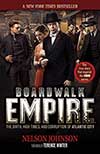
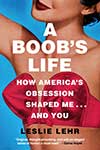
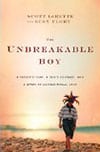
Notable authors include Nelson Johnson, author of Boardwalk Empire, which Martin Scorsese produced for HBO; Leslie Lehr, author of A Boob’s Life, which is currently being adapted for an HBO Max TV series by Salma Hayek; and Scott LeRette, author of The Unbreakable Boy, which was published by Thomas Nelson and is now a major motion picture by Lionsgate starring Patricia Heaton, Zachary Levi, and Amy Acker.
The founder of The Bestselling Author, Mark Malatesta, is a former literary agent, literary agency owner, AAR member, and Marketing & Licensing Manager for the gift and book publisher Blue Mountain Arts. He is now an author coach and consultant. Click here to see Mark Malatesta reviews.
About the Author
 The founder of The Bestselling Author, Mark Malatesta, is a former literary agent, literary agency owner, AAR member, and Marketing & Licensing Manager for the gift and book publisher Blue Mountain Arts. Mark is now a highly regarded author coach and consultant, dedicated to helping writers obtain literary agents. Drawing on decades of industry experience, he works with writers across genres, offering personalized coaching to navigate the complexities of the publishing world.
Through The Bestselling Author, Mark provides practical tools, industry insights, and motivational support tailored to each writer’s needs to help them do so. In addition to coaching, Mark shares his expertise through speaking engagements and online resources. His dedication to empowering authors has made him a trusted mentor in the writing community, earning him a reputation as a knowledgeable and approachable guide for writers pursuing their dreams. Click here for Mark Malatesta reviews.




 MARK MALATESTA is a former literary agent turned author coach. Mark now helps authors of all genres (fiction, nonfiction, and children's books) get top literary agents, publishers, and book deals through his company