

What’s the best time to submit to literary agents? Sounds simple. It isn’t. And it’s a question I wanted to revisit because publishing has changed in ways that make the answer more complicated than it used to be. Many agencies now use portals, category restrictions, one-agent-at-a-time rules, or limited query windows. This article, which is part of our free guide about How to Get a Literary Agent, will help you navigate the nuances.

Quick Summary
The best time to submit to literary agents is when your book and submission materials are ready, your agent list is well researched, and the agents you’re querying are open to submissions.
That answer has become more important—not less—because the submission landscape has changed. More agencies use online forms and query-management systems. Some agents now say they’re open to queries certain days each month.
But timing is more layered than that. Some timing is outside your control. A literary agent might love your type of book but already represent something similar. They might usually be interested in your category but be overwhelmed the week your query arrives. They might have just heard from editors that your category is becoming harder to sell. Or they might be in exactly the right mood, at exactly the right moment, for exactly the kind of book you’ve written.
Calendar timing also matters somewhat. Some months are more practical than others. Some days may be more sensible than others. Sending during normal business hours may feel professional. But the calendar is not magic.
The most important timing is the timing you control: whether your book is ready to be judged professionally, and whether you submit it in a way that gives you the most leverage. For most authors, that means avoiding large query pushes during obvious off-peak times if they can. But for some authors—especially older authors with real urgency, or authors who might otherwise keep putting off submission forever—an imperfect query window may be better than no query at all.
Key Takeaways
- The best time to submit to literary agents is not simply a specific month, day, or hour. It’s when the book and submission materials are strong enough to give the project a real chance.
- Some timing is outside the author’s control. An agent’s workload, current client list, inbox volume, recent submissions, market confidence, and personal taste can all affect how they respond.
- Calendar timing can help at the margins, but it matters less than authors think. There is no magic day of the week that can make a weak query strong.
- The real value of timing is leverage. If possible, you want more than one good agent considering your work at the same time, so you’re not forced to accept the first offer you get.
- Current submission guidelines matter more than general rules of thumb. Many agencies now use portals, category restrictions, one-agent-at-a-time rules, or limited query windows.
- Submitting in thoughtful batches is usually better than querying every agent at once because it helps you evaluate the response before you use up your best opportunities.
- Rejection is not always about quality. Sometimes it’s about timing, fit, workload, market conditions, or agent bandwidth. But authors shouldn’t blame everything on timing. Patterns matter.
Table of Contents
- The Three Types of Timing in Literary Agent Submissions
- Timing Type #1: The Agent Timing You Can’t Control
- Timing Type #2: Calendar Timing—Month, Day, and Time
- Is There a Best Month to Query Literary Agents?
- Is There a Best Day to Query Literary Agents?
- Is There a Best Time of Day to Send a Query?
- Timing Type #3: Book Readiness and Submission Strategy
- How to Interpret Rejection, Silence, and Agent Responses
- Final Thoughts
- FAQ

The Three Types of Timing for Literary Agent Submissions
Timing is always a factor when querying. That hasn’t changed since I was a literary agent. But many agencies now use online submission systems instead of regular email. Some agents open and close to queries in narrower windows. Social media can make a category explode quickly, then feel crowded just as quickly. And in a leaner, more efficiency-driven publishing industry, agent and editor bandwidth matters more now. Publishers Weekly reported that U.S. book publishing employment fell from 91,100 in 1997 to 54,822 in 2023, which it described as a loss of about 40% of traditional publishing jobs in less than 30 years.
That doesn’t mean there’s suddenly a magic time to query. It means authors need to think more about timing. Many authors ask about the month, day, or time of day to query. Is January better than December? Is Tuesday morning better than Friday? What time of day is best?
Those are fair questions—but they’re not the whole question.
The real question is this: When is the right time to submit your book to literary agents so you don’t waste your best opportunities?
That’s because timing in the literary-agent world isn’t just one thing.
It’s three things.
First, there is agent timing, which you can’t control. That’s what’s happening with the agent, their inbox, their clients, their workload, their mood, and the publishing market when your query lands in front of them.
Second, there is calendar timing, which you can partly control. That’s the month, day, and time you choose to submit.
Third, there is readiness and submission-strategy timing, which you can control far more than many writers realize. That’s whether your book, query letter, synopsis, book proposal, sample pages, category, positioning, agent list, and submission plan are truly ready.
Most authors spend too much time worrying about just part of the picture. They obsess over the hour, second-guess the day, and wonder if they should wait three months because someone online said agents are cranky in August.
They should also be asking:
Am I ready?
A polished, well-positioned submission sent on a less-than-perfect day is better than a premature submission sent at the supposedly perfect time.
Also, I don’t always suggest the same timing advice to every author in every situation. If an author is older and feels real urgency to move forward, or if an author is so impatient that waiting for the “perfect” window might become another excuse to delay, the rules can change. Sometimes querying during an imperfect period is better than not querying at all.
Timing Type #1: The Agent Timing You Can’t Control
The most overlooked kind of timing is the timing happening on the agent’s side. I don’t mean whether the agent is open or closed to submissions. That part is obvious. If an agent is closed to queries, don’t query unless their guidelines give you a specific reason to do otherwise. I’m talking about something more subtle. An agent can be open to submissions and still not be in the right place for your project at the exact moment your query arrives.
That can happen for many reasons. The agent might love your category, but they just signed a client with a similar book. They might normally love your kind of project, but they’re currently buried under client manuscripts, contract negotiations, editor follow-ups, meetings, travel, agency responsibilities, personal obligations, or hundreds of unread queries. They might have recently gone out with a book similar to yours and failed to sell it.
They might have heard from editors that your category is cooling off. Or the opposite might be true. Editors may be asking for more of your kind of book. The agent may have a gap on their list. They may have just realized they want more of exactly what you’re offering. They might read your query when they have time and curiosity, or they might read it when they’re exhausted.
That doesn’t mean agents are careless. It means they’re human beings working inside a complicated business. They aren’t evaluating your query in isolation. They’re evaluating it in the context of their list, their clients, their editors, their recent sales, their inbox, their workload, their taste, and their sense of what they can sell.
That’s why the same project can get very different responses from different agents. One agent may think, “I like this, but I already have something too close.” Another may think, “This is good, but I don’t know where I’d place it.” Another may think, “I would have wanted this two years ago, but not now.” Another may think, “Finally. This is exactly what I’ve been looking for.”
Same book but a different agent, timing, and result.
That reality can be frustrating but it can also be freeing. It means rejection isn’t always an absolute verdict on the quality of your book. Sometimes it just means: not this agent or not right now.
Bad timing is real, but don’t let that stop you from submitting.
You only need one agent to get on it to get a deal.
Sometimes rejection means the query is weak. Sometimes the opening pages aren’t strong enough. Sometimes the category is unclear. Sometimes the concept isn’t marketable enough. Sometimes the proposal isn’t persuasive. Sometimes the manuscript still needs work.
Understand the timing you can’t control can help. Don’t let rejection based on that crush your spirit. Stay focused, instead, on the timing you can control.
Timing Type #2: Calendar Timing—Month, Day, and Time
Calendar timing is the kind of timing writers ask about most. That makes sense. The calendar feels practical. It feels concrete. Like something you can get right. But calendar timing usually matters less than writers think.
The calendar can affect when your query is seen. It can affect how crowded the inbox feels. It can affect whether an agent is catching up after vacation, preparing for a conference, wrapping up year-end business, or trying to clear their desk before a break. But the calendar usually doesn’t determine whether your book is worth representing.
A strong project submitted at an imperfect time still has a chance. A weak project submitted at the “perfect” time is still weak.
One thing that’s changed in recent years is that many agencies now use QueryManager or other submission systems, and those systems can make timing and guidelines more formal. Laura Dail Literary Agency says authors should submit to one agent at a time with one project at a time. Other agents say they’re only open to queries on certain days each month.
Don’t shoot the messenger.
I know—it’s ridiculous.
So yes, think about the calendar. But don’t overdo it. And never let general timing advice override an agent’s current guidelines.
Agents can get persnickety if you ignore them.
Is There a Best Month to Query Literary Agents?
There is no magic month to query literary agents. If your book and submission materials are ready, and the right agents are open to submissions, you shouldn’t wait six months for alleged perfect window.
That said, some months are better for querying, and some months are better for preparing to query. That distinction matters. Every month of the year can be a good month to work toward getting a literary agent. The question is whether you should be actively submitting during that month—or using that month to get your ducks in a row so your submission will be stronger when you do send it.
January is a good time because the publishing year is starting fresh. Most agents are back at work, thinking about goals, looking at their lists, and open to the idea of new projects. But January can also mean post-holiday catch-up and crowded inboxes for some. February through May are productive as well because the year is underway and the industry is generally active.
Summer—especially July and August—are slower because of vacations, conferences, travel, family schedules, and disrupted routines. But slower doesn’t mean dead. And it definitely does not mean authors should take the summer off. Agents still read. Agents still request material. Agents still sign clients. If your book and submission materials are ready, you can query some agents during the summer. If your book and submission materials aren’t ready, summer can be one of the best times to revise your manuscript, polish your query letter, strengthen your synopsis or proposal, research agents, study submission guidelines, improve your opening pages, and prepare your submission strategy.
In other words, summer should not be a vacation from your publishing goals. It can be a preparation season, a polishing season, a research season, or—if you’re truly ready—a querying season.
September and October can be strong months as well because the industry often regains momentum after summer. But agents may also be catching up, attending events, preparing submissions, or dealing with a busy fall schedule. Late November and December can be trickier because of Thanksgiving, holidays, travel, year-end business, and general fatigue. Some agents are still reading queries. Others are trying to clear their desks, close deals, respond to clients, or simply get through the end of the year.
For example, let’s say you send a big batch of queries during Thanksgiving week. A couple agents respond. One asks for sample pages. One asks for the full manuscript. A few weeks later, one passes. The other offers representation.
Sounds good, right?
It is good, until you get on the phone and realize the agent is established but distracted. She likes the book, but she wants a long list of changes. Some make sense. Some don’t. She doesn’t seem fully aligned with your vision. She may not have time to submit the book for months.
What do most authors do in that situation? They sign.
Why? Because one agent offer feels like a miracle. And if no one else is reading, the author has no leverage.
Now imagine a different version. You get everything ready during the holidays, but instead of rushing, you submit when agents are more fully back at work. This time, more agents request material. When the first offer comes in, you can notify the others. You can give them a reasonable deadline. You can see whether anyone else wants to step forward.
Maybe one passes. Maybe one doesn’t respond. But maybe another agent offers, too.
Now you have options. You can compare the literary agents’ vision, communication style, editorial feedback, enthusiasm, submission strategy, and track record.
That’s not a fantasy but reality.
I’ve helping many coaching clients create that scenario.
The goal should never simply be to get a literary agent.
The goal should be to get the right agent.
If possible, you want to create a situation where more than one strong agent is considering your work at the same time. That gives you options that keep you from feeling forced to accept the first offer simply because it’s the only offer.
That’s why I generally don’t love large query batches going out between Thanksgiving and New Year’s, or during the middle of summer. Can you still get an agent during those periods? Sure. Should you panic if you already queried during those periods? No. Agents don’t delete everything that arrives while they’re away. And they don’t automatically punish you because your query showed up on, or near, a holiday.
But if you have the choice, and your materials could still be improved, why put yourself in a weaker position? Use slower periods to prepare and polish. Then submit when you’re ready and the odds of focused attention are better.
There are exceptions.
If you’re older—I’ve coached writers up to 104—and you feel a real time pressure to move forward, waiting several months for a slightly better query window may not make sense. If you’re the kind of writer who keeps revising, researching, second-guessing, and delaying because you’re afraid to press send, waiting for the “perfect” time can be procrastination.
In those cases, I may give different advice. If the book and submission materials are truly ready, querying during an off-peak time may be better than waiting for an ideal time that keeps moving farther into the future. Imperfect action can be better than perfect avoidance.
I’m not suggesting you be careless or reckless.
I’m suggesting you be realistic.
Is There a Best Day to Query Literary Agents?
Many writers think they know the best day to query agents. Or, more often, they think they know the worst day. Monday must be bad because agents are buried from the weekend. Friday must be bad because agents are thinking about the weekend. Sunday must be bad because it’s not a business day.
Maybe. Maybe not.
I’ve seen enough exceptions that I don’t put much faith in day-of-the-week rules. One author I spoke with had queried hundreds of agents over several projects and tracked his results carefully. His best response day was Monday.
So much for the Monday myth.
I’ve also had coaching clients get strong responses late on a Friday afternoon, including agents requesting full manuscripts quickly because they wanted to read over the weekend.
What about Sunday? Yep. Some agents catch up on weekends. Some read queries at odd hours. Some check email Sunday night so Monday doesn’t hit them like a brick.
That doesn’t mean every day is equal for every agent. It means the day itself is usually not the deciding factor. A terrific query sent on Friday afternoon can still work. A mediocre query sent Tuesday morning can still fail.
The better question is not, “What day should I send this?” The better question is, “Is this query ready to send?”
The best day to query is less important than the work you do before that day arrives.
Is There a Best Time of Day to Send a Query?
The same principle applies to the time of day. Some authors assume they should only send queries during business hours. That’s sensible. It feels professional. It avoids the appearance of a 2:00 a.m. impulse submission. It may place the query in the agent’s inbox during the workday.
But it’s not a guarantee. Many agents don’t read queries the moment they arrive. Some read in batches. Some read at night. Some read on weekends. Some read weeks later. Some use forms or query-management systems instead of a standard email inbox.
A query sent at 9:00 a.m. is not automatically better than one sent at 11:30 p.m.
One of my favorite examples involved a coaching client in India. He emailed his dream agent after midnight. Within minutes, the agent responded—not just by email, but by phone—to request more material. About a month later, that agent secured offers from Random House, HarperCollins, and Penguin.
That said, don’t submit when you’re tired, emotional, careless, or rushing. If it’s late at night and you’re calm and prepared, fine. If you’re exhausted, second-guessing yourself, and sending before proofreading, wait.
The timestamp matters less than the quality of the submission. The best time of day to query is when your materials are ready and you are clear-headed enough not to make avoidable and regrettable mistakes.
Timing Type #3: Book Readiness and Submission Strategy
This is the timing that matters most because it’s the timing authors control most. The central question isn’t: What month is best? What day is best? Or… What time is best?
It is: Is the project ready to be shopped?
If that sounds harsh, many authors query too early.
They finish a draft and feel done.
Because they want to be done.
They’re not done.
Finishing a draft is a major accomplishment, but a completed draft is not automatically a submission-ready manuscript. A completed book based on a good idea isn’t necessarily a marketable book. At least not yet. And just because you love your story doesn’t mean literary agents are going to love it, or as much. At least not yet.
Before you query, make sure you’re ready.
For fiction, especially debut fiction—unless you’re a celebrity—the manuscript should be complete, revised, and polished. The opening pages should create interest quickly. The protagonist, conflict, stakes, genre, and target audience should be clear. The ending should work. The word count should make sense for the category. The query letter should make the book sound compelling without making it confusing. The synopsis should reveal a coherent story, not expose major structural problems.
For memoir, the standard is the same. Agents usually need to see that the author can deliver the voice, structure, emotional arc, pacing, reflection, and narrative power the book requires. A memoir is not ready just because the events are dramatic. It has to work as a book. Since memoir is nonfiction, you’ll also be expected to have a polished book proposal and some type of profile or platform.ot
For other types of nonfiction, the book might not need to be fully written before querying. But the proposal must be strong. The concept needs to be clear. The audience needs to be specific. Your credentials, platform, expertise, access, story, or authority need to be persuasive. The chapter outline needs to make the structure feel inevitable. The sample chapters need to prove you can deliver. The comparable titles section needs to show market awareness. The marketing section needs to be credible, not just wishful or delusional.
In every category, the submission materials matter. A strong manuscript can be hurt by a weak query. A strong nonfiction concept can be hurt by a vague proposal. A powerful memoir can be hurt by an opening that takes too long to get started. A marketable book can be hurt by an author who doesn’t know how to position it.
Readiness is not just about the book. It’s also about the submission plan. Before querying, you should know what kind of agents you’re looking for. You should know your genre or category. You should research each agent’s guidelines. You should avoid submitting to agents who don’t represent your type of book. You should prepare the materials agents commonly request: query letter, synopsis, sample pages, proposal, author bio, comparable titles, or full manuscript, depending on the project.
And you should avoid querying every agent at once.
If you’re 104, I’ll give you a pass.
How to Interpret Rejection, Silence, and Agent Responses
Once you start querying, timing gets even more complicated. Some authors assume every rejection means the book is bad. Other authors assume every rejection means the agent is wrong. Neither response is useful.
The truth is usually more nuanced. A rejection can mean the agent didn’t connect with the premise. It can mean the writing wasn’t strong enough. It can mean the opening pages didn’t create enough urgency. It can mean the agent doesn’t know how to sell the book. It can mean the category is difficult. It can mean the agent already has something similar. It can mean the proposal lacks platform. It can mean the manuscript needs revision.
It can also mean bad timing. The agent may have liked the idea but felt too overloaded. They may have recently passed on several similar projects. They may be moving away from the category. They may have signed something similar last month. They may admire the writing but not see a clear editorial path. Sometimes they’ll say that. Other times, they’re just not the right person.
This is why authors need both resilience and discernment. Don’t revise your entire book after one rejection. Don’t rewrite your query every time an agent passes. Don’t assume silence means your book is a hot mess.
Do look for—and pay attention to—patterns.
If you query a significant number of targeted agents and no one requests pages, something might not be off. It’s often “just” that hard. But it could mean something is off. Maybe the query or synopsis. Maybe the premise or category. Maybe the opening pages. Maybe the word count.
If agents request pages but consistently pass after reading them, the manuscript may not be delivering. If agents request full manuscripts but don’t offer representation, that’s encouraging. You’re close. But you might need to do more with the manuscript to get over the hump.
And obviously—at least it should be—if multiple agents give similar feedback, take it seriously. If responses are mixed, it might be best to not change a thing.
Bad timing is real, but it should be a comfort—not an excuse. It should remind you that rejection is not always a complete judgment of your talent or your book’s worth. But it should not prevent you from asking hard questions when the response suggests something needs to be improved.
The strongest authors learn to hold both truths at once: Some things are outside your control. Some things are not. Focus most on those that are.
Get Help Before You Submit to Literary Agents
Many authors query too early, query the wrong agents, or submit materials that don’t show the full potential of their book. That impulsivity or inabilty to see potential problems and opportunities can be costly.
If you want help determining whether your book is ready to submit to literary agents, I can help you evaluate your mansuscript or proposal, query letter, synopsis, opening pages, genre/category, author positioning, comparable titles, agent list, and submission strategy.
As a former literary agent, former Marketing & Licensing Manager for the book division of Blue Mountain Arts, and author consultant who has helped 450+ writers get literary agents and/or traditional publishers, I can help you give yourself and your book the best chance.
Here you can explore 1-on-1 author coaching and consulting.
FAQ: The Best Time to Submit to Literary Agents
What is the best time to submit to literary agents?
The best time to submit to literary agents is when your book and submission materials are ready, your agent list is targeted, and the agents you want to query are open to submissions. Month, day, and time can matter somewhat, but readiness matters more.
What is the best month to query literary agents?
There is no universally best month to query literary agents. January through spring and early fall can be active periods, while summer and late December may be slower. But a strong submission can get attention at many times of year if the agent is open to queries.
What day of the week is best to query agents?
There is no magic day. Tuesday, Wednesday, and Thursday may seem sensible, but authors have gotten positive responses on Mondays, Fridays, Saturdays, and Sundays as well. The day of the week matters less than the strength of the book and query letter.
What time of day should I send a query letter?
Morning or early afternoon during normal business hours can be practical, but the exact time of day is rarely decisive. Many agents read queries in batches, not the moment they arrive. A strong query matters more than the timestamp.
Should I query literary agents in December or summer?
You can query literary agents in December or summer if your materials are ready and the agents are open. However, those periods can be slower because of holidays, vacations, conferences, travel, and disrupted schedules. If your materials are almost ready, those periods may be better used for polishing and preparation. That does not mean you should take the summer off. Every month is a good month to work toward getting a literary agent. Sometimes that means querying. Sometimes it means revising your manuscript, improving your query letter, strengthening your proposal or synopsis, researching agents, and getting your submission strategy ready. If you’re an older author with real urgency, or an author who might otherwise keep delaying forever, querying during an imperfect period may be better than not querying at all. Just make sure the book, query, and submission materials are truly ready first.
How do I know if my book is ready to query?
Your book may be ready to query when the manuscript or proposal is polished, the opening is strong, the category is clear, the query letter is compelling, and the required supporting materials are prepared. For fiction and memoir, the manuscript should usually be complete and revised before querying. For nonfiction, a strong proposal and sample chapters may be enough, depending on the project.
Should I query one agent at a time or several?
Most authors should not query only one agent at a time unless there is a specific reason to do so. Querying in thoughtful batches is usually better. It lets you test your query and pages, evaluate responses, and make adjustments before sending to every agent on your list.
About
This article about “The Best Time to Query Literary Agents” was written by a former literary agent turned author coach. Mark Malatesta is the creator of The Directory of Book Agents, host of Ask a Publishing Agent, and founder of Literary Agent Undercover and The Bestselling Author.
Mark has helped hundreds of authors get offers from literary agents and/or traditional publishers. Writers of all Book Genres have used our Book Agent Advice coaching/consulting to get Top Literary Agents at the Best Literary Agencies on our List of Literary Agents.
The Bestselling Author, LLC
 Established in 2011, The Bestselling Author has helped 400+ authors get literary agents and/or traditional publishers. Writers who’ve worked with Literary Agent Undercover, a division of The Bestselling Author, have gotten six-figure book deals; been on the New York Times bestseller list; had their books adapted for TV, stage, and feature film; had their work licensed in 40+ countries; and sold many millions of books.
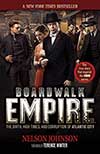
Notable authors include Nelson Johnson, author of Boardwalk Empire, which Martin Scorsese produced for HBO; Leslie Lehr, author of A Boob’s Life, which is currently being adapted for an HBO Max TV series by Salma Hayek; and Scott LeRette, author of The Unbreakable Boy, which was published by Thomas Nelson and is now a major motion picture by Lionsgate starring Patricia Heaton, Zachary Levi, and Amy Acker.
The founder of The Bestselling Author, Mark Malatesta, is a former literary agent, literary agency owner, AAR member, and Marketing & Licensing Manager for the gift and book publisher Blue Mountain Arts. He is now an author coach and consultant. Click here to see Mark Malatesta reviews.
About the Author
 The founder of The Bestselling Author, Mark Malatesta, is a former literary agent, literary agency owner, AAR member, and Marketing & Licensing Manager for the gift and book publisher Blue Mountain Arts. Mark is now a highly regarded author coach and consultant, dedicated to helping writers obtain literary agents. Drawing on decades of industry experience, he works with writers across genres, offering personalized coaching to navigate the complexities of the publishing world.
Through The Bestselling Author, Mark provides practical tools, industry insights, and motivational support tailored to each writer’s needs to help them do so. In addition to coaching, Mark shares his expertise through speaking engagements and online resources. His dedication to empowering authors has made him a trusted mentor in the writing community, earning him a reputation as a knowledgeable and approachable guide for writers pursuing their dreams. Click here for Mark Malatesta reviews.















 MARK MALATESTA is a former literary agent turned author coach. Mark now helps authors of all genres (fiction, nonfiction, and children's books) get top literary agents, publishers, and book deals through his company