

Many writers think their book is being rejected because a literary agent “didn’t read enough,” but it’s often something the agent saw (or didn’t see) in the opening sentences, paragraphs, pages, or chapters. This article reveals the many reasons agents pass quickly that are predictable and fixable—without a full rewrite.
This article is part of our Guide to Getting a Literary Agent. It was written by a former literary agent with 30 years of experience in the industry, not just as an agent but as the former Marketing & Licensing Manager of a well-known book publisher, and as an author coach and consultant who has helped 400+ writers get literary agents and/or traditional publishers since 2011.
Quick Summary: Your Opening Pages and Literary Agents
Literary agents often decide whether to keep reading within your first 3 sentences, first paragraph, first page, and first 5 pages—not because they’re careless, but because their workload forces fast, pattern-based decisions. In the early moments of a manuscript, literary agents are looking for clarity, control, momentum, voice, and market fit. They’re also looking for the most common opening-page mistakes that trigger quick passes—whether you’re writing fiction or nonfiction. Your opening pages are critical because they are what determine if literary agents will read the rest of your book.
Key Takeaways
Literary agents aren’t looking for “perfection” on page one—they’re scanning for risk: clarity, control, and a reason to believe the book will keep paying off.
- In the first 3 sentences, agents want orientation plus trust plus pull (specificity beats cleverness; clarity beats vague mystery).
- Your first paragraph proves whether you can sustain control—voice consistency, perspective clarity, readability, and forward motion.
- Your first page answers one question: Do I want to spend hours with this writer? (clean meaning, guided attention, momentum).
- Your first 5 pages reveal patterns: story/value “engine,” pacing, and whether each page rewards attention with traction or insight.
- Your first chapter is a promise—agents want a mini-arc and momentum into what comes next, not a self-contained short story or self-contained essay.
Table of Contents
- Start Here: How Agents Evaluate the First 3 Sentences, Paragraphs, Pages, and Chapters
- The Uncomfortable Truth That Can Help You
- Fiction vs. Nonfiction: What “Good” Looks Like Early
- What Agents Can See in Your First 3 Sentences
- What Agents Can See in Your First Paragraph
- What Agents Can See in Your First Page
- What Agents Can See in Your First 5 Pages
- What Agents Can See in Your First Chapter
- Myths I Hear From Writers (And What I Say)
- The Excerpt Ladder Test
- High-Impact Fixes That Don’t Require a Total Rewrite
- What “Short Excerpt Rejection” Usually Means
- Get Other Eyes On Your Opening Pages
- FAQ: Opening Pages, Agents, and Early Rejections

Start Here: How You Evaluate the First 3 Sentences, Paragraphs, Pages, and Chapters—of Books You’re Thinking About Reading
Before we go further, let me give you two things:
First, I acknowledge that literary agents can’t see everything about your book via your opening lines, pages, and chapters. However, your odds of getting a literary agent will increase dramatically when you realize what agents can see in your opening pages.
Second, literary agents sometimes read too fast—and they don’t read enough—before they decide if they’re going to spend more time reading your manuscript. That’s a fact that should be acknowledged. Equally important, you should acknowledge the fact that isn’t going to change. It’s fair to be frustrated about it, but it’s productive to spend more time exploring what you can actually do about it.
Your opening pages aren’t being judged for “perfection.” They’re being judged for risk.
In the first few lines, agents are looking for signs you can deliver a clear, controlled, rewarding reading experience—and that the book they think you’re writing is the book you’re actually writing. When those signals aren’t there, they don’t reject your talent. They reject the uncertainty.
The Uncomfortable Truth That Can Help You
Before we talk about how literary agents approach new books, let’s talk about how you approach new books—as a prospective book buyer. If you’re an avid reader, you likely pass on books for many reasons.
For example:
- It’s not in a genre you read.
- You’re not interested in the topic, theme, or setting.
- You’ve read too much lately related to the topic, theme, or setting.
- You don’t like the title.
- You don’t like the cover art.
- You don’t like the teaser description.
- You feel the author is taking too long to get to “the good stuff.”
- You feel the pacing was too slow—or fast.
- You aren’t connecting enough with the voice or style.
- The writing is awkward or confusing to you.
- You like the story but not the style—or vice versa.
- The story and style are competent, but not special or unique enough for you.
- The book goes against your beliefs or values.
- Something else about the book is triggering you or “putting you off.”
When those things happen and you pass on a book, you’re not being cruel. You don’t feel guilty about it. And you shouldn’t feel guilty about it. You simply know what you like, and you’re protecting your time and money that you invest in books.
Literary agents do the same thing—only faster—because the time they invest in books is also money. When agents invest too much time in books they’re unable to sell, they’re not agents for long. So, like you, when an agent passes on a book, it’s rarely a statement about the author’s worth, or even the value and marketability of their writing. It doesn’t mean they’re not resonating with your work at all—it just means they’re resonating with it enough to read more.
Fiction and Nonfiction Are Judged Differently
Agents representing different genres look for different early signals:
- Fiction openings are judged like a reader experience: voice, scene control, character traction, and story engine.
- Nonfiction openings (often a sample chapter, usually tied to a proposal) are judged like a value promise: clarity, authority, structure, insight, and “Why this book, now, from you.”
So, as you read this, I’ll keep translating what “good” looks like for each.
What Literary Agents Are Looking for in Your Opening Pages and Chapters
Treat this process more like a diagnostic than a craft lecture.
Together we’ll evaluate:
- First 3 sentences
- First paragraph
- First page
- First 5 pages
- First chapter
At each step, you’ll identify what an agent can see—and change what might be holding you back.
1) What agents can see in your first 3 sentences
What agents are looking for (in plain English)
Your first 3 sentences should create trust.
Agents are asking, often subconsciously:
- Do I understand what’s happening right now?
- Do I trust this writer’s control of language and clarity?
- Do I feel a pull—curiosity, tension, voice, relevance?
- Do I sense “this will reward my attention”?
A strong opening doesn’t have to be loud.
It has to be intentional.
What kills you in 3 sentences
These are the most common early rejection triggers:
- Disorientation (we don’t know where we are, who we’re with, or what’s happening)
- Generic language (phrases that could open 10,000 other books)
- Overwritten cleverness (a line that performs instead of lands)
- A throat-clearing preamble (philosophy, weather, “life is strange” musings before the story starts)
- Vagueness masquerading as mystery (“Everything changed that day…”)
If you’re writing fiction
In fiction, your first 3 sentences should quietly prove:
I can orient you, establish voice, and create a faint pull without explaining everything.
Specificity beats cleverness. Clarity beats context-free mystery. Even in a quiet literary opening, an agent wants to feel: I’m in capable hands.
Fiction quick test: After 3 sentences, can a stranger answer:
- Where are we (generally)?
- Whose “camera” are we in?
- What kind of energy is this (comic, tense, intimate, ominous, etc.)?
They don’t need the plot. They need stability and intrigue.
If you’re writing nonfiction
In nonfiction, 3 sentences should quickly signal:
Who this is for, what you’re helping them with, and why it matters.
You don’t need a statistic or a credential in sentence one. But you do need an implied benefit: If you keep reading, you’ll understand something useful.
Nonfiction quick test: After 3 sentences, can a stranger answer:
- Who is this written for?
- What problem or desire is being addressed?
- What’s the “promise” of this piece?
The fastest upgrade most writers need
Replace “general” with “specific.”
Not more words—more precision.
- Swap “a small town” for a detail that makes it real.
- Swap “she felt nervous” for a physical signal or thought that’s yours (telling vs showing).
- Swap “this book will show you” for a sharper promise: what changes in the reader’s understanding?
2) What agents can see in your first paragraph
Your first paragraph reveals something agents care about more than your premise:
Can you sustain control?
A strong opening line can be a fluke. A strong paragraph is evidence.
What agents are looking for
- Voice consistency (not a one-liner, but a real voice)
- Clarity of perspective
- Rhythm and readability
- Forward motion (something is changing, pressing, or being revealed)
- A reason to continue now
What kills you in a paragraph
- Atmosphere with no motion
- Setup paragraphs that exist to “explain” instead of engage
- Backstory sneaking in immediately
- Abstract statements that don’t belong to a person in a moment
If you’re writing fiction
The #1 paragraph-level killer is “mood without movement.” Mood is great—if something is also shifting: a decision, a pressure, a disturbance, a desire.
Even if your opening is calm, the paragraph should contain a subtle turning of the wheel.
Ask yourself: What changes between sentence one and sentence five?
If the honest answer is “nothing,” you might be stalling.
If you’re writing nonfiction
Nonfiction can open with story, anecdote, scene, confession, or a contrarian claim—but it must earn its keep quickly by connecting to the reader’s stakes:
- Why does this matter to me?
- What will I understand or be able to do after this?
- Why should I trust this guide?
Agents love voice in nonfiction, but they love useful clarity more.
If your paragraph is beautifully written but meandering, an agent knows your book might be hard to position, edit, and sell.
3) What agents can see in your first page
The first page is where agents start making a very specific decision:
Is this a writer I want to spend hours with?
Not “Is this good?”
But “Do I believe this will keep paying off?”
What agents are looking for
- A sense of purpose (why this moment, why now)
- Control of language (clean sentences, clean meaning)
- Control of attention (you’re guiding the reader’s focus)
- Momentum (even quiet momentum counts)
First-page red flags that trigger fast passes
- It feels like the book is “starting soon” rather than already started
- We still don’t know who we’re with or what’s happening
- The prose is clean but generic
- The voice changes tone mid-page
- The writing is competent but inert
If you’re writing fiction
On page one, agents want a present-tense now. Not necessarily literally present tense but a felt immediacy.
The most common rejection at this stage is: the book begins before the book begins.
Some successful books start with us watching a character wake up, think about life, notice the weather, and remember childhood… but it’s easy with an opening like that for the agent to think: “This author is warming up. I don’t have time for warm-up.”
Even literary fiction can benefit from a pressure point.
If you’re writing nonfiction
On page one, agents want to see you can lead a reader:
- Clear topic control
- Clean transitions
- A sense of direction (where this chapter is going)
A strong nonfiction first page often does one of these:
- Frames the core question in a fresh way
- Establishes the stakes (what’s at risk if the reader doesn’t understand this)
- Offers a useful reframing that feels like immediate value
- Signals the chapter structure (“Here’s what we’re going to unpack…”)
4) What agents can see in your first 5 pages
Five pages is long enough for agents to see some important patterns.
This is where the decision often shifts from “Is this competent?” to:
Is this compelling enough to request?
What agents are looking for
- Does the piece have an engine?
- Does it reward attention (emotionally, intellectually, or both)?
- Are we learning something meaningful per page?
- Is the pacing appropriate for the genre and promise?
If you’re writing fiction
By five pages, an agent wants evidence of trajectory:
- A problem forming
- A want clarifying
- A relationship in motion
- A question tightening
- A disturbance reshaping the normal world
Not necessarily all of those—but enough to feel, “This story is going somewhere.”
If your first five pages are “pleasant,” “well-written,” and “slow,” you will get polite passes.
If you’re writing nonfiction
In nonfiction, five pages should prove you can deliver, not just tease.
That can look like:
- A clear insight
- A useful distinction
- A crisp explanation
- A practical “aha” moment
- A specific framework or set-up for one
Agents are wondering: “Will this book keep paying off chapter after chapter?”
If your first five pages feel too much like a long preface to the real point, the agent knows there’s a good chance the whole book is going to drift.
5) What agents can see in your first chapter
A first chapter is a promise.
It shows whether you can do more than open strong.
What agents are looking for
- Beginning-to-end control (not just a compelling opening)
- Emotional or intellectual texture that feels sustainable
- A satisfying mini-arc (even if small or subtle)
- Momentum into the next chapter
If you’re writing fiction
The biggest first-chapter mistake is writing a chapter that feels like a complete short story.
Agents don’t want closure. They want push and pull and momentum.
A strong first chapter usually ends with at least one of these:
- A new complication
- A sharper question
- A shift in stakes
- A sense that the world is about to change
- A decision that commits the character into motion
If you’re writing nonfiction
Nonfiction chapters don’t need cliffhangers, but they do need momentum.
A strong nonfiction chapter ending often:
- Sharpens the question
- Previews the next problem
- Turns insight into an invitation (“Now that you see this, here’s what we do next…”)
If a nonfiction chapter reads like a self-contained essay with no clear throughline, agents can start to wonder if the book is a collection vs a cohesive reading experience.
Agents Aren’t Perfect (No One Is) But…
When agents reject early, writers often say, “But they only saw x amount of pages.”
True, but, for that agent, they were just too overwhelmed with their workload to consider taking on a new author—sometimes that’s the issue—or they saw one or more of the dealbreakers mentioned in this article, to make them move on to the next manuscript in their inbox.
Remember, some of those issues are subjective and matters of taste and preference. In other words, many rejections have nothing to do with your value or the potential marketability of your book.
Myths I Hear From Writers About Opening Pages (And What I Say)
Myth 1: “Agents only want fast action right away.”
Truth: Agents want momentum and intention. “Action” is optional. Drift is not.
Myth 2: “If the beginning is slow, it’ll get good later.”
Truth: Agents can’t bet on later. Your beginning must earn later.
Myth 3: “Nonfiction has to start with a shocking statistic or compelling story.”
Truth: It has to start with a clear, relevant promise. Stats and stories can help, after clarity.
Myth 4: “My voice is unique, so clarity doesn’t matter as much.”
Truth: Your uniqueness only counts if the reader can follow you.
The Excerpt Ladder Test
Here’s a practical exercise to help you diagnose your opening pages.
Read your first:
- 3 sentences
- Paragraph
- Page
- 5 pages
- Chapter
After each step, answer the question that matches your category.
If you’re writing fiction, ask:
- Do I care about this character yet—or at least want to?
- What pressure is present (even subtle)?
- Would I read 10 more pages?
If you’re writing nonfiction, ask:
- Who is this for?
- What am I being promised?
- Did I receive value already, or only setup?
If you can’t answer those questions confidently, an agent can’t either.
High-Impact Fixes That Don’t Require a Total Rewrite
Fix 1: Start where the story (or value) actually begins
Most openings start before the meaningful moment.
- Fiction: start at the first moment the character can’t simply keep living normally.
- Nonfiction: start at the first moment the reader feels, “Oh—this is for me.”
Fix 2: Replace vague language with specific signals
Precision creates credibility.
- Fiction: a specific detail that anchors place, mood, and worldview.
- Nonfiction: a specific claim, tension, or problem the reader recognizes immediately.
Fix 3: Make your promise and delivery match
If your query sells one kind of experience but page one delivers another, you’ll get rejected fast—because the agent senses a bait-and-switch.
What “Short Excerpt Rejection” Usually Means
Agents pass on good books and, again, that often happens for a reason (including subjective ones) that have nothing to do with the quality of your work. But a “quick pass” sometimes reflects real signals—signals you can control.
They typically fall into these buckets:
- Writing-level clarity/control issues
- Pacing/ignition issues
- Voice mismatch (not “bad,” but not right for that agent/market)
- Concept-to-execution mismatch (big premise, weak delivery)
- Market positioning concerns (especially in nonfiction)
If you don’t know which bucket you’re in, you can end up revising randomly—and waste months or years—postponing or eliminating your book’s chance of being published.
Get Other Eyes On Your Opening Pages
Use the advice in this article to help you see and address what you can’t yet see that’s a problem, opportunity, or both. Then get another set of educated eyes on your opening pages to help you see what you still can’t see.
If you want to do that with me, here’s the page you can see more about what I can do to help you during a 1-on-1 coaching/consulting session. My goal would be to help you see how literary agents are going to see your book. That way you could ensure the version you send to literary agents is communicating what you want it to communicate.
Here’s a comprehensive list of “other eyes” options:
- A coach/consultant (like myself) who helps authors get literary agents
- A critique partner (trusted peer writer in your genre)
- A writing group (in-person or online)
- Beta readers who regularly read your genre (target audience)
- A sensitivity reader (if the book includes cultures/identities/lived experiences you don’t share)
- A developmental editor (structure, pacing, character/argument)
- A line/copy editor (clarity, flow, sentence-level control)
- A former or current literary agent (paid consultation/first pages review)
- A publishing-savvy book coach (opening pages and market positioning)
- A librarian (especially strong for genre fit and reader expectations)
- A bookseller (great at “would this sell to readers?” instinct)
- A creative writing teacher/professor or workshop leader
- A professional author in your genre (sometimes via mentoring/programs)
- An acquisitions editor (rare, but possible via paid critiques or conferences)
- Contest judges / first-page critique events (competitions, conferences, pitch events)
FAQ: Opening Pages, Agents, and Early Rejections
How many pages do literary agents actually read before rejecting?
There’s no universal number. Some agents stop after a few sentences if they see immediate clarity/control problems. Others read 1–5 pages, and many try to read a full chapter when they’re intrigued. But the reality is: if your early pages don’t build trust quickly, most agents won’t have time to “wait for it to get good.”
Do agents really reject good writing quickly?
Yes. Agents can pass on writing that’s objectively strong if it feels hard to position, slow to ignite, mismatched to their list, or too similar to projects they’ve already seen recently. A quick pass doesn’t always mean “bad”—it often means “not enough certainty, fast enough.”
What’s the biggest mistake writers make in the first 3 sentences?
Trying to sound impressive instead of being clear and specific. Agents don’t need fireworks—they need orientation, control, and a reason to keep reading. “Vague mystery” is one of the fastest ways to lose them.
Can I start with backstory, worldbuilding, or philosophy if it’s beautifully written?
You can, but it’s risky—especially with agents. Even gorgeous writing can feel like “warm-up” if the reader isn’t grounded in a moment, a perspective, and a forward-moving impulse. If you lead with context before traction, agents often assume the whole manuscript will drift.
What should a fiction opening do (early) that a nonfiction opening doesn’t?
Fiction must deliver a reader experience immediately: voice, scene control, a character “camera,” and a subtle pull (tension, curiosity, intimacy, unease). Nonfiction can start with story too, but it must quickly convert that into a value promise: who it’s for, what it solves, and why you’re the guide.
What should a nonfiction opening do (early) that a fiction opening doesn’t?
Nonfiction should quickly signal: audience + promise + stakes. The reader should feel, “This is for me,” and “This will pay off.” Agents are scanning for clarity, authority, structure, and a market-ready throughline—not just good writing.
Do I need a hook that’s shocking, dramatic, or high-action?
No. You need momentum and intention. Quiet openings can work beautifully if they feel purposeful and controlled—if something is shifting, pressing, or being revealed. “Action” is optional. “Drift” is the problem.
If I revise only one thing in my opening pages, what should it be?
Make your opening more specific and more anchored—without adding length. Specificity builds credibility fast. Replace generic placeholders (“a small town,” “she felt nervous,” “everything changed”) with concrete signals that create trust and traction.
How do I know if my opening pages match what my query promises?
Compare the experience your query sells to the experience page one delivers. If your query suggests a sharp, high-concept thriller and your opening reads like reflective literary warm-up, the agent feels bait-and-switch—even if both versions are well written.
Is a “slow burn” opening automatically a problem?
Not automatically—many great books are slow burns. The problem is when “slow burn” becomes “slow start,” meaning the pages are competent but inert, pleasant but not pulling, atmospheric but not moving. Agents can’t assume it will ignite later; your opening must earn their time now.
What’s the difference between “mystery” and “vagueness” in an opening?
Mystery is specific but incomplete (we know where we are and what’s happening, but we want more). Vagueness is unspecific and unclear (we don’t know what’s happening, and we don’t trust the writer yet). Mystery creates pull. Vagueness creates impatience.
What does it usually mean when an agent says, “I didn’t connect with the voice”?
Often it’s code for one of these: the voice feels generic, inconsistent, overly performative, or not aligned with the genre/market expectations they sell into. It can also mean the writing is solid, but the agent doesn’t feel the book will be easy to place with editors right now.
If agents are subjective, is there any point in revising opening pages?
Yes—because you can’t control taste, but you can control clarity, control, momentum, and match between premise and delivery. Revision doesn’t guarantee “yes.” It dramatically reduces avoidable “no’s.”
Should I get feedback only on my opening pages, or the whole manuscript?
If you’re getting fast rejections, start with your opening pages first. That’s where the leak is most likely. Once your opening is strong enough to get requests, then deeper manuscript-level issues become the next bottleneck to solve.
Final Encouragement (And The Real Win)
Agents can’t see everything from your first few lines. But they are going to see enough to make assumptions, followed by a rational decision about risk.
Here’s the empowering part: Once you understand what they’re seeing, you can better control what you’re showing.
You don’t need a “perfect” opening. You need an opening that:
- earns trust,
- creates pull,
- and signals that the rest of the book will be worth the time.
That’s not magic. It’s craft—applied strategically.
Don’t rush. Get help. Make every word count.
So literary agents read more of them.
The Bestselling Author, LLC
 Established in 2011, The Bestselling Author has helped 400+ authors get literary agents and/or traditional publishers. Writers who’ve worked with Literary Agent Undercover, a division of The Bestselling Author, have gotten six-figure book deals; been on the New York Times bestseller list; had their books adapted for TV, stage, and feature film; had their work licensed in 40+ countries; and sold many millions of books.
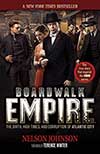
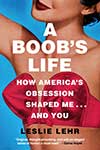
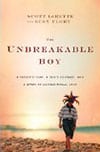
Notable authors include Nelson Johnson, author of Boardwalk Empire, which Martin Scorsese produced for HBO; Leslie Lehr, author of A Boob’s Life, which is currently being adapted for an HBO Max TV series by Salma Hayek; and Scott LeRette, author of The Unbreakable Boy, which was published by Thomas Nelson and is now a major motion picture by Lionsgate starring Patricia Heaton, Zachary Levi, and Amy Acker.
The founder of The Bestselling Author, Mark Malatesta, is a former literary agent, literary agency owner, AAR member, and Marketing & Licensing Manager for the gift and book publisher Blue Mountain Arts. He is now an author coach and consultant. Click here to see Mark Malatesta reviews.
About the Author
 The founder of The Bestselling Author, Mark Malatesta, is a former literary agent, literary agency owner, AAR member, and Marketing & Licensing Manager for the gift and book publisher Blue Mountain Arts. Mark is now a highly regarded author coach and consultant, dedicated to helping writers obtain literary agents. Drawing on decades of industry experience, he works with writers across genres, offering personalized coaching to navigate the complexities of the publishing world.
Through The Bestselling Author, Mark provides practical tools, industry insights, and motivational support tailored to each writer’s needs to help them do so. In addition to coaching, Mark shares his expertise through speaking engagements and online resources. His dedication to empowering authors has made him a trusted mentor in the writing community, earning him a reputation as a knowledgeable and approachable guide for writers pursuing their dreams. Click here for Mark Malatesta reviews.





 MARK MALATESTA is a former literary agent turned author coach. Mark now helps authors of all genres (fiction, nonfiction, and children's books) get top literary agents, publishers, and book deals through his company